



Table of Contents
- Understanding the Emotional Labyrinth
- Cultivating Resilience and Self-Compassion
- Redefining Identity and Self-Discovery
- Building a Strong Support Network
- Embracing Physical Well-being
- Writing Your Next Chapter
- The Path Forward: Choosing Hope
Understanding the Emotional Labyrinth
Heartbreak often feels as if it’s not just a wound to the heart but a rewiring of our very emotions. As
“Our brains perceive emotional pain similarly to physical pain, which is why heartbreak has such a visceral, hurtful quality.”
— Dr. Sarah Chen, NYU
MRI studies, notably from the NIH, indicate the same brain areas are active during both emotional and physical distress.
This emotional tempest isn’t imagined; it’s real and known by science. Perhaps you find yourself stuck in past memories, questioning self-worth, or feeling strangely detached. Breakup grief resembles other grief with stages: denial, anger, bargaining, depression, and eventual acceptance. These aren’t neat nor linear, but by understanding, we can steer our course.
Cultivating Resilience and Self-Compassion
First, let’s accept that healing after heartbreak is no quick dash—it’s more of a marathon. Resilience is pivotal and—surprising as it might seem—more of a learnable skill than an innate trait.
“Resilience isn’t about resistance to falling but about the strength in rising each time.”
— Dr. Laura Martinez, Stanford
Resilience blooms from self-compassion. The trailblazer of self-compassion research,
“Treat yourself kindly, just like you would a close friend.”
— Dr. Kristin Neff
advises treating yourself kindly. This approach reduces anxiety and depression, bolstering emotional intelligence, which proves vital in navigating post-heartbreak turmoil, as Harvard Health suggests.
How to Practice Self-Compassion:
- Use Affirmations: Swap out self-doubt with affirmations. Simple phrases like “I am enough” can uplift.
- Gentle Self-Talk: Imagine you’re speaking to a hurting child—with empathy and care.
- Mindful Acceptance: Embrace your emotions without judgment. Try journaling as a release.
Redefining Identity and Self-Discovery
After a breakup, questions might loom about who you are—especially if your identity was tangled with another’s. This crucial period allows you to redefine yourself outside the relationship’s bubble.
Take Jared, 26. After losing his long-time partner, he stood at his life’s crossroads, questioning his individual identity. He delved into forgotten pastimes—retrieving his dusty guitar and reigniting his passion for music. Through this, Jared didn’t just discover hobbies; he realized he was whole, and not merely half of a couple.
Steps to Explore Your Identity:
- Introspection: Engage in journaling or meditation to delve deeper within.
- New Activities: Try classes, join clubs, or travel solo to spread your wings.
- Seek Feedback: Ask trusted friends about your often-overlooked qualities.
Exploring unknown terrains promotes neuroplasticity, enhancing your brain’s capacity to adapt and heal, as supported by research from The Brain and Mind Institute.
Building a Strong Support Network
Heartbreak can feel like solitary confinement, but healing journeys don’t have to go unaccompanied. Human connection acts as an antidote to heartbreak, with research hinting that those with solid networks cope better emotionally, according to the APA. Surround yourself with souls who lift you.
“Vulnerability fosters connection. Don’t hesitate to share your burdens with those who care.”
— Dr. Emily Harris, Relationship Therapist
How to Strengthen Your Network:
- Open Dialogue: Tell friends your needs; they’re more willing to help than you might think.
- Support Groups: Dive into support groups or online communities where similar tales can offer solace.
- Professional Help: Therapy brings invaluable insights and tools for personal evolution.
Embracing Physical Well-being
It’s easy to overlook physical health during emotional strain. But physical and emotional states are tightly woven. Exercise, nutrition, and sleep form a triad essential for a balanced mind, says the Mayo Clinic.
Exercise releases endorphins—nature’s mood enhancers—helping to counteract emotional heaviness. Eating right fuels both body and spirit, while consistent sleep patterns uplift mood and sharpen focus.
Practical Self-Care Tips:
- Stay Active: Find a joy in yoga, running, or any movement.
- Nutritional Nourishment: A balanced diet—teeming with fruits, veggies, and lean proteins—works wonders.
- Sleep Hygiene: Keep a consistent sleep schedule, and craft a peaceful sleep space.
Tending to your physical self bolsters your body’s strength to weather emotional storms—a backbone for comprehensive healing.
Writing Your Next Chapter
Heartbreak might fracture your life story, but it’s no dictator of your entire narrative. Maya, after months of reflection and internal discovery, came to see her divorce as transformative rather than as definitive. She chose to view her past not through a lens of loss but as a springboard for growth.
Instead of closing yourself off, choose to enter new experiences and relationships with openness and reflection. By practicing gratitude journaling and mindfulness meditation, you cultivate a mindset of appreciation, reshaping your perspective, supported by Mindfulness Research insights.
Ways to Embrace New Beginnings:
- Set Long-Term Goals: See the future you want; plot actionable paths to reach it.
- Celebrate Small Wins: Mark and honor progress, no matter how minor.
- Reflect and Reframe: Use setbacks as stepping stones. What lessons do they hold?
The Path Forward: Choosing Hope
At its essence, heartbreak teaches resilience, hope, and our vast potential for renewal. It nudges us to see vulnerability as strength, growing as a guiding light towards future happiness.
Remember, your journey from heartbreak to growth is uniquely personal, demanding patience and kindness toward oneself. Allow room for grief, healing, and re-embracing life with curiosity. In rediscovery, you may unearth a version of yourself both stronger and more radiant.
Key Takeaways
- Understanding emotional pain can guide the healing process.
- Resilience and self-compassion are learnable skills essential for recovery.
- Building a support network is vital for emotional well-being.
- Physical health is linked to emotional recovery; prioritize self-care.
- Redefining your identity post-breakup can lead to personal growth.
The Bottom Line
Taking this healing path with awareness doesn’t just lead to repair but to an enriched, uplifted self. Face it with courage, knowing growth is not a dream but within touching distance.
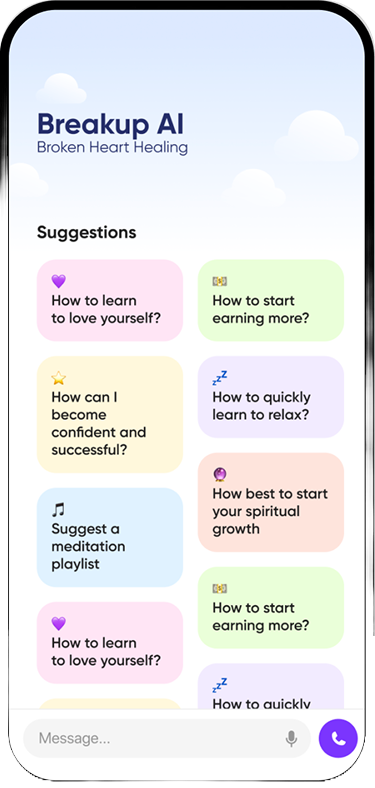
Explore healing with Breakup.one, offering 24/7 support and guided recovery via AI-driven programs. Discover your personalized path to emotional strength and renewal at Breakup.one.
References
- Harvard Health
- NIH
- The Brain and Mind Institute
- APA
- Mayo Clinic
- Mindfulness Research and Practice