



Table of Contents
- Understanding the Aftershocks of a Breakup
- The Psychological Mechanics Behind Growth
- Harnessing the Power of Self-Care
- Redefining Your Personal Identity
- Building a Support System
- Focusing on Future Intentions
- Embracing Self-Compassion and Patience
- A Transformative Journey Awaits
- The Bottom Line
- References
Key Takeaways
- Breakup pain is a significant loss that can lead to personal transformation.
- Cognitive reframing allows us to view past experiences as lessons for growth.
- Self-care and mindfulness practices are crucial for healing and resilience.
- Building a strong support system is vital for emotional recovery.
- Embracing self-compassion can enhance psychological health and facilitate healing.
Understanding the Aftershocks of a Breakup
Breakup pain stings so deeply because our relationships color our world. Breaking apart is akin to mourning—similar to what Dr. Susan Johnson explains in “Hold Me Tight.” She reflects that attachment bonds are our most intense emotional ties, so losing them feels like losing a part of ourselves.
Consider this: research shared by the American Psychological Association likens a breakup to battling addiction, with those pesky withdrawal symptoms that many of us endure. You’re not just losing a partner; it’s a whole lifestyle, a vision of a future now upended. It’s crucial to acknowledge this turmoil, recognizing it’s a regular part of your path to healing.
The Psychological Mechanics Behind Growth
So, what’s the blueprint for moving past this turbulence and nurturing growth? It’s about reframing. Turning past hell into a hinge for emotional evolution is possible.
“Cognitive reframing offers a lens to see your past as a series of key lessons that shape you today.”
— Dr. Sarah Chen, Clinical Psychologist at NYU
Rooted in positive psychology, this reframing suggests viewing challenges as growth sites. By embracing newfound freedoms and focusing on self-discovery, that post-breakup emotional chaos can bloom into a fertile ground for self-improvement.
Harnessing the Power of Self-Care
Self-care: not just a buzzword but a critical step. Establish routines that stabilize—a grounding process, so to speak. Start small, nurture what centers your mind and body. Regular exercise, meditative moments, or creative outlets like journaling are powerful.
With a substantial foundation of research, mindfulness shows tangible benefits. According to a study in the Journal of Traumatic Stress, mindfulness-based stress reduction can notably reduce anxiety and depression while bolstering resilience. Making time for such practices aids not only in healing but also builds emotional endurance.
Think of Maya, 28, who reshaped her post-divorce existence by carving out time daily for yoga and introspection.
“Initially a mere distraction; later, my highlight.”
— Maya, Personal Growth Advocate
Clarity and self-discipline emerged, shifting focus to personal growth over past sorrows.
Redefining Your Personal Identity
The end of a relationship often leaves a vacuum in identity. Reclaiming what singularly defines you is essential. Who were you before this relationship? What carried your dreams, ignited your passion?
At first, pursuing new interests may seem daunting, but essential. Rekindle former hobbies or forge into uncharted territory—maybe art, cooking, or a new sport. In doing so, you slowly sculpt a profound understanding of yourself, unbound by any partner.
“Reclaiming your identity fosters an independent self, essential for balanced future relationships.”
— Dr. Emily Moore, Therapist
Building a Support System
No healing journey should be solitary. Building a support network is crucial—friends, family, support groups. Individuals who see you beyond the shadow of your past relationship.
A University of Arizona study highlights that social support significantly eases the mental toll of breakups. Whether through chats over coffee or engaging in online forums, shared understanding provides healing balm.
Focusing on Future Intentions
A key to growth? Forward-thinking. It’s tempting to linger on “what ifs”, but shifting focus to future potential is empowering. Intention setting becomes pivotal. What do you envision for your future self? What steps can you make today for those dreams?
Revisit Maya. Her recovery involved envisioning a future:
“I crafted a vision board filled it with destinations, career ambitions, friendships I wanted nurtured.”
— Maya, Personal Growth Advocate
Setting goals isn’t just motivating—it aligns with long-term success and happiness. Pursuing goals aligned with personal values enriches psychological well-being.
Embracing Self-Compassion and Patience
Self-criticism often follows breakups. Embracing growth entails kindness to oneself. Self-compassion means acknowledging imperfection as innately human. Be the friend who speaks kindly when times are tough.
“Self-compassion enhances psychological health.”
— Dr. Kristin Neff, Researcher
Remember, healing takes time—it’s non-linear. Patience with yourself and your journey is vital. Growth might seem tiny day-to-day yet, retrospectively, monumental.
A Transformative Journey Awaits
Heartache—a formidable foe; yet, this pain can be a spark for profound personal evolution when faced with resilience, compassion, and curiosity. By weaving through these pathways, breakup pain can transform into a remarkable, personal metamorphosis.
As you move forward, remember—this journey is uniquely yours, with immense promise. You’re rewriting a new chapter—rich in potential and deep understanding. While this chapter began with pain, it holds seeds of deep growth.
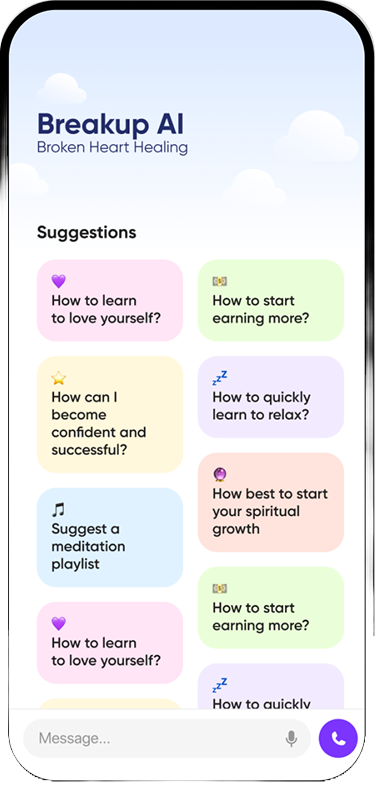
When further support calls, explore tools like Breakup.one, an AI-powered companion offering 24/7 emotional guidance and healing programs to transform your healing journey.
The Bottom Line
The journey after a breakup is challenging, but it is also filled with opportunities for growth, self-discovery, and personal empowerment. Embrace the pain, be kind to yourself, and take intentional steps toward a fulfilling future.
References
- American Psychological Association
- Journal of Traumatic Stress
- University of Arizona
- Research by Dr. Kristin Neff