



Table of Contents
- Understanding the Science of Heartache
- Embracing the Grieving Process
- Cultivating Self-Compassion
- Building a Strong Support Network
- Reclaiming Your Sense of Self
- Learning From the Past
- Nurturing New Connections
- Practicing Gratitude
- Embracing the Future
Key Takeaways
- Understanding the physical and emotional pain of heartbreak can aid in healing.
- Grieving is a personal process; embracing it is crucial for recovery.
- Self-compassion mitigates self-doubt and promotes emotional well-being.
- Building a support network helps in navigating through heartache.
- Practicing gratitude shifts focus from loss to abundance, fostering positivity.
Understanding the Science of Heartache
The agony of heartbreak isn’t just a figment of your imagination; it’s etched deeply within your psyche. A piece of research in the Journal of Neurophysiology revealed that the brain’s response to a breakup bears resemblance to the experience of physical pain. This neurological overlap demystifies why emotional distress can render one physically immobilized. The body reacts as if it’s healing a tangible wound, activating stress responses that impinge upon both mood and physical well-being.
To navigate toward healing, grasping why these emotions are so potent is key. Post-breakup, the brain scales back its release of oxytocin—the ‘love hormone’—while allowing cortisol, the stress hormone, to flood through, leaving you trapped in turmoil.
Embracing the Grieving Process
In the wake of a breakup, feelings can span from blazing anger to deep sadness or even unexpected relief.
“Grieving, in whatever shape it takes, is indispensable.”
— Dr. Melinda Harper, Relationship Therapist
Acknowledging this is pivotal to recovery.
Each individual’s grieving path meanders differently, and this calls for gentleness towards oneself. Journaling can act as a refuge for articulating jumbled emotions. In truth, findings from the Association for Psychological Science highlight that expressive writing not only diminishes intrusive thoughts but also aids cognitive functioning, ultimately easing one on the path ahead.
Cultivating Self-Compassion
Breakups often amplify a storm of self-doubt. The inner critic grows louder, and this is where fostering self-compassion becomes a lifeline.
“Self-kindness mitigates emotional distress significantly.”
— Dr. Kristin Neff, Self-Compassion Researcher
Start with recognizing simple human truths. It’s okay to feel fractured. Whisper a mantra of solace: “I am enough. This too shall pass.” Practices like meditation, available through applications such as Headspace, guide mindfulness and foster self-kindness, grounding you firmly in the present.
Building a Strong Support Network
As Maya leaned into her circle of loved ones during her divorce, she discovered a comforting balm for her heartache amidst friends and family. Such networks provide support; yet sometimes, seeking a therapist can be an essential step. Therapy offers a confidential sanctuary where intricate feelings can be voiced. Cognitive Behavioral Therapy (CBT), in particular, helps reshape negative thoughts, transforming self-reproach into self-appreciation.
Reclaiming Your Sense of Self
In relationships, one’s identity may entwine heavily with that of their partner. Post-breakup is a chance to rediscover personal identity.
“Small, personal goals can help reconstruct who you are.”
— Dr. Alex Lickerman, Author
Whether it’s enrolling in dance classes or championing a cause, redirecting energy into growth fuels personal renewal. Focus on physicality too—exercise is a natural mood lifter, says Harvard Medical School. As endorphins—the body’s own painkillers—course through your veins during activities like jogging or yoga, they elevate the spirit.
Learning From the Past
Reflection, as opposed to dwelling, is pivotal. While the urge to analyze past missteps is strong, steering towards lessons and personal growth instills resilience. Understand what clicked and what didn’t, and let these insights shape future relationships. An American Psychological Association study found those who focus on reflection over rumination are better equipped for new beginnings.
“An ended relationship doesn’t equate to diminished value.”
— Dr. Susan Anderson, Abandonment Recovery Program
Nurturing New Connections
After rebuilding emotionally, opening up to new connections might seem daunting but offers its own rewards. Post-breakup friendships often reinforce that love transcends the romantic. New viewpoints can invigorate confidence and reshape one’s social canvas.
Practicing Gratitude
Counterintuitive though it might appear, cultivating gratitude aids emotional recovery. Shifting focus from absence to abundance through practices like maintaining a gratitude journal can be transformative. An initiative by UC Davis advocates for such exercises, stating they bolster mental well-being and provide equilibrium against despair.
“Gratitude is a means to savor life’s positives, promoting conscientiousness and an optimistic outlook.”
— Dr. David DeSteno, Psychology Professor
Embracing the Future
In time, the haze of heartache will part, uncovering pathways yet unseen. For Maya, once feeling utterly lost, an embrace of self-reclaimed her stability, “The end of my marriage was the start of truly understanding my needs,” she reflects.
Don’t lose hope—healing is a meandering journey. Trust that with each tentative step, a life emerges, resilient and enriched by lessons wrought from heartbreak.
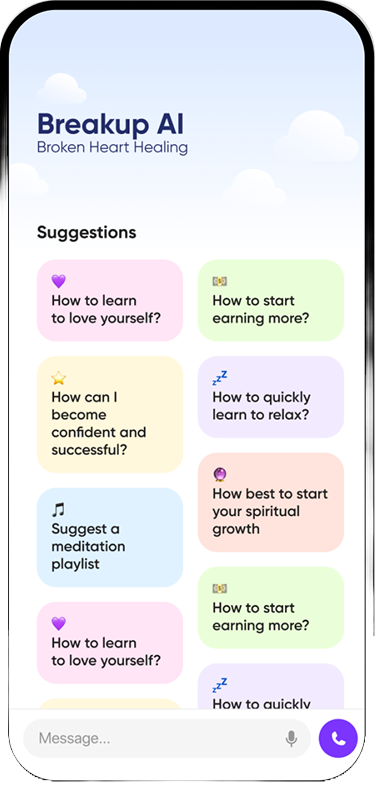
For those embarking on this path of recovery, Breakup.one offers an AI-backed companion on this voyage, delivering constant emotional support and guidance to journey toward a more balanced, brighter future.
The Bottom Line
Healing from a breakup is a multifaceted journey, requiring time and self-compassion. Embrace the process, seek support, and trust in your ability to evolve, ensuring that heartbreak leads to personal growth and new beginnings.
References
- Journal of Neurophysiology
- Association for Psychological Science
- Harvard Medical School
- American Psychological Association
- University of California, Davis, Greater Good Science Center