



It was a dreary Tuesday afternoon; Emily sat at her favorite coffee shop’s corner table. Clutching a chai latte, she found the weather reflecting her mood—each raindrop a whisper of her unraveling romance. She found herself haunted by one question: how does one move on from a breakup when the love felt so real?
Table of Contents
- Embracing the Pain: A Step Toward Healing
- Finding Your Anchor: Embracing Routine
- Reconnecting: Rebuilding Your Social Fabric
- A Path of Rediscovery: Personal Growth Post-Breakup
- Seeking Professional Help: Recognizing the Need
- The Pursuit of Forgiveness: Gateway to Future Joy
- Walking Forward: Navigating the Journey Ahead
Key Takeaways
- Embrace and validate your emotions as a vital part of healing.
- Establishing a routine can help restore a sense of normalcy and stability.
- Reconnecting with friends and community is crucial for emotional support.
- Pursuing personal growth and hobbies can lead to self-discovery.
- Seeking professional help is valuable if feelings become overwhelming.
Embracing the Pain: A Step Toward Healing
The end of a relationship? It’s painful beyond words. Dreams dashed, future plans dissolved. No one ever says heartbreak is tidy or predictable. Whether you saw it coming or not, the process often spirals through denial, shifting to anger, then plunging into deep sadness. Dr. Sarah Chen, a clinical psychologist from NYU, drives home the importance of embracing these feelings.
“It’s crucial to let yourself feel the pain. It’s a testament to what was significant in your life.”
— Dr. Sarah Chen, Clinical Psychologist
Take Maya, for instance, who at 28, endured a painful divorce. For her, accepting her grief was a crucial component of healing.
“I found it vital to validate my feelings instead of sweeping them under the rug,” she reflects. “This acceptance—this was my sanctuary.”
— Maya, 28
Why is it so critical to acknowledge our emotions? The American Psychological Association found that repressed emotions can wreak havoc, physically and psychologically, sparking stress and shadowing us into depression. Accepting your emotions isn’t giving up; it’s more of a compassionate acknowledgment that you are, after all, just human.
Finding Your Anchor: Embracing Routine
After a breakup, the void left can disorient. It’s as though you’re sailing in a turbulent storm without a compass. Establishing a routine might be that anchor you desperately need. Dr. Michael Andrews, a relationship coach with years of experience, suggests,
“When we forge routines, we’re effectively crafting an outline of normalcy and stability.”
— Dr. Michael Andrews, Relationship Coach
Think morning walks or scheduled reading—these may sound mundane, but they are crucial components to forging mental and physical resilience.
Science, surprisingly, agrees. According to a report by the National Institutes of Health, those with consistent routines tend to report increased happiness and reduced stress. Predictable patterns can counterbalance the chaos following heartache, filling the void with purpose, and gently structuring your days.
Reconnecting: Rebuilding Your Social Fabric
In the wake of a breakup, isolation is a common pitfall, particularly if your social world revolved largely around your partner. Sure, solitude might lead to introspection, but reconnecting with your community is essential. A robust body of scientific literature vouches for social support as a significant balm for emotional wounds. The Mayo Clinic has noted time and again that positive social interactions have the power to manage stress, alleviate anxiety, and lift self-esteem.
But hold on—this doesn’t mean diving headlong into a new romance. It’s more about leaning on friends and family who can offer warmth and diversion. Joining groups, diving into community activities, or even venturing into online spaces can recreate a sense of identity beyond the relationship. Rebuilding these connections is more than comfort—it’s potentially transformational.
A Path of Rediscovery: Personal Growth Post-Breakup
Losing a relationship can feel like losing part of yourself—perhaps one you cherished deeply. Yet, in that void lies a unique opportunity for self-discovery. It’s a time to dust off old passions or pursue hobbies long shelved. Lila, a 25-year-old art teacher, views her breakup as a turning point.
“I returned to painting and even picked up new classes on weekends. Rededicating time to myself restored my confidence and joy,” she shares.
— Lila, 25
Psychologists laud self-exploration as an incredible healing tool. The Journal of Personality and Social Psychology cites that engaging in self-expansion—trying new things, honing new skills—is linked to increased well-being and satisfaction. This broadened self-concept reinforces resilience, reaching beyond romantic definitions.
Seeking Professional Help: Recognizing the Need
Sometimes, despite pouring effort into healing, the ache of a breakup digs deeper than anticipated. If hopelessness, anxiety, or depressive symptoms cling, it might be time for professional support.
“Don’t hesitate to seek help if emotions become overwhelming,” advises Dr. Laura Martinez, a psychiatrist with over ten years of experience. “Therapy offers a safe haven to untangle your feelings and perspectives.”
— Dr. Laura Martinez, Psychiatrist
According to the National Institute of Mental Health, therapies like Cognitive Behavioral Therapy (CBT) prove effective for those navigating breakup-induced emotional turmoil. Professional counseling not only aids in navigating complex feelings but also equips you with tools to emerge from trying times with greater self-awareness.
The Pursuit of Forgiveness: Gateway to Future Joy
Forgiveness? That’s a tricky terrain, deeply personal and often arduous after heartbreak. But it’s essential for moving on. It’s not about brushing off past grievances or rekindling a relationship; it’s more about releasing the grip of resentment.
“Forgiveness is about reclaiming your peace. It’s an ultimate act of self-care, freeing ourselves from past emotions.”
— Dr. Sarah Chen, Clinical Psychologist
A Harvard study points out that forgiveness reduces stress and bolsters mental health, paving the way for contentment. By relinquishing grudges, you open up to future happiness and opportunities—free from past shadows.
Walking Forward: Navigating the Journey Ahead
Letting go post-breakup—it’s rarely immediate. It’s a path that demands patience, self-compassion, and an active hand in steering your healing process. Remember, it’s not about erasing memories or diminishing past experiences but authoring a future where they no longer weigh you down.
Find solace in new routines, forge social connections anew, and brave the journey of self-discovery. When the burden feels immense, reaching for professional support can serve as a profound step forward. Gradually, forgiveness—not often easy—opens your heart to embrace the love, joy, and potential your life continues to offer.
If you’re wading through the raw aftermath of a breakup, take courage. This journey to healing can become a deeply transformative phase of growth and renewal. By tending to yourself with earnest care, you foster hope and resilience.
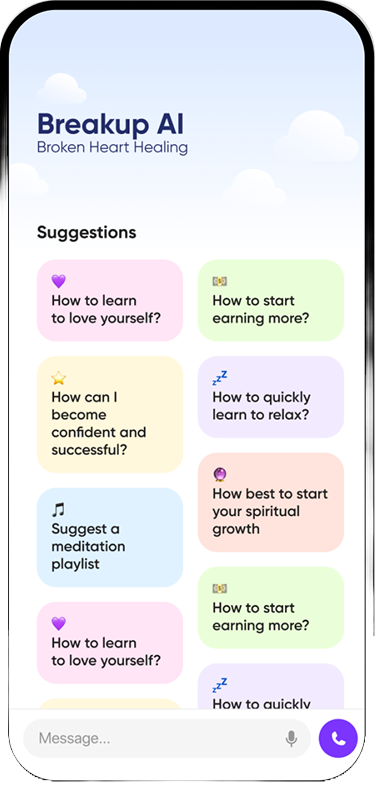
For those embarking on this path to healing, tools like Breakup.one, an interactive support system offering guided programs and emotional support, stand ready to accompany you through this transformative journey. Discover what strength and joy lie beyond the heartache.
The Bottom Line
Healing from a breakup is a journey that requires resilience, self-exploration, and support. By acknowledging your feelings, establishing a routine, reconnecting with your social circle, and seeking help when necessary, you can find a path forward filled with growth and new possibilities.
References:
- American Psychological Association. Emotional Suppression
- Mayo Clinic. The importance of social connections
- National Institutes of Health. The power of daily routines
- National Institutes of Mental Health. Cognitive Behavioral Therapy
- Harvard University. The science of forgiveness