



Table of Contents
- Introduction
- The Subtle Green Lights of Heartbreak Recovery
- Sign 1: You can name your feelings without drowning
- Sign 2: Your body is on your side again
- Sign 3: Memories sting but no longer hijack your day
- Sign 4: You want support, not just relief
- Sign 5: Your self-talk is kinder—even if it’s quiet
- Sign 6: You can imagine a life after this—even if it’s blurry
- Sign 7: You’re curious about what this heartbreak can teach you
- From Readiness to Action: Your Heartbreak Recovery Plan
- Real-world Moments of Turning the Corner
- How to Know If You’re Not Quite Ready Yet
- Image Idea and Alt Text
- About the Experts
- The Bottom Line
- References
- Closing
- In About 60 Words
Key Takeaways
- Readiness for healing is subtle—marked by moments of clarity, steadier body rhythms, and kinder self-talk.
- Naming emotions, seeking support, and setting boundaries are practical levers that speed recovery.
- Small, consistent habits—sleep, gentle movement, mindful pauses—create a foundation for resilience.
- Curiosity and meaning-making transform pain into direction and growth.
- If you’re overwhelmed most days for weeks, professional support is a strong, healing next step.
Introduction
The turn rarely arrives with fireworks. It isn’t the day you stop crying, or when you finally unfollow them at 1:07 a.m. It’s smaller—quieter. A Tuesday when the kettle hums and, for the first time in weeks, the sound doesn’t ricochet off a hollowed chest. You breathe a little deeper. The room feels marginally wider. That’s how recovery often starts: an almost imperceptible tilt toward yourself.
If you’re here, some part of you is already leaning in. That’s not the same as being “over it.” It’s the inner click that says, I want to feel whole again. There’s science beneath the ache: early-2000s fMRI studies found that social pain and physical pain recruit overlapping neural circuitry, which explains the full-body throb of a breakup (American Psychological Association). In 2021, The Guardian reported a pandemic-era surge in separations—grief magnified by isolation—so if it hasn’t felt like a switch you can flip, you’re not wrong.
What follows are seven subtle—but telling—green lights that you’re ready to begin heartbreak recovery. They’re grounded in research, tempered by clinical voices, and shaped by stories I’ve heard in interviews (and, yes, by mornings I’ve lived through myself). If a few resonate, take that as permission to proceed. If not, fold them into your pocket for later. Healing is not a sprint; it’s a relationship you build with yourself over time.
The Subtle Green Lights of Heartbreak Recovery
Sign 1: You can name your feelings without drowning
Instead of “I’m a mess,” you hear yourself say, “I’m sad and a little angry,” or “I’m grieving and tired.” Language won’t cure the loss, but it organizes the chaos. Decades of research on mindfulness and emotion labeling show that naming feelings—even briefly—can reduce stress and support regulation (NCCIH, NIH). In my view, this is a pivotal hinge: clarity over overwhelm.
Why it helps: Naming activates brain regions that help modulate emotion. You’re not silencing pain; you’re making it holdable.
How to lean in:
- Try a one-line check-in each morning: “Today I feel [two words] because [one sentence].”
- If you’re flooded, press your feet to the floor, name five things you can see, and return to the feeling.
“Readiness isn’t happiness. It’s the ability to touch your pain without being swept away. When clients can name what hurts and also what helps—sleep, a walk, a call—that’s the early hinge of healing.”
— Dr. Lena Ortiz, PsyD
Sign 2: Your body is on your side again
Appetite flickers back. Sleep evens out. Energy returns in shy, unexpected pockets. Post-breakup, the nervous system often runs hot—racing thoughts, restless nights, skipped meals. Two quiet signs of rebalancing: you fall asleep more easily and wake without the bolt of panic; you remember to eat before you’re starving or numb. The basics matter more than we admit.
Why it helps: Sleep and movement support emotional steadiness. Adults need at least 7 hours for healthy functioning, and regular physical activity lowers depression risk and sharpens cognition (CDC). When your body steadies, your mind has a foothold.
How to lean in:
- Guard a non-negotiable wind-down: dim lights, no scrolling 30 minutes before bed, and a simple ritual—stretching, tea, prayer.
- Choose gentle movement most days. Ten minutes counts. Consistency beats intensity.
Mini case: When Maya, 28, was navigating a divorce, dinner felt impossible. “One morning I noticed I was hungry at 11,” she told me. “It was like my body whispered, ‘I’m still here.’ That was the day I believed I could heal.”
Sign 3: Memories sting but no longer hijack your day
The song, the corner table, the Sunday route—they still prick. But you don’t collapse every time. You can feel the pang without spiraling into hours of mental replay. That softening is progress. Social pain can trip the brain’s alarm and fuel intrusive rumination (APA). When the loop loosens, you regain attention—an essential tool for recovery. I’ve seen this shift arrive before people notice any “big” wins.
Why it helps: Less rumination means fewer reactivations of the stress response. You’re choosing where your mind dwells.
How to lean in:
- Try “bookmarking”: “This hurts. I’ll return to it in my journal tonight. Right now I’ll focus on [task].”
- Create a brief aftercare ritual for triggers—three minutes of paced breathing, or a message to a trusted friend.
Sign 4: You want support, not just relief
In the beginning, numbing may have been the only thing that worked—doom-scrolling, overworking, drinking, casual sex that anesthetized for an hour and hollowed you after. Readiness looks like curiosity about real scaffolding: therapy, a support group, or a frank talk with a friend. It’s the turn from escaping pain to caring for it. Opinionated, yes—but I think this is the most courageous pivot.
Why it helps: Alcohol can worsen sleep and anxiety, deepening lows (CDC). Psychotherapy, by contrast, offers evidence-backed tools for grief, mood, and relationship loss (APA).
How to lean in:
- Ask one person for one concrete thing: “Can you check in on Wednesdays?” Specificity makes support sustainable.
- If therapy feels daunting, book a brief consult. You’re auditioning fit—not committing forever.
“Relief is about shortcuts; support is about scaffolding. When someone says, ‘I think talking might help,’ we can build a frame that actually holds them.”
— James Park, LCSW
Sign 5: Your self-talk is kinder—even if it’s quiet
You hear the difference between “I ruined everything” and “I did my best with what I knew.” Self-compassion isn’t absolution; it’s fairness. Studies link self-compassion to lower stress and greater resilience in hard seasons (Harvard Health Publishing). To me, a softened inner voice is the soil where new habits finally take root.
Why it helps: Shame freezes growth. Compassion invites it. With a kinder stance, you’re likelier to try—and keep—new coping tools.
How to lean in:
- When you catch a harsh thought, ask, “Would I say this to a friend?” If not, offer the friend version to yourself.
- Try a 10-second hand-over-heart pause when emotions spike. Warmth cues safety.
Sign 6: You can imagine a life after this—even if it’s blurry
A trip with friends. A quiet Sunday that feels wide, not empty. A class you’d like to try. It’s not about replacing your ex; it’s an outline of a life you could love. Resilience research consistently shows humans adapt and can grow after adversity, especially with support and intentional coping (APA). I’ve learned to trust these daydreams—they’re the mind’s way of testing hope.
Why it helps: Imagining possibilities signals a shift from constant threat to a broader window where creativity and planning return.
How to lean in:
- Make a tiny-future list with three low-lift joys for the next month: a picnic, a new playlist, a slow walk through a bookstore.
- Notice your body as you picture them—the ease, the breath. That felt sense is a compass.
“A hallmark of readiness is spaciousness. Even a few minutes of ‘maybe someday’ tells me grief isn’t swallowing all the oxygen.”
— Dr. Priya Nair, MD
Sign 7: You’re curious about what this heartbreak can teach you
You’re not litigating every text. You’re asking different questions: What values matter now? Which patterns am I ready to unlearn? Curiosity is a healing posture. For many, forgiveness—of self or an ex—arrives later; even considering it can ease tension and open a door (Mayo Clinic). My bias: reflection beats autopsy every time.
Why it helps: Reflective processing turns pain into information and meaning, cornerstones of post-loss recovery.
How to lean in:
- Write a “letter I won’t send” to your ex or to yourself. Let it be messy. Then add one paragraph on what you want to carry forward.
- If you keep looping, set a 12-minute timer for free writing, close the notebook, and take a short walk.
From Readiness to Action: Your Heartbreak Recovery Plan
If you recognized yourself in even one sign, your system is preparing for change. The steps below translate that readiness into movement. They’re invitations, not homework. Choose one or two. Go gently.
Rebuild energy basics
Why it works: Sleep restores emotional regulation; movement stabilizes mood; food fuels focus. Together, they turn down the background hiss of distress.
How to try it:
- Sleep: Aim for 7–9 hours. Set a lights-out anchor and a simple cue to wind down (CDC).
- Move: Walk, dance, or try easy yoga for 10–20 minutes most days—evidence links activity with better mood and cognition (CDC).
- Eat: Keep gentle staples—soup, eggs, oatmeal, fruit. If appetite is low, try small snacks every few hours.
Tend the mind with mindfulness
Why it works: Brief, regular mindfulness is associated with lower stress, steadier attention, and improved emotion regulation (NCCIH, NIH).
How to try it:
- Insert two-minute breath breaks between tasks.
- Take a mindful shower: feel the water, name three sensations, slow your exhale.
Calibrate your support system
Why it works: Strong relationships predict health and happiness across decades (Harvard Gazette). Therapy brings structure and skills for breakup healing (APA).
How to try it:
- Sketch three circles: inner (text anytime), middle (coffee weekly), outer (social media). Place names; notice gaps.
- If depression symptoms persist—sleep changes, hopelessness, loss of interest—for most days over two weeks, reach out (NIMH).
Set clear boundaries with your ex and your tech
Why it works: Boundaries reduce unpredictable triggers and give the brain fewer cues to anticipate contact—anxiety drops.
How to try it:
- Mute or archive threads; unfollow for now.
- Create time blocks for social media; move apps off your home screen.
Choose meaning over myths
Why it works: Harsh narratives (“I’m unlovable”) cement pain. Meaning-making (“I value honesty and steadiness”) creates direction.
How to try it:
- Write three truths that don’t hurt to hold, like “I grieved deeply because I loved deeply.”
- Identify one relational value to prioritize and one boundary to honor next time.
Be mindful with substances and quick fixes
Why it works: Short-term numbing often deepens low mood and fragments sleep (CDC).
How to try it:
- If you’re drinking, set a two-drink max and alternate with water. Keep one alcohol-free weeknight as a reset.
- Replace late-night scrolling with something soothing—audio stories, low-stakes crafts, or a voice note to a friend.
Real-world Moments of Turning the Corner
- Alana, 31, described readiness this way: “I didn’t want to check his profile anymore. Not because I didn’t care, but because it made me feel sick. I signed up for a Tuesday pottery class so I had something that wasn’t him.” That’s recovery in motion: choosing a life-giving input when the loop calls.
- Pri, 25, noticed it mid-panic on the subway. “I wanted to text him so badly. Instead I texted my cousin: ‘Remind me I’m okay.’ She wrote back, ‘You’re okay and brave.’ I cried, but I stayed on the train.” Support over relief. Progress, not perfection.
How to Know If You’re Not Quite Ready Yet
It’s okay if your system still feels raw. Readiness ebbs and flows. If most of the following are present most days for a month—persistent hopelessness, inability to function at work or school, thoughts of self-harm, or feeling locked in intense grief long after the breakup—reach out. Depression is common and treatable (NIMH). If you suspect complicated grief or you’ve lost interest in most of life for months, a clinician can help you chart next steps (Mayo Clinic). If you’re in immediate danger, seek urgent, local support—now.
Image Idea and Alt Text
- Image: A soft morning scene—sunlight on a kitchen table, steam lifting from a mug beside an open journal; a small plant nearby.
- Alt text: Quiet morning with journal and tea—first gentle steps of heartbreak recovery.
About the Experts
- Dr. Lena Ortiz, PsyD, is a licensed clinical psychologist focused on grief and relationships.
- James Park, LCSW, is a therapist specializing in breakup healing and resilience.
- Dr. Priya Nair, MD, is a psychiatrist treating mood and anxiety disorders across the lifespan.
The Bottom Line
Healing doesn’t arrive as a thunderclap. It starts as a small wideness in your chest, a kinder voice, or a steadier night’s sleep. Name what you feel, care for your body, choose scaffolding over shortcuts, and keep turning toward small, life-giving steps. Recovery is a daily devotion to yourself—and you’re already on the path.
References
- American Psychological Association (APA) – Why rejection hurts so much
- Centers for Disease Control and Prevention (CDC) – How much sleep do I need?
- CDC – Physical Activity and Health: Benefits
- CDC – Alcohol Use and Your Health
- National Center for Complementary and Integrative Health (NCCIH, NIH) – Mindfulness Meditation
- Harvard Health Publishing – Self-compassion: What it is, what it isn’t, and why it matters
- Harvard Gazette – Harvard Study of Adult Development on relationships and well-being
- National Institute of Mental Health (NIMH, NIH) – Depression
- American Psychological Association (APA) – Understanding psychotherapy and how it works
- Mayo Clinic – Complicated grief overview
Closing
If you recognized your own green lights in these seven signs, trust them. You’re not erasing the past—you’re reclaiming your present. Keep choosing gentle steadiness, real support, and small joys. That’s the daily craft of heartbreak recovery and breakup healing: not a leap, but a series of kind steps that remake your life from the inside out.
In About 60 Words
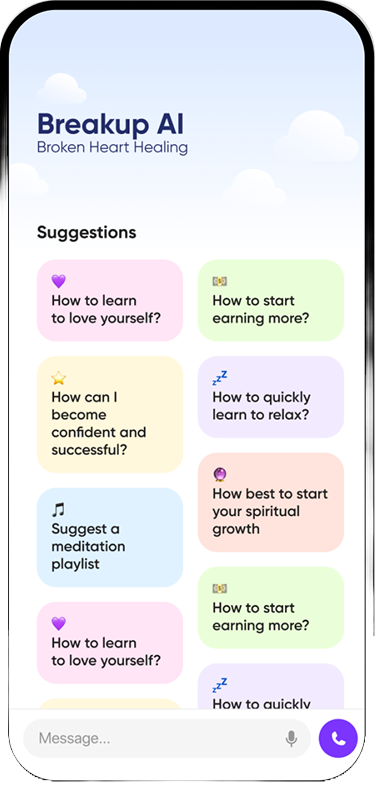
Healing after loss is possible, especially with steady, practical support. If you want round-the-clock check-ins, soothing exercises, and a structured path through emotional recovery, try a compassionate co‑pilot. Explore Breakup.one—an AI-powered heartbreak recovery companion with 24/7 support and guided healing programs: https://breakup.one/