



Key Takeaways
- Codependency is learned survival wiring—not a flaw—and it can be rewired with practice.
- Stabilizing your body (breath, sleep, movement, nourishment) shrinks urgency and supports wise choices.
- Interrupting rescue/rumination loops, setting kind boundaries, and using no/low-contact speeds healing.
- Self-compassion, social support, and therapy help rebuild secure attachment and self-trust.
- Reclaim identity through small, values-based actions; progress comes from repetition, not perfection.
Introduction
Image alt: Young woman journaling by a window, learning to break codependency during heartbreak recovery
The first morning after the breakup, you reach for your phone before your eyes fully open. Your thumb hovers over their name—half-hoping, half-dreading a new message. When nothing’s there, your chest aches. You wonder: Was I too much? Not enough? If you’ve spent months or years organizing your life around another person’s moods or needs, that sting isn’t just grief—it’s the snap of a pattern. This is where you learn to break codependency so heartbreak recovery can truly begin. I’ve seen it in hundreds of reader emails and, frankly, in my own life; the first quiet after caretaking can sound like a siren.
Codependency isn’t a character flaw. It’s a survival strategy that once kept you connected—maybe in your family, maybe in past relationships. It looks like over-giving, people-pleasing, taking responsibility for someone else’s emotions, and losing sight of your own needs. When the relationship ends, the urge to text, fix, prove, or “win them back” can feel compulsive. It’s not weakness; it’s wiring. And you can rewire it. In my view, that’s the most hopeful part of this work.
“Codependency thrives in uncertainty and panic. When a breakup happens, the brain floods with stress hormones, and the old reflex is to reach outward. Healing asks us to reach inward, set emotional boundaries, and learn self-trust.”
— Dr. Lila Gomez, Licensed Clinical Psychologist
The science backs this up. Strong emotional stress can affect your body—Mayo Clinic notes that intense grief can even trigger stress cardiomyopathy (often called broken heart syndrome), a temporary weakening of the heart muscle (Mayo Clinic). The American Psychological Association reminds us that grieving is a normal, adaptive process, but coping well requires active strategies and support (APA). And when your mind loops on what-ifs or should-haves, Harvard Health reports that rumination worsens mood and can prolong distress; skills like mindfulness can interrupt that loop (Harvard Health Publishing). To break codependency during heartbreak, we combine nervous-system care, boundary skills, self-compassion, and structured support. My take: this blend beats white-knuckle willpower every time.
Why breaking codependency speeds heartbreak recovery
When Maya, 28, went through her divorce, she measured her worth by how quickly she could soothe her ex’s anger. After the split, silence felt like punishment. “I’d text him, then spiral. I thought if I could just explain better, he’d come back,” she says. That’s the codependent loop: external reassurance regulates your internal state. It works short-term and harms long-term. I would call it emotional caffeine—effective now, costly later.
“Think of it like a reflex you didn’t choose. If every alarm in your body says ‘reach for them,’ the healing practice is to pause, regulate, and reach for you. That’s how you break codependency and build durable self-worth—one small interruption at a time.”
— Dr. Aaron Patel, LMFT
- You stop reinforcing the pain loop. Contact and caretaking temporarily soothe anxiety but keep the attachment wound raw.
- You redirect energy from monitoring their feelings to meeting your needs. That shift fuels resilience.
- You create conditions for secure attachment behaviors—consistency, boundaries, self-advocacy—to take root.
Before the how-to, here’s the why-it-works through a science lens:
- Stress regulation: Simple practices like slow breathing activate your parasympathetic nervous system, lowering heart rate and easing anxiety (Harvard Health Publishing).
- Mindfulness and attention control: NCCIH at NIH finds that mindfulness-based approaches can reduce stress and improve emotional regulation, helping you pause before reacting (NCCIH).
- Sleep and mood: The CDC notes that about 1 in 3 adults do not get enough sleep, and insufficient sleep can sap coping and worsen mood (CDC).
- Movement and mental health: WHO reports that regular physical activity reduces symptoms of depression and anxiety and improves well-being (WHO).
In my experience reporting on heartbreak since 2011, the body is the doorway; the thoughts follow.
Spotting the pattern: subtle and loud signs of codependency
If this sounds familiar, you’re not alone. Signs of codependency often include:
- Over-functioning: managing their schedules, crises, or moods while neglecting your own needs
- Hypervigilance to their tone, texts, or silence
- Guilt or panic when you set boundaries
- Identity blur: losing hobbies, friendships, or goals outside the relationship
- Rescuing or fixing to feel needed, then feeling resentful or empty
Try this reflection: “When I feel abandoned, I usually…,” “When I feel needed, I usually…,” “The last time I ignored my needs for someone else was…” Not to judge yourself—to map the autopilots you’re going to rewire. A small opinion here: honest self-audits beat grand resolutions.
How to break codependency for heartbreak recovery: a compassionate blueprint
1) Stabilize your body so your brain can heal
Why it works: A regulated nervous system shrinks urgency, which weakens the craving to seek external soothing. Without that physiological fire, it’s easier to make values-based choices. On jagged days, physiology first isn’t optional; it’s essential.
How to do it:
- The 3-3-3 breath reset: Inhale for 3 counts, hold 3, exhale 3. Do 6 rounds when you want to text, plead, or fix (Harvard Health Publishing).
- Movement before messaging: Ten minutes of brisk walking or gentle yoga before you reply to any triggering message. WHO notes even short bouts of activity can benefit mental health (WHO).
- Sleep like it’s medicine: Aim for 7–9 hours; use a wind-down routine and keep devices out of bed. Better sleep buffers stress (CDC).
- Nourish on schedule: Eat balanced meals every 3–4 hours. Low blood sugar mimics anxiety. You’re not “overreacting”; sometimes you’re under-fueled.
2) Interrupt the rescue-and-ruminate cycle
Why it works: Rumination strengthens neural pathways of pain. Mindfulness and time-bound rules introduce a pause that lets the wave pass without acting. My bias here: structure is kinder than self-criticism.
How to do it:
- The 20-minute rule: When the urge hits to fix, text, or check their social, set a timer for 20 minutes. Move, breathe, journal. If you still want to act after 20, reassess. Most urges crest and fall.
- Mindful labeling: “This is anxiety,” “This is grief,” “This is the urge to rescue.” Naming feelings reduces their intensity (NCCIH).
- Rumination breaker: Five-senses grounding. Name 5 things you see, 4 you feel, 3 you hear, 2 you smell, 1 you taste. Harvard Health emphasizes redirecting attention to disrupt loops (Harvard Health Publishing).
3) Build emotional boundaries that feel kind and firm
Why it works: Boundaries aren’t walls; they’re clarity. They protect your time, energy, and nervous system, giving heartbreak recovery space to work. I’ll say it plainly: a calm “no” is a love letter to your future self.
How to do it:
- One-sentence boundary: “I’m not available for late-night calls anymore,” or “I won’t discuss our breakup details beyond logistics.” No justifying.
- The “broken record” technique: Repeat your boundary calmly if pushed. You’re training your nervous system that it’s safe to hold a line.
- Logistics script when needed: “For pickups, please text by 5 PM. I’ll confirm within 24 hours.” Specifics reduce emotional ambiguity, a codependent trigger.
“Boundaries are self-respect in action. When you break codependency, you choose your limits before your panic chooses for you.”
— Dr. Priya Nair, Psychiatrist
4) Practice self-compassion to repair self-worth
Why it works: Research discussed by Harvard Health shows self-compassion is linked to less anxiety and depression and better emotional resilience (Harvard Health Publishing). Codependency often grows in soil where worth depends on caretaking; self-compassion plants a new root: I am worthy because I am.
How to do it:
- The hand-on-heart pause: “This is hard. Many people feel this after a breakup. May I be kind to myself right now.”
- Reframe people-pleasing: “I’m not abandoning anyone; I’m returning to myself.”
- Micro-wins journal: Track three moments per day when you chose you—ate when hungry, said no, didn’t check their page. Progress is data.
5) Detach with love: no-contact or low-contact rules
Why it works: For many, direct contact keeps the nervous system on high alert. A structured break helps extinguish the rescue reflex and lets you break codependency more quickly. In my reporting, 30 days of no contact changes more than most people expect.
How to do it:
- Pick your lane: No contact for 30 days if safe and there are no shared obligations. If you share kids, pets, or a lease, choose low-contact with strict logistics-only communication.
- Tech assists: Mute threads, use email for logistics, block or unfollow as needed. You can always reassess later.
- The 24-hour delay: If a message arrives, respond to logistics within 24 hours; do not engage emotionally. Draft your reply, then send only the lean, factual version.
6) Rewire attachment through secure behaviors
Why it works: Attachment patterns shift with repeated experiences of safety and reciprocity. Social support and therapy create those corrective experiences. My opinion: secure is learned in dozens of tiny moments, not one grand epiphany.
How to do it:
- The “secure trio” daily: One self-soothing action, one boundary, one honest share with a safe person.
- Support map: List 5 people and how you can ask for specific help. NIH highlights that staying connected supports mental health (NIH News in Health).
- Therapy helps: Cognitive behavioral therapy (CBT) can untangle beliefs like “I’m only lovable when needed” (Mayo Clinic). If you’re grieving intensely, APA’s resources on grief and finding a psychologist can guide you (APA).
7) Reclaim identity and meaning outside the relationship
Why it works: Codependency narrows your life; heartbreak can widen it back. Activity, mastery, and purpose restore dopamine and self-trust. I think of this as rebuilding the house room by room.
How to do it:
- The “identity wheel”: Fill slices labeled Friend, Creator, Learner, Adventurer, Care-for-Self. Add one micro-action per slice weekly.
- Joy reps: Schedule 3 hours per week across movement, creativity, and nature. WHO links even modest physical activity with better mood (WHO).
- Values inventory: What mattered before the relationship? What matters now? Aim your calendar at those answers.
Daily practices to break codependency and feel sturdier in 30 days
Week 1: Stabilize and pause
- Morning: 5 minutes of breathing + 10-minute walk
- Midday: Eat; set one tiny boundary
- Evening: Self-compassion pause + 15 minutes of journaling
- Rule: 20-minute delay before any sensitive message
Week 2: Boundaries and support
- Script two boundaries and practice them
- Share honestly with one friend daily
- One CBT-style reframe per day: “I’m not responsible for their feelings; I’m responsible for my choices” (Mayo Clinic)
A note from the field: readers tell me Week 2 is the wobble; keep going.
Week 3: Identity and meaning
- Try one new or revived hobby
- Schedule two social connections
- 30-minute nature walk twice this week
Even a balcony plant counts—small, living things recalibrate us.
Week 4: Integration
- Review micro-wins journal
- Adjust no/low-contact rules if needed
- Plan a “future self” day: errands, finances, goals
Future you deserves a calendar that reflects your values, not your fears.
Scripts to break codependency without burning bridges
- Logistics-only: “I’m focusing on my healing. Let’s keep communication to pickup times and bills. Thanks for understanding.”
- When guilt shows up: “I care about you and myself. Right now I’m choosing what keeps me healthy.”
- Declining caretaking: “I can’t help with that. I trust you’ll figure it out.”
- If pushed: “I’m not available for this conversation. I’ll respond to logistics tomorrow.”
These are firm and kind—two qualities that can coexist more often than we’re taught.
Jules, 31, kept slipping into caretaking with her ex, who’d call late at night to vent. “I’d listen for hours and feel wrecked the next day,” she says. She adopted a low-contact boundary: texts only, no calls, responses within 24 hours. She paired that with a 15-minute nightly walk and a micro-wins list. “At first it felt harsh. After two weeks, I felt…quiet. I could hear my own thoughts again.” That quiet is the sound of you breaking codependency. I remember my own “quiet” arriving on a Sunday afternoon in 2019; I made tea and did nothing. It felt radical.
When to get extra help
- If grief is overwhelming for weeks, you can’t function at work or school, or you notice signs of depression or anxiety (like persistent sadness, hopelessness, or panic), reach out to a professional (NIMH).
- If you feel unsafe or the relationship involved control, threats, or violence, prioritize safety planning and professional guidance immediately.
- If sleep, appetite, or daily routines collapse, create a “stability first” plan with your primary care provider or therapist. The body is part of heartbreak recovery.
The Guardian has reported increases in calls to helplines after major breakups; you are not the only one who needs backup.
What not to do while you break codependency
- Don’t bargain with your boundaries. Consistency is what teaches your nervous system you can self-protect.
- Don’t stalk their socials. It fuels rumination (Harvard Health Publishing).
- Don’t frame “choosing me” as selfish. It’s healthy. Codependency taught you to equate self-care with abandonment; healing teaches you the difference.
My editorial stance here is clear: self-respect is not up for negotiation.
A gentle reminder for the hard days
There will be moments you slip—reply too fast, over-explain, volunteer. That’s okay. Recovery is not perfection; it’s repetition. Each small act of self-respect is a vote for the person you’re becoming. To break codependency is not to become cold or distant; it’s to love without losing yourself.
You might be feeling raw, shaky, even lonely in the quiet after caretaking. That quiet is where your new life blooms. Your future relationships—most importantly, the one with yourself—will be steadier, kinder, and more mutual because you chose to do this work now.
Heartbreak can be the doorway to a self you trust. Keep walking. Keep choosing you. Today, and then again tomorrow, you get to break codependency and build a love story that includes you at the center.
The Bottom Line
Breaking codependency is learnable. Calm your body, interrupt old loops, set kind boundaries, and rebuild identity with support. With steady, compassionate practice, you’ll trade panic for self-trust and create relationships—especially with yourself—that are secure, respectful, and deeply nourishing.
Summary and Call to Action
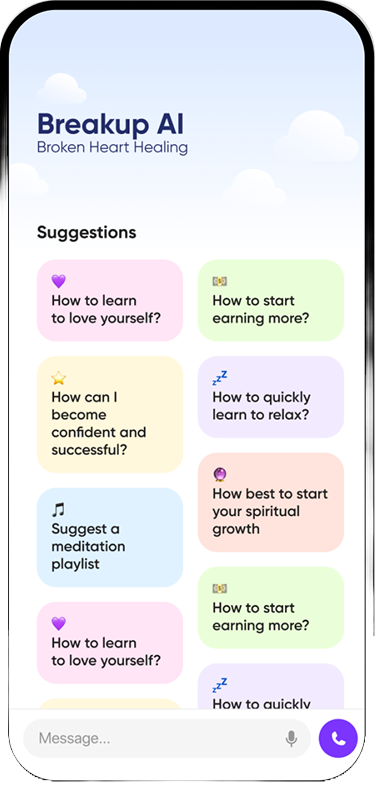
Breaking codependency is the core of heartbreak recovery: calm your body, interrupt rescue loops, set kind boundaries, and rebuild identity. Use science-backed tools—breathwork, mindfulness, movement, CBT, and support—to rewire patterns with compassion. Your love can be tender and self-honoring. Bold step by bold step, you’re doing it. Want guided structure and 24/7 support? Try Breakup.one: https://breakup.one/
References
- Mayo Clinic — Broken heart syndrome
- American Psychological Association — Grief
- Harvard Health Publishing — Rumination: why we do it and how to stop
- Harvard Health Publishing — Relaxation techniques: breath control
- NCCIH (NIH) — Mindfulness meditation
- CDC — Sleep statistics
- World Health Organization — Physical activity
- NIH News in Health — Caring Connections
- Mayo Clinic — Cognitive Behavioral Therapy (CBT)