



Table of Contents
- Introduction
- The neuroscience of love, loss, and that “I can’t stop thinking about them” loop
- Attachment patterns: when your early templates amplify the pull
- Stress physiology: your body keeps the score after a breakup
- Why your mind replays everything at 2 a.m.
- Social loss is grief: you’re not “overreacting”
- The sunk-cost trap: when time invested makes you hold tighter
- How to begin letting go of an ex (and why these steps work)
- Case notes from the field: Jas’s quiet rebuild
- What to remember on the hardest nights
- Two small experiments to try this week
- When you’re ready to loosen your grip even more
- Summary and Call to Action
- The Bottom Line
- References
Key Takeaways
- Heartbreak activates reward, attachment, and stress systems—making longing and intrusive thoughts biologically predictable.
- Intermittent contact and social media “checks” create variable rewards that intensify cravings.
- Regulating your nervous system (sleep, movement, breath) steadies emotions and attention.
- Clear boundaries, mindful pauses, and daily structure reduce rumination and restore agency.
- Grief is a valid response to social loss; connection and, if needed, therapy speed recovery.
Introduction
At 2:13 a.m., you scroll past the photos you promised you’d tuck away for good. That familiar ache settles beneath the ribs—heavy, exacting—until your thoughts loop and fray. You tell yourself it’s time. Your body doesn’t follow. If letting go feels impossible, it isn’t a character defect; it’s biology meeting biography. The reasons are layered—neural, psychological, social—and when you see the pattern, your breath loosens a bit.
What makes letting go of an ex so hard?
When Maya, 28, finalized her divorce, she found herself replaying the light-soaked reel of their best days, even as the facts told a harder story. “I felt like a rational adult trapped in a teenager’s brain,” she told me over tea in late autumn. If this sounds familiar, it’s not a failure of will. Love reshapes the brain’s reward circuitry; early attachment templates prime your nervous system; and once a central figure is gone, stress biology scrambles the rest.
- Your brain in heartbreak leans toward craving and reward-seeking
- Your attachment system reads separation as a threat to safety
- Stress hormones keep you wired, watchful, and short on sleep
- Rumination narrows attention to what hurts most
- Grief is a valid response to social loss
- Cultural scripts and sunk-cost logic knot the exit
Let’s walk through the science of why release feels sticky—and the practices that actually help you loosen the grip, rather then tighten it.
The neuroscience of love, loss, and that “I can’t stop thinking about them” loop
Falling in love lights up the brain’s reward circuit, the same motivation machinery that cues a dopamine lift when we anticipate something good. As the National Institute on Drug Abuse has explained, dopamine reinforces pleasurable behavior; we’re built to repeat what soothes or excites. When a relationship ends, your brain doesn’t update its software overnight. It still expects the text, the laugh, the scent on a hoodie. Without the expected signal, agitation and craving can feel eerily like withdrawal.
“Your brain learned that this person equals safety, comfort, relief. Removing that signal doesn’t register as neutral—it lands as loss in the body. Cravings and intrusive memories are the brain’s best attempts to restore equilibrium. It’s inelegant, but adaptive.”
— Dr. Ava Martinez, Clinical Psychologist
This is why intermittent contact—checking their feed, trading the late-night “I miss you,” agreeing to occasional intimacy—stretches the ache. Unpredictable rewards form stubborn habit loops. Variable reinforcement is a powerful driver of persistence; the more you check, the more your brain scans for a hit.
Maya’s turning point came when she sketched a personal “dopamine map”: late-night scrolling, a playlist, the café he favored. She trimmed exposure. The hurt didn’t vanish, but the spikes softened—much like when you stop walking past a bakery every evening. You’re not evading feeling; you’re redefining the cues that flood the system.
Attachment patterns: when your early templates amplify the pull
Attachment theory offers a lens on why some goodbyes feel like cliff edges while others feel like steady paths. If you lean anxious-preoccupied, you may fixate on signs of rejection, scroll for reassurance, or reread threads to self-soothe. If you tilt avoidant, you might cut contact fast, declare you’re “over it,” then feel blindsided by longing the next empty Sunday.
“Breakups activate the attachment system, an ancient design to keep us close to caregivers. A nervous system tuned by unpredictable care will flag separation as danger more loudly. The task isn’t to judge your style; it’s to learn to regulate it.”
— Dr. Thomas Reid, LMFT
Styles aren’t destiny, but they do shape recovery. Anxious partners often benefit from firm containers—clear boundaries, scheduled support, co-regulation with safe people. Avoidant partners may need gentle exposure to vulnerability and community so repair doesn’t happen in isolation. My view: naming your pattern can be an act of compassion, not a label.
Stress physiology: your body keeps the score after a breakup
The stress response is not a thought. It’s a cascade. As Harvard Health has noted, adrenaline and cortisol mobilize the body to confront threat; chronic activation erodes sleep, mood, and immunity. After a breakup, readers describe heart palpitations, stomach pain, insomnia that lasts until the birds. In rare cases, stress alone can even trigger “broken heart syndrome” (stress cardiomyopathy), documented by Mayo Clinic.
Sleep is a quiet amplifier. The CDC advises adults to aim for seven or more hours; short sleep is linked to lower mood and poor decision-making. If you’re snagging five broken hours and crying at the sight of a lone toothbrush, that’s not just heartbreak—it’s physiology catching up with you.
Why your mind replays everything at 2 a.m.
Rumination—mental rehashing of what went wrong—wears a mask of productivity. If you turn it over enough, you’ll solve it. That’s the bargain. In truth, rumination deepens the groove of distress. Your brain is trying to predict and prevent future pain; vigilance hijacks presence. Once your nervous system is on alert, attention skews toward threat cues: their ringtone in a crowded room, a car in their color on your street. Telling yourself not to think about them is the classic pink-elephant trap.
Nostalgia muddies the water, too. Emotionally intense memories are sticky. When we’re hurting, the mind sands some rough edges off the past. The way through is the “both/and”—hold what was good and what made staying impossible. It’s harder. It’s more honest.
Social loss is grief: you’re not “overreacting”
Grief is a human response to loss, not a diagnosis. The American Psychological Association underscores that most people adapt with time and support, though a subset experience prolonged grief that hobbles daily life. While that diagnosis sits in the context of bereavement, it clarifies a point I’ll stand by: losing a primary attachment can unmake a day, a week, a season.
Culture complicates this. Well-meaning friends nudge: “Just get back out there,” or “It wasn’t meant to be.” That skips the texture of what was lost—routines, micro-rituals, perhaps a home, and certainly a shared future. These are not small goodbyes.
The sunk-cost trap: when time invested makes you hold tighter
Economists call it the sunk-cost fallacy: we cling to what we’ve poured time, money, or hope into—because the investment itself feels sacred. In love, it sounds like, “But it’s been six years,” or “I can’t throw away our history.” I understand the instinct. The pivot is to ask about future value, not past investment. Will the next season of your life—your health, capacity for joy, growth—be better if you stay, or if you end this chapter? Clarity rarely arrives at 2 a.m. over a camera roll. It comes at 10 a.m., with sunlight, after a walk.
How to begin letting go of an ex (and why these steps work)
You don’t need a marathon plan. You need a short list that works with your biology.
-
Remove variable rewards that keep the habit loop alive
Why it works: Reward circuits learn from cues. Each “maybe they posted” check is a pull on the lever. Fewer cues mean fewer cravings. Research from NIDA on reward pathways shows that cues linked to past rewards can trigger dopamine surges and prompt seeking behavior.
How to try it: Mute, unfollow, or block for a defined period. Store photos and gifts in a sealed box, out of sight. Change your lock screen; alter routes that pass familiar haunts. Draft a contact contract (for example, 60 days no contact) and share it with one trusted friend who can spot you when resolve is thin.
Pro Tip: Use app timers or site blockers to cap social media checks, and move tempting apps off your home screen for at least 30 days. -
Rebuild a regulated nervous system
Why it works: A steadier body supports a clearer mind. Chronic stress keeps attention locked on threat—“Are they thinking of me?”—instead of connection and creativity. Harvard Health outlines how persistent stress degrades mood and cognition.
How to try it: Protect a consistent sleep window. Use a low-tech wind-down. Get morning light; add 10 minutes of brisk walking. Keep caffeine earlier in the day. If panic rises, try paced breathing (inhale 4, exhale 6) or the 5-4-3-2-1 grounding practice to return to the present.
-
Practice mindfulness to ride craving waves
Why it works: Mindfulness inserts a pause between urge and action. “I must text” shifts to “I’m noticing an urge to reach out.” Mayo Clinic’s guidance on mindfulness highlights its role in emotional regulation and stress reduction.
How to try it: When the urge spikes, label it: “Craving is here.” Set a 10-minute timer. Place your phone in another room. Breathe. Urges crest and fall like waves; most lose force if you wait a little.
-
Activate your days on purpose
Why it works: Rumination loves blank space. Behavioral activation—planning small, meaningful actions—has robust support in psychotherapy to lift low mood and counter avoidance.
How to try it: Each night, list three manageable actions for tomorrow: one for the body (stretch, walk), one for the mind (read, class, podcast), one for bonding (call a friend, volunteer hour). Keep them small enough to complete.
-
Reconnect with safe people
Why it works: Humans regulate each other. Social isolation burdens health; connection buffers stress. The National Institute on Aging has written about the health costs of isolation and the protective effects of connection. I’d add: healing accelerates in good company.
How to try it: Tell one person the unvarnished story—no minimizing. Ask a friend for a weekly walk. Consider a grief circle or breakup group. Borrow steadier nervous systems while yours recalibrates.
-
Write the honest, whole story
Why it works: Coherent narrative helps the brain file what happened and softens intrusive replay. Naming both the grace and the harm lowers the charge and reduces all-or-nothing thinking.
How to try it: Write two letters you won’t send: one on what you cherished, one on what you could not keep living with. Then write a letter from your one-year-future self, describing how you moved through this season with care.
-
Get professional support if you’re stuck
Why it works: Therapy tailors strategies to your patterns—CBT for rumination, trauma-informed care if the breakup reopened old wounds, and structured support if grief is prolonged or impairing.
How to try it: If after several months you can’t function at work or school, can’t sleep, or feel hopeless most days, it’s time to involve a professional. You deserve care that matches the moment.
Case notes from the field: Jas’s quiet rebuild
Jas, 31, ended a two-year on–off relationship that felt like home and a storm. She set a no-contact contract, adjusted her morning route to avoid his café, and texted two friends whenever the urge to reach out flared. She replaced compulsive late-night scrolling with a 20-minute walk at dusk and a favorite storytelling podcast. She also began trauma-informed therapy to understand why intermittent attention felt indispensable.
Week two, cravings peaked. By week four, sleep returned to a humane rhythm. By week eight, she walked past the café without the chest clamp. She still missed him. But she was missing him from a steadier shore. Letting go didn’t mean she cared less; it meant she stopped leaving herself behind.
What to remember on the hardest nights
- You’re not failing because you still cry. You’re grieving.
- Your brain is stepping down from a love-shaped habit loop.
- Boundaries aren’t punishment; they’re rehab for a raw nervous system.
- Missing them is not the same as needing to go back.
- You can honor who they were and still choose what you need now.
Two small experiments to try this week
- The 24-hour pause: If you want to text, draft it in Notes. Sleep on it. Revisit in 24 hours. Most people find the heat cools considerably once the body resets.
- The “five people” plan: Identify five humans you can rotate for connection—friend, sibling, colleague for a lunch walk, therapist, small group. When you want to reach for your ex, reach for one of the five.
When you’re ready to loosen your grip even more
Letting go of an ex isn’t pretending they never mattered. It’s reclaiming the room inside you that a past life still occupies. It’s allowed to feel both breaking and hopeful. The science is clear: brains and bodies adapt; with steady repetition, the heart relearns that it is safe to love again—first, and enduringly, to love you.
If tonight is another 2 a.m., choose the smallest move: mute the feed, breathe for one minute, write three lines, message someone on your “five people” list. Pages turn this way—line by line. One morning soon, the light will land differently and your nights will feel less haunted. Letting go rarely sounds like a slammed door. More like a window opening to new air.
Image alt: woman sitting on a bed at dawn, soft light on her face, journaling about letting go of an ex
“People don’t heal just because days pass; they heal because they practice new, kinder patterns until the brain and body trust them. Letting go isn’t erasing love. It’s choosing your aliveness.”
— Dr. Ava Martinez, Clinical Psychologist
Summary and Call to Action
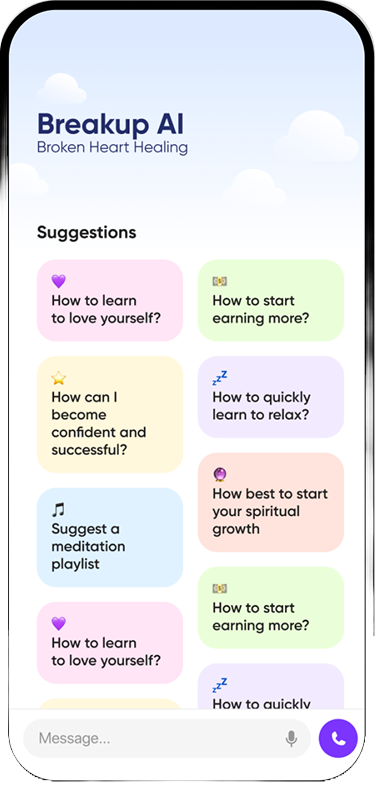
If you can’t stop replaying the past, it isn’t weakness—it’s how reward, attachment, and stress systems work. With clean boundaries, nervous-system care, and the right people, longing eases and attention returns to your life. If you want steady, day-and-night support, consider Breakup.one—an AI-powered heartbreak recovery companion with guided programs and gentle check-ins. https://breakup.one/
The Bottom Line
You’re not broken—you’re human. Heartbreak pulls ancient systems into overdrive, but with boundaries, regulation, mindful pauses, and community, your brain and body recalibrate. Start with one small step today; consistency turns relief into a new baseline.
References
- National Institute on Drug Abuse (NIDA) – The Reward Circuit: How the Brain Responds to Natural Rewards and Drugs
- Harvard Health Publishing – Understanding the stress response
- Mayo Clinic – Broken heart syndrome (Takotsubo cardiomyopathy)
- Centers for Disease Control and Prevention (CDC) – How Much Sleep Do I Need?
- American Psychological Association (APA) – Grief
- American Psychological Association (APA) – Prolonged Grief Disorder
- National Institute of Mental Health (NIMH) – Psychotherapies
- National Institute on Aging (NIA) – Loneliness and Social Isolation