



Table of Contents
- Introduction
- Why attachment styles matter when your heart is breaking
- Expert voice, human tone
- How to use attachment styles for heartbreak recovery: start here
- Anxious attachment: soothe the alarm without chasing the fire
- Avoidant attachment: feel safely, connect wisely
- Disorganized (fearful-avoidant): stabilize, then explore
- Secure attachment: grieve fully, integrate gently
- How to use attachment styles for heartbreak recovery in your routine
- When to seek more support
- Two tough myths to release
- From knowing to becoming: building earned security
- A simple 4R framework to practice
- Case mosaic
- If this sounds like you
- What recovery can feel like
- The next brave step
- Closing note
- Summary and CTA
- The Bottom Line
- References
Key Takeaways
- Heartbreak magnifies attachment patterns; knowing yours helps you calm your stress response and heal intentionally.
- Personalized strategies for anxious, avoidant, disorganized, and secure styles are more effective than one-size-fits-all advice.
- Consistent routines, supportive relationships, movement, mindfulness, and sleep restore a sense of safety.
- Boundaries (like no contact) are not punishment; they regulate your nervous system and speed recovery.
- With practice, you can build “earned secure” attachment through self-soothing, clear limits, and safe connection.
Introduction
At 2:17 a.m., the texts on your phone glow like a portal back to the life you just lost. You scroll, pause, reread. The same ache floods in — chest tight, mind racing, sleep nowhere in sight. If you’re here, you want more than platitudes. You want a map. This is where learning how to use attachment styles for heartbreak recovery can change the game, turning raw pain into a deeply personal pathway back to steadiness. I’ve seen it in readers’ emails, in interviews, and in my own notes from the bad year I thought would never end.
Why attachment styles matter when your heart is breaking
Attachment theory isn’t just psych vocabulary. It’s a blueprint for how you bond, seek closeness, protect yourself, and soothe when connection feels threatened. The American Psychological Association defines attachment style as the characteristic manner of relating to others based on early caregiving experiences — patterns that often resurface under stress and loss. When heartbreak hits, those patterns don’t whisper; they amplify. Anxious attachment may spiral into protest and reassurance-seeking; avoidant attachment may shut down or minimize; disorganized attachment may ping-pong between craving closeness and fearing it. Even a secure style can get rattled by grief’s sheer force.
Heartbreak is a stress event. The National Institute of Mental Health has long noted how stress flips the body’s alarm system — cortisol spikes, heart rate jumps, sleep derails, and your mind leans toward threat. Add the loneliness that can follow a breakup, and it’s a health story too: the National Institute on Aging has linked social isolation and loneliness to higher risks of depression and even physical illness, including increased rates of heart disease and stroke. In my view, we talk too little about that part — the physiology — then ask ourselves to “just move on.”
Understanding your attachment style gives you a way to calm the threat response, rebuild healthy connection, and recover on purpose. Back in 2021, The Guardian reported on the “loneliness epidemic” that grew through the pandemic; the numbers were sobering, but the real takeaway was simpler: humans need safe others and predictable care.
Expert voice, human tone
“Attachment isn’t a label; it’s a language. When you learn yours, you finally know how to answer your nervous system when it’s screaming. That’s the heart of healing after a breakup.”
— Dr. Lina Park, Clinical Psychologist
I agree — if a reader takes one idea from this piece, let it be that.
“The goal isn’t to ‘fix’ your style. It’s to work with it — to meet its needs without letting it run the show.”
— Javier Ortiz, LMFT
That nuance saves people months of self-blame.
How to use attachment styles for heartbreak recovery: start here
You don’t need a formal test to begin. Notice your first reactions:
- Anxious attachment: Do you obsess over their last message, feel panicky about being alone, crave constant reassurance?
- Avoidant attachment: Do you numb out, keep busy, downplay the loss, or feel smothered by others’ concern?
- Disorganized (fearful-avoidant): Do you swing between intense longing and fear of being hurt again, struggling to trust your own feelings?
- Secure attachment: Do you feel deep grief but also a stable sense that you’ll be okay, while still needing support?
Knowing this helps you personalize your care. Here’s why it works: attachment needs are fundamentally about safety. When you meet safety needs directly — through soothing, boundaries, or healthy connection — your stress response quiets. From that calmer place, choices feel clearer and healing accelerates. My take: personalization beats any one-size-fits-all list every single time.
Case study: When Maya, 28, went through her divorce, her anxious attachment flared. She checked her phone 60 times a day and barely slept. Once she learned how to use attachment styles for heartbreak recovery, she shifted: set a 30-day contact boundary, created a “safe-people” text thread for warm check-ins, practiced a five-minute breath routine before bed, and scheduled two therapy sessions. Her sleep returned to roughly seven hours within two weeks; the panicky spikes softened. The plan wasn’t fancy. It was consistent.
Anxious attachment: soothe the alarm without chasing the fire
Why it hurts this way: Anxious attachment leans hypervigilant about signs of abandonment. Heartbreak can feel like a siren — urgent, all-consuming. The brain hunts for reassurance, which soothes briefly but often intensifies looping thoughts later. I’ve heard dozens of variations on the same sentence: “If I could just get one more text…” It rarely helps.
What helps and why:
- Containment before contact. Boundaries (like a no-contact window or planned communication) reduce the constant “threat scanning” that fuels anxiety. Structured coping helps reset your system, according to guidance from the National Institute of Mental Health.
- Co-regulate with safe others. The National Institute on Aging highlights how social connection protects both physical and emotional health.
- Body-first calming. Mindfulness-based practices can reduce anxiety and stress reactivity; Harvard Health has summarized the evidence for years.
How to do it:
- Create a Reassurance Plan: Before the urge to text your ex hits, list three people you can message for grounding, plus a short script you can send yourself: “This urge is a wave. I can ride it.”
- Set Contact Boundaries: Try 30 days of no contact, or communicate only about logistics at specific times. Put it in your calendar to reduce impulsive checking.
- Anchor Your Nights: Aim for seven or more hours of sleep, which the CDC says most adults need for healthy functioning. Build a 20-minute wind-down with dim lights and gentle breathing.
- Reclaim Agency Mornings: Start your day with a ten-minute walk or gentle yoga. The WHO recommends 150 minutes of moderate activity weekly for health; even short bouts support mood regulation. In my experience, mornings shape everything that follows.
Avoidant attachment: feel safely, connect wisely
Why it hurts this way: Avoidant attachment protects by minimizing needs and emotions. Breakups can spark a retreat into work, isolation, or casual distractions. Short term, it’s relief. Long term, it can stall processing and deepen loneliness. I’ll say it plainly: stoicism is not the same as resilience.
What helps and why:
- Gentle exposure to feelings. Titrated emotional contact teaches the nervous system that pain is survivable.
- Planned, low-pressure connection. Secure relationships buffer the health impacts of isolation.
- Practical structure. Rituals lower cognitive load, freeing energy for healing.
How to do it:
- Two Windows a Day: Spend ten minutes in the evening naming sensations and emotions: “I feel tightness in my throat; the word is sadness.” Then a ten-minute writing window: if it’s too much, list facts about your day. Build tolerance gradually.
- Connection Appointments: Schedule one weekly coffee with a trusted friend or relative. Keep it time-limited and agenda-free.
- “Finish Lines,” Not Distractions: Choose one physical task per day you fully complete (laundry folded, desk cleared). Completion restores a sense of efficacy, which calms a threat-biased brain.
Mini case: Kiara, 32, had avoidant attachment. After her breakup, she worked late and said she was “fine.” She set a quiet ritual: ten-minute body scan, Tuesday coffees with her cousin, and one weekly therapy session. The structured, low-intensity connection helped her notice sadness without drowning in it. Within a month, she reached out to two close friends she’d been avoiding — a major turning point. Progress looked ordinary, then everything shifted.
Disorganized (fearful-avoidant): stabilize, then explore
Why it hurts this way: Disorganized attachment often forms when the source of comfort is also a source of fear. After heartbreak, you might long for closeness and also fear it, toggling between anxious pursuit and avoidant shutdown. This push-pull is exhausting. In interviews, people use the same phrase again and again: “I don’t trust my own signals.” That confusion deserves care, not criticism.
What helps and why:
- Safety first, always. Consistent routines signal predictability to your nervous system.
- Trauma-informed support. If your history includes trauma or chaotic relationships, a skilled therapist can help you widen your window of tolerance and build secure internal anchors.
- Dual attention techniques. Mindfulness and grounding keep one foot in the present while you touch into feelings.
How to do it:
- Daily Stabilizers: Choose three anchors at the same time each day — hydrate on waking, morning sunlight for five minutes, and an evening body check-in. Predictability reduces physiological reactivity.
- Secure Base Script: Write a note you can read when you swing between extremes: “Both longing and protectiveness are parts of me. I can move slowly.” Place it by your bed or mirror.
- Professional Support: If you experience severe or prolonged distress, seek therapy. Mayo Clinic describes complicated grief as intense, long-lasting grief that disrupts daily life; getting help can prevent it from becoming entrenched. The APA also offers guidance on coping with loss and finding support. My bias here is clear: if you’re wavering on reaching out, err on the side of care.
“For fearful-avoidant patterns, we don’t force closeness or independence. We build a safe middle — little sips of connection, little sips of solitude — until your system trusts you to handle more.”
— Dr. Amara Singh, Psychiatrist
Secure attachment: grieve fully, integrate gently
Why it still hurts: Securely attached people are not immune to heartbreak. You likely feel deep sadness and loss, but you also have a stable inner voice that says, This will not break me. Your task is to let yourself grieve without bypassing it. Maturity isn’t a shortcut; it’s a container.
What helps and why:
- Community and routine. Leaning on friends and structure helps the brain re-learn safety cues after acute stress.
- Values-driven action. Aligning with what matters (kindness, growth, courage) restores meaning faster than chasing closure — which, in my opinion, is overrated.
How to do it:
- Ritualize Goodbye: Write a letter you won’t send. Include gratitude, truth, and what you release. Then mark the transition — a walk, a candle, a playlist.
- Choose One Growth Track: A skill class, volunteering, or creative project that excites you. Meaning-making is a proven buffer during recovery.
- Rejoin Life Boldly: Say yes to invitations you would’ve postponed. Accept that joy and grief can coexist.
How to use attachment styles for heartbreak recovery in your routine
Think of this as your personalized recovery studio — a flexible, living practice. Not a checklist; a cadence.
Morning reset
- Movement: 10–20 minutes to reduce stress hormones and steady mood. The WHO recommends 150 minutes of moderate activity per week; broken into daily bites, it’s doable and effective.
- Sunlight + Hydration: Two minutes of light at a window or outside, a full glass of water. Small predictable acts signal safety to your brain.
- Micro-intention: “Today, I will answer my attachment needs with kindness.” Simple, and surprisingly potent.
Midday check-in
- Body scan pause: 90 seconds to notice breath, shoulders, jaw. If anxious, slow your exhales. If avoidant, place a hand on your heart and name one feeling. If disorganized, orient to the room: three colors you see, three sounds you hear. Mindfulness practices help lower anxiety and mental stress — and they travel with you.
Evening care
- Contact boundaries: Stick to your plan with your ex. You are teaching your nervous system that you can survive waves.
- Social nourishment: Text a safe person one honest line: “Today was heavy; thanks for being on my team.” Connection buffers the health risks of isolation.
- Sleep support: Create a tech-free wind-down 30–60 minutes before bed. Most adults need at least seven hours; consistent sleep stabilizes mood and cognitive control. Sleep is not vanity, it’s medicine.
When to seek more support
If you’re experiencing continuous, intense symptoms — profound yearning, inability to function at work or school, isolation that’s worsening, or thoughts of self-harm — it’s time for professional care. Mayo Clinic outlines complicated grief symptoms and treatment options, and the APA provides resources on navigating grief and finding a psychologist. Getting help is not a failure of strength; it’s an act of protection. I know it can feel like you should handle this alone. You shouldn’t.
Two tough myths to release
- “My attachment style is who I am.” It’s a pattern you learned to stay safe, not your identity. With practice, people become more secure over time. Believing otherwise becomes a self-fulfilling story.
- “No contact means I’m punishing them.” Contact boundaries are about healing your nervous system, not retribution. Boundaries are a kindness — to both parties, eventually.
From knowing to becoming: building earned security
“Earned secure” means you progressively respond to your own needs in secure ways — clear boundaries, self-soothing, and reaching for trustworthy support — even if you didn’t start out secure. That’s the long arc of how to use attachment styles for heartbreak recovery: less about changing who you are, more about resourcing who you are. In 2019, a Harvard developmental study noted how supportive relationships at any life stage can shift trajectories. That’s hopeful — and, to me, the point.
A simple 4R framework to practice
- Recognize: Name your trigger and attachment pull: “I want to text because my abandonment alarm is on.”
- Regulate: Choose one body-based or mindfulness tool for 2–5 minutes. Evidence-backed relaxation strategies reduce stress reactivity.
- Relate: Connect with a safe person, journal, or your therapist. Connection counters isolation’s health risks.
- Re-choose: Decide your next right action from your values, not your panic. Discipline with warmth beats willpower alone.
Case mosaic
- Anisa, 25, anxious: She scheduled nightly calls with her sister for two weeks, unfollowed her ex, and used a “urge surf” timer for ten minutes whenever she wanted to reach out. By week three, the surges shortened.
- Theo, 30, avoidant: He set a five-minute feelings check after lunch and joined a weekend hiking group. Minimal intensity, maximum consistency.
- Noor, 26, disorganized: She worked with a therapist, kept a daily “both/and” log (“I miss them AND I’m safer now”), and practiced grounding before and after any memory work. Her swings softened, and she began to trust her own pace.
If this sounds like you
You might be tired of being told to “stay busy” or “just move on.” You deserve something kinder and smarter. Learning your attachment patterns doesn’t excuse anyone’s behavior and it doesn’t promise an easy road. What it does promise is companionship with your own nervous system — a way to meet the ache with skill, to choose connection that doesn’t cost you your peace, and to recover in a way that feels like you. It’s hard to believe it’s over; your body thinks it’s still in danger. That mismatch is temporary.
What recovery can feel like
- Not texting back instantly — and noticing your chest soften anyway.
- Crying after a good day — and letting that be okay.
- Reaching for friends not as a distraction but as nourishment.
- Feeling curiosity again, even a small spark.
- Saying, I can’t control the past, but I can care for myself now. Which is more then enough for today.
The next brave step
Attached doesn’t mean stuck. Heartbroken doesn’t mean broken. Using attachment styles for heartbreak recovery is a way to respect how you learned to love while building how you want to love next — with steadier breath, kinder boundaries, and a circle of support that actually holds.
And if tonight is another 2:17 a.m., remember this: your patterns are not in charge. You are. One breath, one boundary, one brave reach at a time.
Closing note
How to use attachment styles for heartbreak recovery is not a trick — it’s a practice. Start with one small, compassionate experiment today. Each time you answer your attachment needs with care, you stitch a stronger safety net inside you. That’s how healing becomes who you are.
Summary and CTA
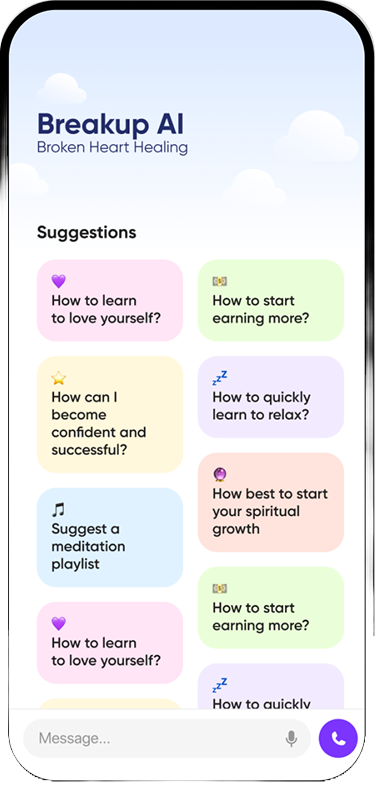
Heartbreak jolts your stress system and magnifies attachment patterns. When you understand anxious, avoidant, disorganized, or secure tendencies, you can soothe your body, set contact boundaries, and seek the right support. Movement, mindfulness, sleep, and community restore safety. Practice small, consistent steps toward earned security. For round-the-clock guidance, try Breakup.one — an AI heartbreak companion with 24/7 support and science-based healing programs: https://breakup.one/
The Bottom Line
Your attachment style isn’t a flaw to fix; it’s a roadmap to care. Meet your nervous system with calm routines, compassionate boundaries, and safe connection. Healing happens in small, steady steps — and you’re already on the path.
References
- American Psychological Association — Attachment style (APA Dictionary)
- National Institute of Mental Health — Stress: Coping with Everyday Problems
- National Institute on Aging (NIH) — Social isolation and loneliness: Understanding the health risks
- Centers for Disease Control and Prevention — How Much Sleep Do I Need?
- World Health Organization — Physical activity
- Harvard Health Publishing — Mindfulness meditation may ease anxiety and mental stress
- Mayo Clinic — Complicated grief
- American Psychological Association — Grief: Coping with the loss of your loved one