



Introduction
It starts small, almost polite—a whisper: What if I just check their stories? One thumb-flick later, you see they liked a meme. An old playlist surfaces, a song you shared on a rain-smeared night. Then the cursor blinks in the message box and your ribs start humming. You tell yourself it’s for “closure,” or a harmless “How are you?” You know it isn’t. It’s about release, recognition, and the hard work of letting go of an ex—and the version of you who loved them.
I’ve sat there more then once, watching the “typing…” bubble appear and vanish at 12:11 a.m., bargaining with myself. That urge to reach out isn’t a moral failure. It’s a highly human response to separation. In my view, naming that truth is the first humane step—self-compassion over self-scolding usually moves the needle faster.
Table of Contents
- Introduction
- Why Your Brain Keeps Reaching for Your Phone
- The Loop That Makes Healing Slower
- The Science Behind Letting Go of an Ex
- How to Stop Texting Your Ex: Practices for Letting Go of an Ex Without Losing Yourself
- What Your Feelings Are Trying to Say
- Reclaiming Your Story After the Last Text
- A New Kind of Intimacy
- The Bottom Line
- References
Key Takeaways
- The urge to text an ex is a normal, brain-based response to pain, reward seeking, and attachment.
- No contact (or structured low contact) reduces triggers, supports emotion regulation, and speeds healing.
- Simple tools—delay the send, urge surfing, sleep, movement, and accountability—are highly effective.
- Feelings are messengers; meet them with care and alternatives that bring safety and soothing.
- Consistent small actions rebuild self-trust and make space for a life that’s steadily your own.
Why Your Brain Keeps Reaching for Your Phone
A breakup lands like a social injury. Neuroscientists have shown that social rejection activates brain regions tied to physical pain—no wonder your chest aches, your throat tightens. The American Psychological Association has written about this overlap; it helps explain why heartbreak feels like it lives in the body, not just the mind. Mayo Clinic has even cataloged a stress cardiomyopathy nicknamed “broken heart syndrome,” a reminder that loss isn’t abstract.
There’s the reward system, too. Romantic love lights up dopamine circuits—the same motivation-and-reward pathways behind habits and cravings. After a split, your brain still anticipates the “hit” of closeness you used to get from that person. One new text can act like a tiny relief dose, a jolt that quiets panic for a minute and teaches your brain to chase the next one. The National Institute on Drug Abuse has mapped this pattern for years; it’s not drama, it’s wiring.
“People think they’re weak for wanting to text, but the brain is doing what it’s designed to do—reduce distress and seek what once felt rewarding. That doesn’t mean you should text. It means you need better ways to deactivate the alarm.”
— Asha Patel, PhD, Clinical Psychologist
Attachment complicates things further. If your nervous system learned to settle in their presence—even in a complicated relationship—separation can feel unsafe. Cue the bargaining: If I just send one message, I’ll stop thinking about them. This is how we end up comforting the anxiety, not healing it.
The Loop That Makes Healing Slower
The pattern is wearyingly familiar: you text, you get a breadcrumb, you rise for an hour… and then the drop is worse. Under the surface:
- Rumination. After a breakup, the mind loops: What went wrong? Could I have fixed it? Harvard Health noted in 2021 that rumination fuels anxiety and a low mood; fresh contact keeps the story alive instead of letting memory soften around the edges. My bias: rumination is grief trying to do a job without enough sunlight.
- Intermittent reinforcement. Unpredictable responses—sometimes a reply, sometimes silence—are psychological flypaper. The same principle keeps slot machines buzzing. NIDA’s science on variable rewards is clear: uncertainty is sticky.
- Grief interference. Grief is a healthy process with a tempo of its own. Reopening the connection over and over can trap you between hope and despair, prolonging acute pain, as the APA’s grief guidance suggests.
When Maya, 28, went through her divorce, she kept texting her ex-husband “for logistics.” Three months later, the logistics were done but the messages weren’t. “Every time he replied, I felt calm for an hour,” she told me. “By morning, I felt hollow and embarrassed.” She put a compassionate no-contact rule in place; within a few weeks the hollow feeling thinned to something steadier. The Guardian reported in 2020 on the late-night check-in habit after breakups; it’s common, but that doesn’t make it nourishing. Breadcrumbs aren’t nutrition—they’re bait.
The Science Behind Letting Go of an Ex
Letting go isn’t a slogan; it’s a nervous system strategy. No contact—or structured low contact if you share kids, a lease, or a workplace—is not punitive. It gives your brain enough quiet to rewire. In my experience, it’s the simplest merciful tool we have.
“Think of it like applying a splint. You’re stabilizing the injury so real healing can begin. Every reach-out is like jostling the sprain.”
— Luis Romero, LMFT
Why it works:
- Cue extinction. Without repeated triggers—seeing their name pop up, scanning their socials—the craving circuits dim over time, a process addiction researchers have documented for decades.
- Emotion regulation. Boundaries mute the rollercoaster of intermittent reinforcement, giving mood and sleep a chance to level—two pillars of resilience the CDC keeps pointing to.
- Grief integration. Space allows anger, sadness, and fear to move. Those feelings aren’t problems to fix; they’re data to integrate, as the APA’s grief materials emphasize.
Jess, 31, tried to stop texting her ex three times. What helped wasn’t more grit; it was a routine. She set a 24-hour delay on unsent messages, muted him, scheduled a 9 p.m. check-in with a friend—her danger hour—and joined a 30-day movement challenge. By week three, her first waking thought wasn’t him. It was whether to run by the river or the park. Small, boring changes—unsexy but wildly effective.
How to Stop Texting Your Ex: Practices for Letting Go of an Ex Without Losing Yourself
Before the “how,” here’s the “why”: your system needs safety, structure, and soothing. The aim isn’t to white-knuckle through cravings but to give your brain and body alternate routes to relief. I’m convinced that practicality beats pep talks here.
-
Create a clear no contact rule (or “low contact with rules”).
Why it works: It severs the cue → craving → texting loop so attachment can recalibrate.
How to do it: Decide what’s permitted (kid schedules via email only; 48-hour response lag) and what’s not (no late-night texts; no social media check-ins). Put it in writing—to yourself and, if appropriate, to them.
-
Delay the send.
Why it works: Cravings crest and fall like waves. Riding the wave for 10–20 minutes often reduces urgency enough to choose differently (a point NIDA’s research echoes).
How to do it: Draft the text in your notes app, set a 20-minute timer, and do a grounding practice. If you still want to send after the timer, read the message aloud. Your own voice can be a reality check.
Pro Tip: Add a 20–60 minute “Send Later” delay in your email or messaging app settings. Future-you gets a veto. -
Use “urge surfing.”
Why it works: Mindfulness helps you notice urges without obeying them; over time, they lose force (NCCIH has summarized this well).
How to do it: Describe the urge like weather: “There’s pressure behind my ribs; thoughts are stormy; I feel pulled.” Breathe for five slow rounds. Visualize the swell rising… then breaking.
-
Block, mute, and tidy the digital closet.
Why it works: Fewer cues, fewer cravings. Full stop.
How to do it: Mute their contact, hide or block on socials, archive threads, remove photo widgets. Strategic, not dramatic.
Pro Tip: Move social apps off your home screen or use app limits during your “danger hours.” Reduce friction to help new habits stick. -
Write but don’t send.
Why it works: Expressive writing moves emotion through and lowers rumination; Harvard Health has written on this repeatedly.
How to do it: Open a doc titled “Letters I Won’t Send.” Pour it out—rage, longing, apologies. Reread a week later. Notice what softened.
-
Recruit accountability.
Why it works: Social support buffers stress and boosts follow-through; the APA has long underscored this.
How to do it: Tell two friends your plan. Share your danger hours. Ask them to be your first text when the urge spikes.
-
Move your body, even a little.
Why it works: Physical activity modulates neurotransmitters and stress hormones, lifting mood (Harvard Health; WHO).
How to do it: Commit to 10 minutes a day for the next week. Walk around the block. Stretch to a short video. Do it at the time you’d usually scroll.
-
Protect your sleep like it’s sacred.
Why it works: Sleep loss amplifies emotional reactivity and cravings; 7+ hours improves regulation (CDC).
How to do it: Charge your phone across the room, set a wind-down alarm, go screen-free 30 minutes before bed. Boring often beats brilliant here.
-
Regulate your nervous system.
Why it works: Calming the body lowers the “I need them now” signal.
How to do it: Box breathing (inhale 4, hold 4, exhale 4, hold 4), splash cold water on your face, or place a warm pack on your sternum.
-
Create a “craving kit.”
Why it works: Idle hands find phones.
How to do it: Stock a small bag with tea, gum, a fidget ring, a soothing scent, and a short list of people to text instead.
-
Future-proof with scripts.
Why it works: Pre-deciding removes decision fatigue when an unexpected “hey” lands at 11:43 p.m.
How to do it: Draft responses like, “I’m focusing on healing and not available to text. Wishing you well.” Save it in Notes for easy paste.
-
If safety is a concern, make a plan.
Why it matters: If the relationship involved control, harassment, or abuse, limiting contact may be essential to safety. Reach out to local resources, a domestic violence hotline, or a trusted professional for tailored guidance. Your safety is nonnegotiable.
What Your Feelings Are Trying to Say
Letting go can stir an orchestra of feelings: panic, tenderness, fury, nostalgia, relief. Rather than arguing with them, listen for the message. My view: feelings are messengers; we suffer more when we shoot them.
- If you feel panic: Your body is saying, “I’m afraid of being alone.” Offer companionship—call a friend, journal by candlelight, put on a piece of music that holds you in place.
- If you feel anger: Your body is saying, “A boundary was crossed.” Channel it into motion, a voice memo, or a boundary you’ll now honor with care.
- If you feel nostalgia: Your body is saying, “I miss being seen.” Seek small, safe doses of eye contact—chat with the barista, walk with a neighbor, eat dinner with your sister.
You’re not craving them so much as the states they once ushered in: steadiness, belonging, sparkle. Those states still exist—just through different doors.
Reclaiming Your Story After the Last Text
There’s a version of you on the far side of this who doesn’t check a phone at red lights, who sleeps through the night, who remembers what she likes for breakfast without measuring it against someone else’s tastes. To meet her, practice tiny acts of self-loyalty daily. I’ve seen it again and again in reporting and in my own life: small acts done consistently change the weather.
Try this week-long reset for letting go of an ex:
- Day 1: Tell one trusted person your no-contact plan. Mute and archive.
- Day 2: Build your craving kit; write your unsent letter.
- Day 3: Move for 10 minutes; schedule two social dates for the next 10 days.
- Day 4: Create three response scripts and save them.
- Day 5: Do a 10-minute mindfulness practice on urges (as outlined by NCCIH).
- Day 6: Do a sleep audit—phone out of the bedroom, set a wind-down alarm (CDC guidance backs this).
- Day 7: Celebrate one win without texting anyone about it. Keep it just for you.
If you slip, it doesn’t erase the progress. It offers data about where the floor is slick. Adjust your plan and keep going.
A New Kind of Intimacy
The most intimate relationship you’ll ever cultivate is the one with yourself. Letting go of an ex isn’t simply stepping out of their orbit; it’s a quiet reorientation toward what steadies and expands you. If you “fail” and reach out, remember: your brain is learning. Each time you ride an urge instead of acting on it, you build trust with yourself. Every boundary you uphold is a note to your future: I’ve got you.
And one day, the energy you once spent composing messages you never sent will power something dazzlingly yours—a morning ritual, a new friendship, a skill you swore you had no time for, a quiet you thought you’d forfeited for good.
The Bottom Line
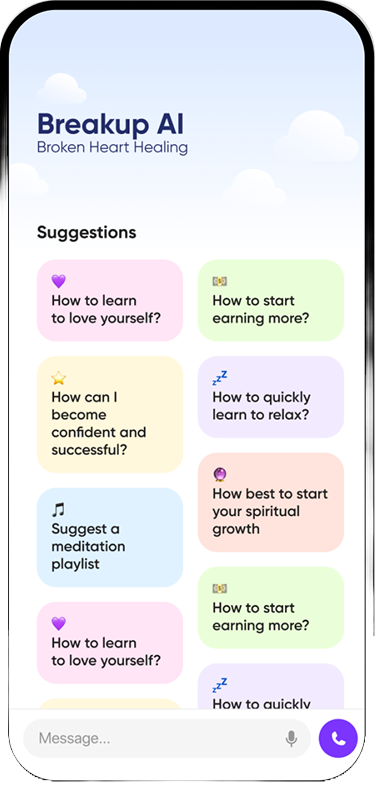
The urge to text an ex is not weakness—it’s your nervous system asking for relief. Create structure, reduce cues, and practice small, steady soothing. With time and support, the loop quiets and your life grows louder in the best ways. For round-the-clock support and tools, try Breakup.one — your AI heartbreak recovery companion: https://breakup.one/
Summary: The urge to text an ex is a normal, brain-based response to pain and craving. With boundaries, mindful delay, movement, sleep, and consistent support, you can retrain your brain and heart toward safety, dignity, and forward motion. Your future self is closer than it looks.
References
- American Psychological Association — Why rejection hurts so much
- American Psychological Association — Grief
- National Institute on Drug Abuse — Drugs, Brains, and Behavior: The Science of Addiction
- CDC — How Much Sleep Do I Need?
- World Health Organization — Physical activity
- Harvard Health Publishing — Exercise is an all-natural treatment to fight depression
- Harvard Health Publishing — Rumination
- National Center for Complementary and Integrative Health — Meditation and Mindfulness
- Mayo Clinic — Broken heart syndrome (takotsubo cardiomyopathy)