



Table of Contents
- Understanding Emotional Resilience
- The Science of Healing After Breakup
- Fostering Emotional Resilience
- Personal Stories of Resilience
- Moving Forward
- Your Next Steps to Healing
- The Bottom Line
Key Takeaways
- Emotional resilience is the ability to adapt and grow through heartache.
- Mindfulness practices can help process emotions during a breakup.
- Building new routines provides stability and fosters healing.
- Sharing your experiences with others can ease the loneliness of a breakup.
- Self-compassion is key to navigating feelings of inadequacy post-breakup.
Imagine this: it’s a breezy Saturday afternoon. You’re parked on your couch, enveloped by a silence that feels almost stifling. Not so long ago, this very space buzzed with laughter, echoing shared dreams, hopes. Yet now, it serves as a hollow reminder of someone who’s strangely absent. Breakups can feel crushing. But, could it be that buried within this heartache is a wellspring of strength? Find this inner resilience, and you’ve found your way to post-breakup healing—it’s a trek worth every step.
Take Maya, for instance. At 28, she found herself unexpectedly single, looking back on a seven-year marriage that had become her universe. Lost was an understatement.
“Everything felt upside down; my confidence was in tatters.”
— Maya, survivor of a breakup
But in this turmoil, Maya discovered something profound—an inner sturdiness she had never tapped into before. Emotional resilience, the magic ability to bounce back from life’s obstacles, is something we can nurture like a young plant. It can steer you to brighter days when everything seems bleak.
Understanding Emotional Resilience
Before indulging in the healing journey, what exactly is emotional resilience? In the words of Dr. Sarah Chen, a clinical psychologist at NYU:
“Emotional resilience isn’t about dodging pain; it’s about adapting and growing through it.”
— Dr. Sarah Chen, Clinical Psychologist
The American Psychological Association backs this, highlighting how resilient individuals manage to stay steady amidst storms, using flexible coping behaviors.
Building emotional resilience doesn’t mean brushing off your feelings like crumbs from a shirt. Rather, it’s akin to accepting your grief, and then moving—deliberately—through it. It’s a transformational journey, a sturdy foundation for healing once a relationship fades away.
The Science of Healing After Breakup
Heartbreak—it’s not just poetic, it’s scientific. Neuroscientific explorations have shown that ending a cherished relationship triggers the same brain areas as physical pain. Surprising, but perhaps it explains why breakups hurt so much (National Institutes of Health). Just like physical injury, mending requires time, attention, and active efforts.
Understanding grief psychology adds another layer to this recovery.
“Post-breakup grief can parallel classic grieving.”
— Dr. Emily Stone, Grief Counselor
“Your mind processes loss, but emotional resilience lets you navigate these waters without drowning.”
Fostering Emotional Resilience
- Mindful Acceptance
At resilience’s core? Accepting emotions without the filter of judgment. All feelings are valid, be it sadness, anger, or even relief. Recognizing these states kickstarts healing. Mindfulness practices such as meditation or simple breathing exercises can cradle these emotions, letting them exist without enslaving you.
Studies suggest mindfulness reduces rumination—a notorious hurdle during heartache—and fosters emotional regulation (Mayo Clinic).
Pro Tip: Dedicate just ten minutes a day to mindfulness meditation. Apps like Headspace offer guided paths to fostering self-awareness, serving as patient guides through this practice. - Community Connection
Battling isolation, Maya leaned into her support network and online communities for those recovering from breakups. Sharing experiences can melt away the chill of solitude. A CDC report notes that social support lessens stress, fortifying resilience through emotional and practical resources.
Pro Tip: Try joining forums or local meetups with fellow heartache navigators. Vulnerability, though daunting, plants seeds for connection—and for healing. - Building New Routines
New routines are as important as air. Losing a partner—uprooting daily habits—leaves a void; yet it’s a chance to create a life reflecting your true essence. A fresh routine offers security and structure in transition’s chaos.
The reason it helps? Routine can temper anxiety and foster control, APA asserts.
Pro Tip: Start small: A morning walk, a new hobby, a cooking class—any can reshape your surroundings in a positive light. - Harnessing Self-Compassion
Breakups can invite ruthless self-talk. However, Dr. Kristen Neff, renowned for her self-compassion research at the University of Texas, advises,
“Treat yourself as you would a cherished friend.”
— Dr. Kristen Neff, Self-Compassion Researcher
Acknowledging imperfection as human, not a singular flaw, is crucial.
Self-kindness shows improvements in anxiety and depression, a Journal of Clinical Psychology study notes.
Pro Tip: Replace self-critical murmurs with affirmations, reaffirming your innate worth.
Personal Stories of Resilience
Each recovery path is unique, yet shared stories illuminate the way. Consider James—after closing a tumultuous chapter, he poured himself into writing.
“It became my healing sanctuary,”
— James, writer and poet
he admits. His poetry collection proved cathartic, connecting him with others facing heartache.
Then there’s Leila, who embraced physical activity.
“Running was my refuge,”
— Leila, fitness enthusiast
she says. With it came clarity, thanks to endorphin release and fulfilled goals—that made all the difference.
Moving Forward
As you cultivate these strategies, you may notice gentle changes. Laughter resurfaces, cautiously. The shadowy past retreats, its grip loosening on the present. Healing’s path isn’t linear—it’s a mix of ebbs and flows, but patience is a friendly companion.
In pondering, “Will I ever love again?”—remember that as you build emotional resilience, your capacity for new beginnings flourishes. Pain turns into a transformative chapter within your personal growth narrative.
Your Next Steps to Healing
You’ve embraced your feelings, discovered empathetic communities, forged new trails, and treated yourself with warmth. Now, lean into these strengths, bit by bit.
Albert Einstein once mused,
“In the middle of difficulty lies opportunity.”
— Albert Einstein
Yes, even in emotional recovery, opportunities abound, inviting you not just to rediscover love, but yourself too—an evolution across life’s experiences.
Consider HeartMend as your partner on this voyage. We’re here to equip you with insight—each heartache bears seeds of personal development and transformation. Together, let’s navigate these emotional intricacies.
The Bottom Line
Healing post-breakup is an intimate journey calling for emotional resilience. Understanding heartbreak’s science, and employing mindful acceptance, community support, fresh routines, and self-kindness, allows you to tap into your resilience and get through the ache. Rebuilding isn’t solely about fixing a broken heart; it’s about emerging wiser from the experience.
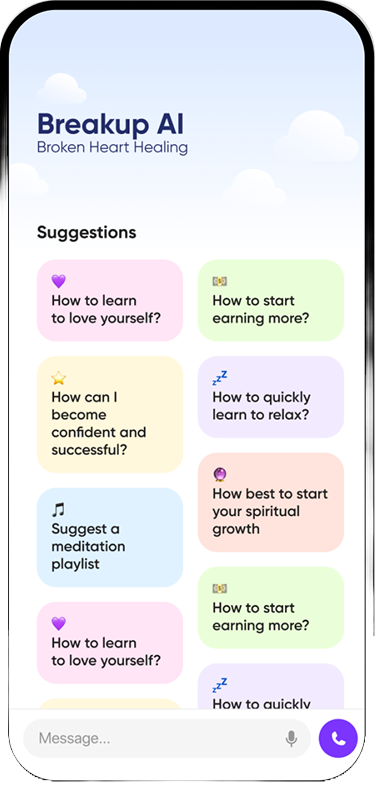
Feeling overwhelmed? Explore personalized support and continuous guidance at Breakup.one, your AI-powered breakup recovery resource—24/7 emotional ally, offering healing programs tailored to your heart’s needs. Connect, reflect, thrive with expert help beside you.