



Table of Contents
- The Science of Heartbreak
- Why Self-Care is Vital Post-Breakup
- How to Implement Self-Care Practices
- 1. Reclaim Your Space
- 2. Nourish Your Body and Soul
- 3. Exercise Regularly
- 4. Practice Mindfulness and Meditation
- 5. Connect with Your Support Network
- Reframe Your Perspective
- Final Thoughts
The Science of Heartbreak
Heartbreak—it’s not just in your mind. It’s an all-encompassing physiological phenomenon. You’d be surprised to know that a study from the Journal of Neurophysiology found that romantic rejection fires up the same brain sections as physical wounds do. It’s the reason a breakup can physically ache, a point
“Heartbreak taps into the neurological paths similar to physical afflictions, messing with everything from how you sleep to what you crave.”
— Dr. Sarah Chen, Clinical Psychologist at NYU
presents with clarity. This physiological insight demands attention. It adds layers to your understanding of emotions—they aren’t only fabrications of the psyche. Your entire being is on this tumultuous road to recovery, each aspect calling for its own brand of self-care.
Why Self-Care is Vital Post-Breakup
Now, onto the significance of self-care. Why is it such an anchor after your heart does that shattering thing?
- Emotional Balance: By incorporating self-care, you’re not only comforting but bringing equilibrium to a sea of emotions that can feel downright chaotic.
- Physical Well-being: Feeding your body right, catching those Zs, and keeping active—these don’t just benefit your physique. They help mitigate fatigue and anxiety that often chew at your ends.
- Self-Identity Revival: Self-care does wonders in helping you reanchor to your essence apart from that ruptured relationship, rekindling self-worth and resilience.
“Maya, amid her divorce, realized self-care wasn’t just about solace. It played a pivotal role in her identity’s resurgence and rekindled joy.”
— Dr. Sarah Chen, Clinical Psychologist at NYU
“Finding strength in solitude transmutes despair into personal growth.”
How to Implement Self-Care Practices
Having established the ‘why,’ the focus now turns to the ‘how.’
1. Reclaim Your Space
Surrounded by memories of yesterday? That’s a tough spot. Personalization of your living quarters becomes golden. Think color rotation, invigorating artworks, or even a few spirited plants.
How to do it: Pick just one zone and reinvent it. Even a fresh throw or a vision board teeming with aspirational goals can weave wonders.
2. Nourish Your Body and Soul
Heartbreak often plays havoc with appetite—either vanishing it or escalating comfort eating. Vital here is to refocus on nutrition and hydration; they stabilize both mood and energy.
How to do it: Plot meals weekly around whole foods: think greens, vibrant berries, oily fish, and nuts. Fun fact? Cooking itself can transform into a soothing ritual.
3. Exercise Regularly
A dose of physical activity releases uplifting endorphins—curative for depression’s shadows or anxiety’s whispers. Engage with something you love—yoga, perhaps a jog, a dance.
Why it works: Research via the National Institute of Mental Health indicates exercise lessens stress-inducing hormones like adrenaline and cortisol, welcoming relaxation.
How to do it: Begin small. A stroll, 20 minutes around the block—the lift it brings to spirit and mindset, immeasurable.
4. Practice Mindfulness and Meditation
Daily mindfulness or meditative practices sprinkle calm and control over your mental landscape—a remedy from clinging to past events, directing focus to present joys and future potentials.
Why it works: Studies, no less from Harvard University, demonstrate mindfulness bolsters emotional regulation by stimulating the prefrontal cortex related to decision-making and self-discipline.
How to do it: Allocate a mere five minutes each morning to sit still, just breathing. Apps like Headspace or Calm? Awesome guides.
5. Connect with Your Support Network
Going solo? It magnifies loneliness. Reach for those who radiate warmth and understanding. Engage in groups sharing your experience, for empathy is a balm unlike any other.
Why it works: Social links elevate oxytocin, trimming stress while fortifying against emotional aches, says a Mayo Clinic report.
How to do it: Chart regular hangouts with pals or tap into online platforms for open emotional exchanges and newfound perspectives on healing.
Reframe Your Perspective
Despite its bite, heartbreak can nudge forth a windswept passage of transformation. It’s a chance for self-discovery. For Maya, the end wasn’t a collapse but a canvas for rediscovery.
“If heartbreak is seen as an avenue toward personal evolution, its value becomes stark.”
— Dr. Sarah Chen, Clinical Psychologist at NYU
“Scars transform into maps charting survival and fortitude.”
Final Thoughts
Piecing yourself back post-heartbreak? No small endeavor. It’s laden with time, patience, and a resolute stride toward nurturing through self-care. They’re far from diversions—they’re threads stitching your soul together.
In self-reconstruction, a newfound chance emerges: to steer life rekindled by your own terms. Through dedicated self-care, you are not merely repaired but stand as self-anchors of love and joy.
Key Takeaways
- Heartbreak impacts both psychological and physiological well-being.
- Utilizing self-care practices fosters emotional balance and recovery.
- Creating a positive environment can reduce stress and enhance mood.
- Nourishing your body and maintaining physical activity are crucial for healing.
- Connecting with supportive individuals can alleviate feelings of loneliness.
The Bottom Line
Recovering from heartbreak is a journey requiring time, patience, and self-care. Embrace the process as a path to personal growth and rediscovery, knowing that through this dedicated effort, you’re not just healing but also transforming into a stronger version of yourself.
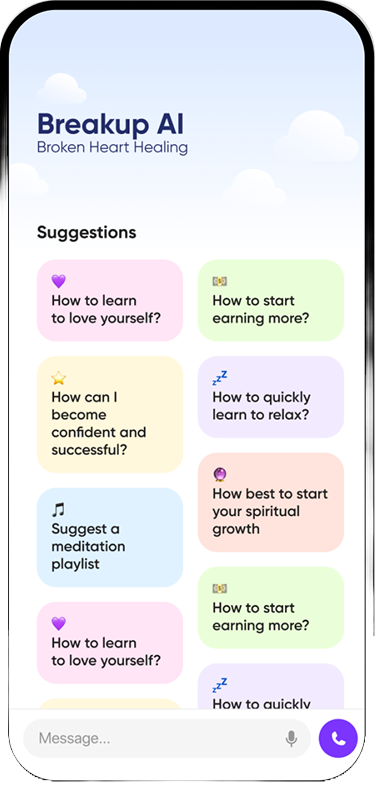
*For ongoing softness in your journey, explore Breakup.one—a 24/7 companion powered by AI, guiding you through emotional pathways to recovery. Welcome renewal at Breakup.one.
*
References:
- American Psychological Association
- Mayo Clinic
- Harvard University Studies on Mindfulness