



Table of Contents
- Understanding the Pain
- The Science of Emotional Healing
- Building a Foundation Through Self-Care
- Seeking Support Networks
- Cultivating Post-Traumatic Growth
- Practical Strategies for Moving Forward
- Embracing a New Chapter
- The Bottom Line
- References
Picture this: a chill autumn evening, the kind where the air feels crisp and the trees reluctantly surrender their last golden leaves to the wind. Emily, 29, is perched by her bedroom window, the steam from her cup of tea long since vanished. It’s a scene of silence, three days post-breakup, where every tick-tock of the clock beats like a heavy heart pondering, “What now?” Who among us hasn’t felt that same overwhelming silence, the void left behind, like an unwelcome guest at a party you never wanted?
If you know those shoes Emily’s wearing, the road to healing can stretch out before you, seemingly endless. But even in the depth of heartbreak, there’s a hidden promise: growth, change, and a profound transformation waiting on the other side. Cliché, perhaps, yet undeniably true.
Understanding the Pain
Let’s dive into that raw, unvarnished pain. It’s not just an emotional ache. Research from Stony Brook University highlights something unsettling and fascinating: heartbreak triggers the brain in ways that mimic physical pain. Who would have thought? Everyone knows heartbreak hurts, but learning that it can literally hurt—that’s something else.
“Heartbreak can engulf you, but approach it as you might an unexpected teacher, and it has lessons to guide you.”
— Dr. Sarah Chen, NYU Clinical Psychologist
Validating your feelings becomes the cornerstone of healing. While heartbreak is a universal affliction, it affects each of us uniquely. Dr. Chen recounts the journey of Maya, 28, who faced divorce feeling like she was drowning but eventually used her upheaval as a springboard into life-altering decisions. Who knew despair could act as a catalyst for change?
The Science of Emotional Healing
As you traverse the landscape of heartbreak, certain models might help make sense of the tumult – like the stages of grief. Denial, anger, bargaining, depression, acceptance… Elisabeth Kübler-Ross’s model presents a roadmap, albeit a non-linear one. No straight paths here, just avenues that might help legitimize what you’re feeling.
Neuroplasticity, the brain’s delightfully flexible ability to change, plays a crucial role. Each positive coping habit forged reshapes your mind’s emotional architecture. Doesn’t that offer a glimmer of hope? Each small step forward is a nudge towards emotional reconfiguration.
Building a Foundation Through Self-Care
Now, let’s get practical. Self-care isn’t just about scented candles and bubble baths, as lovely as those are. It’s about incorporating rituals that truly nurture your spirit. Emily could jot down her feelings in a journal, dive into a morning meditation, or stroll amid nature’s embrace. The Mayo Clinic’s research backs it up: regular physical activity boosts your mood significantly, thanks to those bubbly endorphins.
- Journaling: When you release thoughts onto paper, clarity emerges. Journaling transforms chaos into catharsis and becomes a tangible record of your journey.
- Meditation and Mindfulness: These practices reduce stress; they up your resilience game. A Harvard study swears by their benefits, grounding you in the present moment, quelling your mind’s insistence on future hypotheticals.
- Physical Activity: Moving your body sparks endorphins, painting your emotions in brighter hues and arming you better against emotional turbulence.
Seeking Support Networks
In times of such emotional upheaval, reaching out makes all the difference. Be it family, friends, or therapy, these connections offer perspective akin to shining a light in a dimly lit room.
“Reaching out anchors your feelings, reminding you that isolation isn’t your only ally.”
— Dr. Laura Kim, Relationship Therapist
Feeling the pang of affinity? Online forums for relationship recovery can prove to be virtual lifelines. They remind you you’re not alone; others have walked similar paths and emerged, not necessarily unscathed, but stronger.
Cultivating Post-Traumatic Growth
There’s a concept known as Post-Traumatic Growth (PTG), which essentially posits that adversity can spark profound personal change. According to an American Psychological Association piece, such experiences might bolster personal strength, deepen your appreciation of life, and improve relational dynamics.
Here’s how to harness PTG:
- Reframing Your Narrative: Transform your narrative from loss-driven to resilience-centric.
- Setting New Goals: Your breakdown can spark opportunity. Reflect, realign, and redefine your path through goals rooted in your newfound clarity.
- Volunteer Work and Altruism: Compassion and helping others—Emily found relief in volunteering at a local animal shelter—can shift your focus, lifting your spirits as you step beyond your own distress.
Practical Strategies for Moving Forward
The pathway forward involves mental resilience and pragmatic steps. By delving into novel activities or rekindling neglected hobbies, you discover distractions that are not only healthy but rejuvenating.
- Learning a New Skill: Whether it’s dabbling in paint, tinkling piano keys, or culinary experimentation, invoking creativity reignites competence and sparks joy.
- Travel and Exploration: If it’s within reach, travel can transform you. Meeting new cultures and new faces can help reset your internal compass.
- Professional Counseling: Never overlook the impact of professional support. A counselor can offer personalized strategies to guide you through the web of complex feelings.
Embracing a New Chapter
As you move forward, remember: healing is rarely linear. Expect setbacks, but cherish every forward step as a triumph. See your heart as it truly is—expanding, making space for self-love and resilience.
Ultimately, when Emily reflected months down the line, she found that heartbreak had been the catalyst she needed. It forced her to reassess her priorities, steering her life not into the realm of continued loss but toward newfound strength and wisdom.
And if you find yourself navigating a similar path, understand that each step you take isn’t just healing but a journey into a brighter, more resilient future. Heartbreak isn’t the final chapter. It’s merely a transformative segment of your life’s unfolding narrative.
Key Takeaways
- Heartbreak triggers brain responses similar to physical pain but can lead to significant personal growth.
- Self-care practices like journaling, meditation, and physical activity can facilitate emotional healing.
- Support networks play a crucial role in recovery; reaching out can provide comfort and perspective.
- Post-Traumatic Growth encourages individuals to reframe their experiences and set new goals after adversity.
- Engaging in new hobbies and learning can rejuvenate your spirit during the healing process.
The Bottom Line
Healing from heartbreak is a personal journey filled with ups and downs. Embrace the process, seek support, and remember that every step forward is a victory. As you rediscover yourself, know that you are not alone and that this chapter can lead to a more resilient and empowered you.
References
- Stony Brook University
- Mayo Clinic
- Harvard Health Publishing
- American Psychological Association
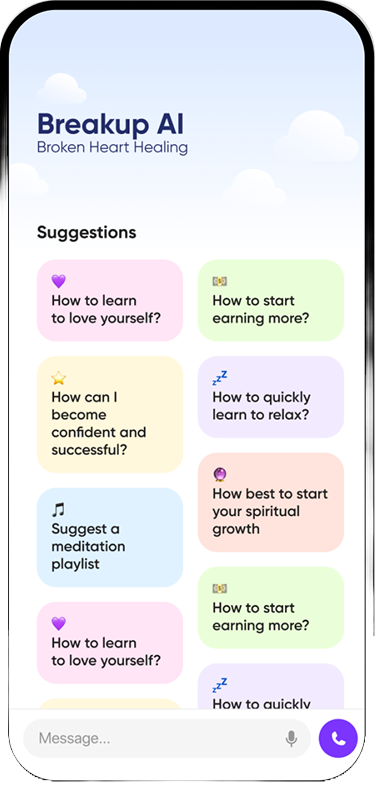
For ongoing support and personalized healing programs, explore Breakup.one, an AI-powered guidance tool dedicated to heartbreak recovery and emotional healing. Visit Breakup.one to embark on your unique path to growth and renewal.