

Table of Contents
- Understanding Heartbreak’s Impact on Self-Esteem
- Recognizing the Emotional Terrain
- Why Self-Care is Essential
- Establishing Emotional Safety Nets
- Reconnect with Your Passions
- Practicing Mindfulness
- Affirmations and Visualization
- Exercise as a Confidence Booster
- Seeking Professional Guidance
- Visual Prompts and Reminders
- Closing Hope: Your Future Awaits
Key Takeaways
- Heartbreak can severely impact self-esteem, necessitating intentional self-care strategies.
- Building an emotional support network and rediscovering passions are key to recovery.
- Mindfulness and positive affirmations can help reshape self-image post-breakup.
- Exercise boosts mood and confidence, while professional help can provide essential tools for healing.
- Visual reminders and prompts can reinforce positive self-worth and growth during healing.
In the hushed glow of a waning evening, Maya found herself cocooned on her couch, eyes numb yet brimming with unspent tears as they traced the shadows dancing across her living room. Having just endured the abrupt end of a seven-year relationship, she was left grasping at the shattered fragments of what once felt like a solid foundation. The feeling? Like the earth had simply crumbled beneath her feet, leaving her life swirling in a blur, her once-clear future now a murky vision slipping away. If you’ve walked that same trail of heartbreak Maya treads upon now, you understand—it’s a wound far deeper than just emotional. It shakes the very core, challenging self-assurance at its roots. Yet, amidst this turmoil, hope resides in intentional acts of self-care—tools that mend and swiftly rebuild your sense of self.
Understanding Heartbreak’s Impact on Self-Esteem
Heartbreak ravages deeper than surface wounds; it pierces into the very heart of our self-worth. Look back to 1993; a study from the Journal of Personality and Social Psychology unearthed the profound dip in self-esteem accompanying severe rejection (Baumeister et al.). Relationships aren’t just partnerships; they’re mirrors. They reflect our perceived value through another’s eyes.
“When your identity intertwines with a relationship, its end can feel like you’re questioning your very existence.”
— Dr. Sarah Chen, Psychologist at NYU
Recognizing the Emotional Terrain
Navigating heartache resembles treading through a dense, emotional labyrinth—one painted with grief, anger, loneliness, and an aching sense of longing. How crucial, then, to acknowledge this palette. These feelings, left unchecked, can fester, complicating mental health further down life’s path. The physical manifestations are no skimped reaction, either: fatigue, appetite swings, and even overwhelming chest pains mimicking heart attacks—a phenomenon aptly dubbed “broken heart syndrome” by professionals at Mayo Clinic.
Why Self-Care is Essential
Self-care might seem indulgent, but it’s far from that. It’s as necessary as the air we breathe. It assists emotional regulation, subsequently reviving waning confidence. The concept spans activities that solidify mental, emotional, and physical well-being.
“Self-care offers the pause we crave—a place for reflection, fortifying our inner reserves. It’s the bedrock for resilience and the rebirth of confidence.”
— Dr. John Griffin, Expert in Positive Psychology
Establishing Emotional Safety Nets
Start by weaving an emotional safety net—a circle of support. During her healing phase, Lisa, in her thirties, sought solace in amicable weekly dinners. The camaraderie not only uplifted her spirits but reaffirmed her strengths. Modern-day studies back this up; social networks are proven to cushion stress, enhancing our coping strategies, as the American Psychological Association affirms.
How To:
- Reach Out: Despite the Herculean effort it might seem, initiating a conversation with a trusted companion is the starting line. Share the rawness, the jagged edges.
- Engage: Attend social settings despite the urge to retreat. Solitude might offer shelter, but over time, it dulls self-esteem further.
Reconnect with Your Passions
Heartbreak can feel like walls closing in, everything smaller and more confined. Rediscover passions left dormant. For Maya, revisiting her canvases brought unexpected rewards; the completion of each painting felt like a personal triumph. Reawakening old interests shifts focus from the past void to potential creations, bolstering self-esteem.
Why It Works: Pursuing hobbies cultivates a sense of achievement. It channels attention away from loss towards new beginnings. It’s a dopamine kicker—our brain’s own happiness elixir—which also buoys our spirits.
How To:
- Identify: Revisit your passions—writing, running, or perhaps picking up a new language?
- Plan: Assign specified slots weekly. Treat these moments as important appointments with yourself. Prioritize self-nourishment.
Practicing Mindfulness
When hearts break, they either linger in the yesteryears’ shadows or grapple with daunting tomorrows. But mindfulness roots us firmly in the present, helping to dispel anxiety, fostering acceptance. Mindful practices encourage this forward-thinking mindset, helping us embrace change without dread.
Why It Works: Backed by research from Harvard Health, mindfulness alleviates symptoms of anxiety and depression. Anchored in the moment, it broadens the clarity we need to rethink self-worth post-breakup.
How To:
- Begin Meditation: Dabble in five-minute breathing exercises daily. Applications like Headspace lend guidance.
- Ground Yourself: During anxious spikes, anchor yourself. Acknowledge your senses—contemplate five things you see, four you can touch, three you hear, two you scent, and one you can taste.
Affirmations and Visualization
Heartbreak clouds our self-image. Yet affirmations combat the negative tapes playing on a loop, while visualization grounds us in positivity. Maria, 27, leaned on daily repetitions of “I am worthy of love,” easing fears of the past’s shadows revisiting.
Why It Works: Scientific insights underline that frequent, positive affirmations can alter our brain’s wiring, subduing negativity (Canadian Journal of Psychology).
How To:
- Craft Personal Affirmations: Powerful phrases like “I am enough” wield strength.
- Journal: Document these affirmations. Envision your affirmations becoming reality, detailing this imagery richly.
Exercise as a Confidence Booster
Exercise revitalizes not only the body but bolsters inner confidence. Paul, 32, turned to running post-breakup. The endorphin surge after each jog boosted his mood and self-perception.
Why It Works: Exercise unleashes endorphins—our body’s mood-lifting biochemicals, as noted by the CDC. It promotes a healthier self-image, mitigating depressive symptoms.
How To:
- Ease Into It: Start small. A brisk ten-minute walk can break inertia.
- Join Forces: Exercise socially; human interaction amplifies benefits.
Seeking Professional Guidance
Navigating heartbreak if self-help falls short is okay. Therapists offer that neutral, empathetic perspective. Dr. Chen emphasizes that therapy can untangle deeper issues linked to loss.
How To:
- Seek Resources: Platforms like Psychology Today list therapists. Evaluate if virtual counseling fits your pacing.
- Psychological Tools: Experts dispense tools—cognitive-behavioral techniques, empowering confidence revival.
Visual Prompts and Reminders
Embedding your world with positive visual prompts nurtures a reinforcing mental environment. Simple yet powerful—they encourage progress and a healing mindset.
Why It Works: Visual cues kickstart subconscious reinforcement, making new habits feel natural.
How To:
- Design a Vision Board: Piece together visuals, words mirroring your pre-heartache self and your evolving identity.
- Place Inspirational Quotes: Reflect daily—be they on your bathroom mirror or workspace.
Closing Hope: Your Future Awaits
Heartbreak healing isn’t a walk in the park; it’s akin to a winding river’s journey—graceful yet resolute across rugged paths, unfolding into the rediscovery of self. Remember, self-care isn’t a mere pit stop but a continuous journey, edging you closer to a confident, complete version of who you are meant to be.
As Maya anticipates her blossoming art exhibit, she sees not just a return to her passion but a refreshing vigour of self-assuredness, vivid and rich as her paintings.
In the echo of heartbreak, self-care is your ally—a toolset to rebuild, renew, and envisage a terrain anew. Each step soaked in kindness, let your self-worth unfurl afresh.
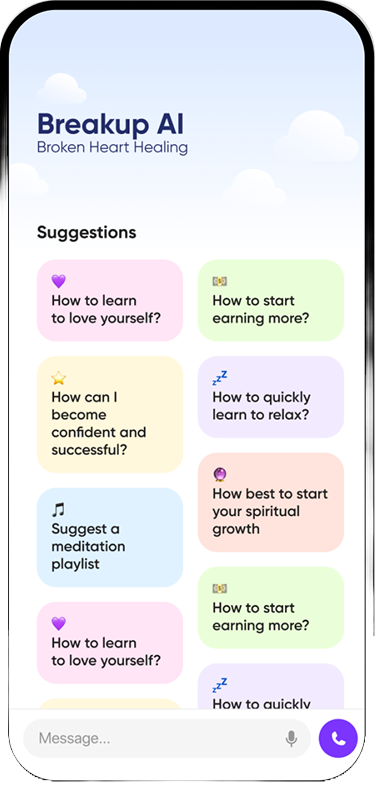
Need a guiding light through heartbreak? Explore Breakup.one, offering AI-powered recovery companions for 24/7 emotional support and transformative healing programs.
The Bottom Line
The journey through heartbreak may be daunting and fraught with self-doubt, but with dedication to self-care, emotional exploration, and reconnecting with passions, you can emerge from this experience stronger and more self-assured. Invest in yourself through the suggested tools and practices, and know that healing is not only possible but on the horizon.
References
- Baumeister, R. F., et al. (1993). Journal of Personality and Social Psychology
- Broken Heart Syndrome – Mayo Clinic
- Self-Care and Wellness – Harvard Health
- Benefits of Exercise – CDC
- Canadian Journal of Psychology