



Table of Contents
- The Science of Heartbreak
- The Power of Self-Compassion and Mindfulness
- Redefining Self-Identity
- Building a Support System
- Establishing New Routines
- The Role of Therapy and Professional Guidance
- Forgiveness: The Ultimate Liberator
- Embracing Future Possibilities
- Reflective Closing
The Science of Heartbreak
Maya stood alone in her apartment, her engagement ring now gathering dust in a drawer she rarely opened. It wasn’t just the end of her relationship; it felt like plunging headfirst into emotional chaos. Are you there too? Teetering on the brink, wrestling with the silence that follows a breakup. Yet, tucked within the heartache is a chance—an unexpected one—for profound growth.
Did you know heartbreak actually hurts like a physical wound? The brain doesn’t quite distinguish between emotional and physical pain. A study in the Journal of Neurophysiology reported that simply seeing a photo of an ex can trigger the same areas in the brain that light up when we feel physical pain. Dr. Sarah Chen from NYU explains it like this:
“The dorsal anterior cingulate cortex, involved in the emotional aspect of physical discomfort, lights up during a breakup.”
— Dr. Sarah Chen, NYU
A curious intersection, isn’t it? Recognizing that misery has genuine neurological roots might be the first step towards healing. It’s not imaginary, nor trivial — it’s real and deserves kindness and understanding.
The Power of Self-Compassion and Mindfulness
In the whirlwind of post-breakup emotions, being gentle with oneself is crucial. Kristin Neff, a pioneering voice in self-compassion research at the University of Texas, insists that kindness to oneself after such emotional trauma is more beneficial than harsh self-assessment. Her studies indicate that practicing self-compassion helps reduce anxiety and depression after breakups. Meanwhile, embracing mindfulness — being present without self-judgment — slowly quiets the mind. When Maya weaved mindfulness into her routine, she began to shift her focus.
“I stopped dwelling on what wasn’t and redirected my energy to the sensations around me—the breath, the ground. Slowly, I found peace in simplicity.”
— Maya, Personal Experience
Redefining Self-Identity
Breakups often set off identity crises. Who are you, stripped of a relationship? It’s a common question. But if you look at your relationship as merely a chapter and not the entire narrative, it opens doors to self-rediscovery. A study in the Personality and Social Psychology Bulletin highlighted that post-breakup personal exploration led to significant self-growth. Your journey, if embraced, can lead to unexpected places of discovery.
Consider Jonathan. After his breakup, he revived his dormant passion for photography.
“It was odd at first, but capturing life’s fleeting moments gave me a new lens to see myself through.”
— Jonathan, Personal Experience
Building a Support System
The warmth of human connection can mend a broken heart. Studies from the American Psychological Association affirm that a robust social network significantly aids emotional recovery post-breakup.
“Reaching out is more than seeking solace,” says Dr. Emily Stone, a seasoned relationship counselor. “It’s about building meaningful connections that dispel isolation.”
— Dr. Emily Stone, Relationship Counselor
Establishing New Routines
The upheaval of a relationship’s end throws daily life off-kilter. Establishing new routines doesn’t just alleviate this chaos—it restores control. Research in Psychiatry Research underscores how routines help manage stress and improve mental health.
Sarah wrestled with insomnia and ennui post-breakup. To combat this, she crafted a morning ritual featuring yoga, breakfast, and reading.
“Routine gave me a sense of control and it slowly birthed hope.”
— Sarah, Personal Experience
The Role of Therapy and Professional Guidance
Therapy serves as a lighthouse amid emotional tempests. Counselors provide insights tailored to your journey, offering new perspectives on past patterns and guiding you to healthier relationships. A meta-analysis in Clinical Psychology Review found that therapy post-breakup noticeably reduces emotional distress, paving paths to personal growth.
“Therapy isn’t solely about soothing wounds,” explains Dr. Alex Moreno, a licensed therapist. “It’s also a reflective space where self-discovery thrives.”
— Dr. Alex Moreno, Licensed Therapist
Forgiveness: The Ultimate Liberator
Ah, forgiveness—the hardest grace. It liberates one from the chains of grudges and blame. Research from the Journal of Behavioral Medicine shows forgiveness reduces stress and fosters well-being by cultivating comprehension and acceptance.
Lisa, age 32, penned a letter to her ex—not to send, but to release.
“Forgiveness isn’t their absolution; it’s my liberation from bitterness.”
— Lisa, Personal Experience
Embracing Future Possibilities
As one chapter closes, another begins. The vastness of this potential can be daunting. Yet, according to the Journal of Marriage and Family, embracing singlehood post-breakup often leads to greater life satisfaction and self-discovery.
“Invest in the relationship with yourself—it’s priceless.”
— Dr. Rose Adams, Life Coach
Reflective Closing
Standing at this intersection of your journey, you possess an unrivaled chance for personal growth. Heartache won’t just vanish, but in time, it morphs from what was to stepping stones toward a reinvented future.
May the tapestry of Maya’s story and these practical strategies be a beacon on your path of recovery and renewal. Your journey might meander, but it is uniquely, powerfully yours.
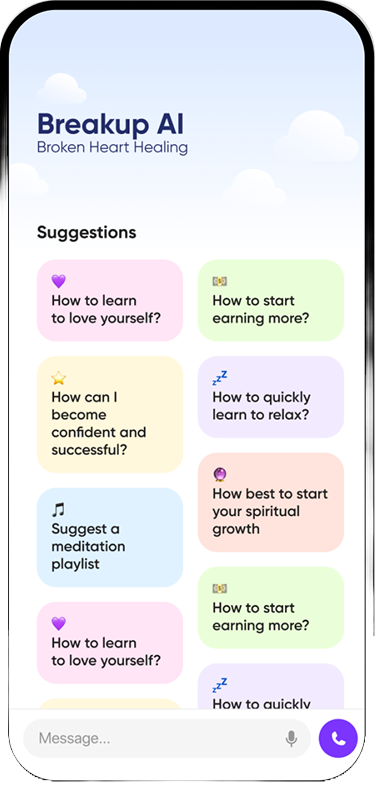
As you traverse this unfolding chapter, don’t walk it alone. Discover personalized support with Breakup.one, your AI-powered companion in heartbreak recovery, offering 24/7 emotional guidance. Visit Breakup.one and begin your journey to healing and growth.
Key Takeaways
- Heartbreak causes both emotional and physical pain, as evidenced by neurological overlap.
- Self-compassion and mindfulness are essential for healing from a breakup.
- Building a supportive social network enhances emotional recovery.
- Establishing routines restores a sense of control and aids mental health.
- Forgiveness can significantly improve emotional well-being and lead to personal liberation.
The Bottom Line
Your journey through heartbreak is an opportunity for profound personal growth. Embrace the experience, seek supportive connections, and strive for self-discovery. With time, what feels like an ending can transform into new beginnings.