



In the quietude of her bedroom, as dawn bathed the space with its early Sunday light, Emily found herself ensnared by the emptiness following her recent breakup. Photographs were scattered around—once cherished memories now tormenting reminders of what was lost. Friends and family, with their kind words, insisted, “This too shall pass.” But for Emily, time seemed frozen. If you’re standing on this emotional precipice, you’re not navigating it alone. While this journey through breakup depression is steeped in hurt, it also offers a path to healing and profound transformation. Let’s delve into how one can effectively mend a broken heart, with empathy, understanding, and strategies backed by science.
Table of Contents
- Understanding Breakup Depression
- The Science of Heartbreak: Why It Hurts
- Embracing Your Emotions: The First Leap Toward Healing
- Practicing Mindful Acceptance
- Rebuilding Self-Identity
- Journaling and Introspection
- Engaging in Acts of Self-Care
- Connecting with Social Support
- Therapy and Professional Support
- Embracing New Opportunities
- Cultivating Gratitude and Positivity
- Establishing New Routines
- Setting Personal Goals
- Final Reflections: Empower Your Journey
Key Takeaways
- Breakup depression is a valid emotional response and affects brain chemistry similarly to physical pain.
- Engaging in mindfulness and self-care can significantly aid in coping with emotional distress.
- Writing and social support are crucial tools for processing emotions and rebuilding self-identity.
- Embracing change and setting new goals can lead to personal growth after a breakup.
Understanding Breakup Depression
First, acknowledge your feelings. The end of a relationship can feel like an earthquake beneath your feet. Breakup depression isn’t mere sadness—it’s a deep sense of loss and sometimes rejection. It’s the unwelcome shadow that persists well past the final goodbye. Back in 2021, a study in the Journal of Positive Psychology highlighted that it takes about 11 weeks for people to start seeing beyond the breakup fog, though experiences can vary widely.
“Breakup depression is a real and valid experience,”
— Dr. Sarah Chen, Clinical Psychologist at NYU
It’s crucial to know this, she tells us, since losing a vital person impacts our brain’s chemistry, much like withdrawing from an emotional high. So, how do we confront such profound grief and begin piecing together emotional well-being again?
The Science of Heartbreak: Why It Hurts
The aftermath of a breakup is a lot like withdrawal—painful and jarring. Research indicates that emotional pain activates the same brain areas as physical pain (according to studies from ScienceDirect). Love releases happy hormones like dopamine and oxytocin in our brains. But when love fades, these hormones drop sharply, leaving one feeling hollow and yearning.
The science behind it shows why recovering equilibrium isn’t immediate.
“Understanding the physical processes at play can be the first step towards reconciling with your pain,”
— Dr. Louise Jameson, Neuropsychiatrist
Knowing it’s not just ‘in your head’ can empower you to engage proactively with your emotions.
Embracing Your Emotions: The First Leap Toward Healing
Allow yourself the grace to grieve. What might happen if you avoid those emotions? The likelihood of experiencing extended sadness increases. Maya, 28, learned this through her own experience—from her divorce—immersing herself in work as an escape.
“I needed to face my feelings,”
— Maya, 28
Practicing Mindful Acceptance
Mindfulness can be your ally in this emotional upheaval—helping you stay present with your feelings without judgment. Meditation and yoga are effective tools that anchor you in the here and now. Harvard Medical School states in a report that mindfulness considerably eases symptoms of depression and anxiety.
“Regular mindfulness can help keep your emotional waves from capsizing your boat,”
— Amber Ray, Well-Being Coach
Even dedicating five minutes to reflect quietly on your emotions can work wonders.
Rebuilding Self-Identity
Breakups upend our self-identity as relationships often weave into how we define ourselves. Losing one can feel disorienting. How do you combat this? By embarking on a self-discovery journey.
Journaling and Introspection
Writing serves as a release and a mirror for introspection. Whether through unshared letters or daily reflections, it’s a tool for emotional exploration. According to the American Psychological Association, expressive writing can boost resilience and enhance overall emotional health.
Engaging in Acts of Self-Care
Self-care routines reaffirm your value beyond the relationship. Whether through long baths, books, or new hobbies, refresh your space to mirror the version of you that’s evolving.
Connecting with Social Support
Isolation amplifies melancholy—lean into your support network; they offer both perspective and clarity. Friends and family, familiar with your true self, can provide that external lens you might need to interpret the breakup’s end. Sharing within a circle of trust eases the emotional load.
Therapy and Professional Support
Seeking a therapist specializing in relationships or depression can be pivotal.
“Cognitive-behavioral therapy (CBT) targets negative thought patterns and prompts healthier emotional responses,”
— Dr. Lucy Goldberg, Author of “Healing the Heart”
Embracing New Opportunities
Once immediate emotional pain subsides, see it as a catalyst for fresh beginnings. Whether through new activities, people, or even distant travels, revitalization awaits. Does this mean ignoring the past? No, but it means harnessing the present for growth and discovery.
Cultivating Gratitude and Positivity
When your heart feels heavy, this concept can seem far-fetched. Yet, practicing gratitude over time reshapes emotional horizons. The Positive Psychology Journal suggests recognizing what you’re thankful for can significantly uplift emotional well-being and reduce depression.
Establishing New Routines
A grounding routine offers control amid chaos. Morning jogs, evening brews, or weekend hikes can anchor you.
Setting Personal Goals
Charting a new course without direction is daunting. But setting small aspirations—be it reading more, mastering new recipes, or delving into online courses—excites a sense of progression.
Final Reflections: Empower Your Journey
Remember, your journey through heartbreak isn’t linear. It ebbs, flows, brings relief and sorrow, but each step fortifies resilience.
“Trust that you’re gaining wisdom from this experience,”
— Dr. Chen
Life’s most profound transformations often sprout from its deepest tribulations. Imagine a future—different, perhaps, but brimming with unrealized potential. You’re the artist of this new story, the canvas both vast and vivid.
Breakup depression weaves a narrative of personal evolution—approach it with mindfulness, compassion, and active healing, and you’ll emerge not just whole, but thriving with a reborn sense of self.
The Bottom Line
Your journey through heartbreak may be challenging, but it is also an opportunity for personal growth and renewal. Embrace the process, learn from your feelings, and give yourself the chance to heal and emerge stronger.
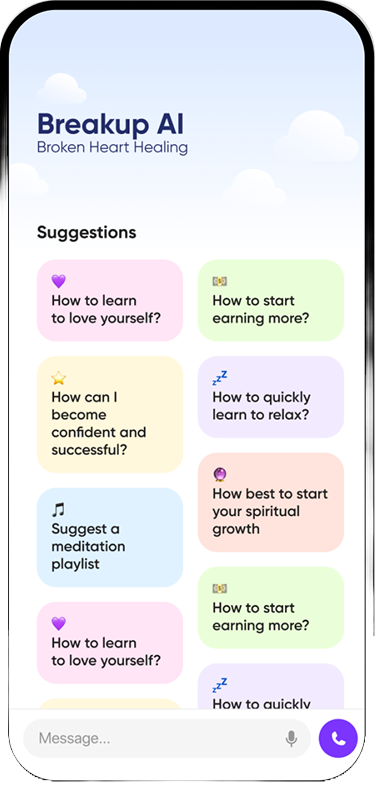
When the weight of heartbreak feels too great, consider Breakup.one, the AI-powered heartbreak recovery companion. It provides 24/7 support and structured healing programs. Explore Breakup.one today.
References
- Journal of Positive Psychology
- ScienceDirect
- Harvard Medical School
- American Psychological Association
- Positive Psychology Journal