



Table of Contents
- Understanding the Emotional Turmoil
- Embracing the Grieving Process
- Time as a Healer: Why It’s Essential
- Constructive Self-Talk: Rebuilding Inner Narrative
- Reconnecting with Self — The Path to Self-Discovery
- Cultivating New Relationships and Strengthening Old Ones
- Practicing Forgiveness — The Grace to Move Forward
- Cultivating Gratitude — The Antidote to Pain
- Setting Future Goals — An Exercise in Hope
- Empowering Conclusion
Key Takeaways
- Heartbreak triggers both psychological and physical responses, making it essential to acknowledge your feelings.
- Embrace the grieving process as a path toward self-discovery and personal growth.
- Take your time to heal and allow personal growth to emerge naturally.
- Practicing gratitude and positive self-talk can significantly aid in the recovery process.
- Forgiveness, both of yourself and your former partner, is crucial for moving forward.
Understanding the Emotional Turmoil
To begin with, let’s not mince words about heartbreak—it’s both a psychological and a physical ordeal. Back in 2011, a study from the Journal of Neurophysiology pointed out that our brains process emotional pain similarly to physical injury. The heaviness in your chest? The ache that just won’t quit? This isn’t mere melodrama. You’re not just “moving on” from a relationship; your body is processing a seismic event.
“Acknowledging this cocktail of emotions is the initial, crucial step towards healing.”
— Dr. Sarah Chen, NYU Clinical Psychologist
Embracing the Grieving Process
Grief isn’t a straight road. It sways and shifts like a choppy sea. The stages—denial, anger, bargaining, depression, acceptance—aren’t linear either. It weaves in and out without warning, at times leaving you breathless. Why accept grief? Because suppressing it only prolongs the heartache, stifles the possibility of growth.
When Maya, now 28, went through her divorce, guilt was her unwelcome companion. She was trapped in the belief that she had let her marriage slip through her fingers. But once she began pouring her unvarnished thoughts and emotions into a journal, she discovered how much she unfairly blamed herself. It opened a pathway towards self-compassion—a key component of her healing journey.
Time as a Healer: Why It’s Essential
Time—a peculiar companion in the realm of breakups. One that we beg to dash forward but damn for crawling at a snail’s pace. Yet it’s within the loitering that healing sneaks in. In 2016, the Journal of Positive Psychology found 71% of individuals could view a breakup positively after a stint of no contact.
The idea here isn’t to rush past time but rather to inhabit it. Lisa Turner, a well-regarded relationship coach, highlights that in these interims, personal growth quietly takes root.
“Endurance and reflection are your allies.”
— Lisa Turner, Relationship Coach
Constructive Self-Talk: Rebuilding Inner Narrative
How do you speak to yourself post-heartbreak? Inner narratives hold sway over our healing journeys. If that inner voice leans toward self-criticism, the spiral of perceived failures tightens. Positive self-talk, however, provides the scaffolding of resilience.
“Choose affirmations that echo your true self—truths like ‘I am worthy of love and respect’ or ‘Change and growth are my companions.’
— Dr. Sarah Chen, NYU Clinical Psychologist
Reconnecting with Self — The Path to Self-Discovery
The close of a chapter in a relationship is also a gateway to reconnect with yourself. What have you learned about what matters to you in terms of needs, values, and aspirations? Exploration becomes key here. Whether through reclaiming old hobbies, diving into new passions, or meditating—seek joy in solitude and redefine who you are outside your past relationship.
You might explore therapy as an option. A 2007 report by the American Psychology Association emphasized the efficacy of Cognitive Behavioral Therapy (CBT) in managing post-breakup emotions and guiding self-discovery.
Cultivating New Relationships and Strengthening Old Ones
When the time feels right, reaching out to new contacts or deepening old friendships is invaluable. These connections furnish emotional support and bring fresh perspectives. Engaging socially has tangible benefits—oxytocin, the “cuddle hormone,” is released, balancing the stress hormone cortisol, which often surges after social rejection (a reminder from a 2013 study by Narvaez and associates).
Building new ties doesn’t demand jumping into romance hastily. Often, the warmth found in friendships suffices, offering fulfillment and validation while nurturing emotional well-being.
Practicing Forgiveness — The Grace to Move Forward
Ultimately, embracing growth invites forgiveness—be it for yourself or your former partner. The notion isn’t about excusing wrongdoing but lightening the weight of bitterness. Research in the Journal of Behavioral Medicine indicates that forgiveness lowers stress and enhances mental health (Toussaint et al., 2015).
Forgiveness is a journey. It may not be granted at once but revisited over time. Imagine it as a gift for yourself, easing emotional burdens and inviting positivity.
Cultivating Gratitude — The Antidote to Pain
Developing gratitude shifts focus to positive aspects. Gratitude has been linked to greater alertness, enthusiasm, and determination, according to a 2003 study by Emmons and McCullough. Keep a gratitude journal—jot down three things you’re thankful for each day. Over time, this habit can rewire perceptions, unveiling possibilities where none appeared before.
Setting Future Goals — An Exercise in Hope
To turn the breakup narrative on its head, visualize the future with vibrant clarity. What dreams had faded in the relationship’s shadow? Here’s your moment to reclaim them.
Set goals that are concrete and reachable. Avoid nebulous statements like, “I want to be happy.” Instead, outline actions: “I will read one book a month,” or “I’ll take up a dance class.” Such resolutions serve as roadmaps to future fulfillment, not just empty promises.
Empowering Conclusion
Emma—she began piecing her life together once the breakup dust settled. She unearthed strength she hadn’t known was within her grasp. The profound sadness made way for gratitude, forgiveness, and a newfound affinity for the woman she was becoming. Your own path to healing lies through embracing those tumultuous waves of emotions, gradually transforming chaos into growth.
This journey isn’t the lightest one, I’ll admit. Still, within its tests, you discover resilience and self-awareness. As you navigate the many layers of feeling, hold onto the truth that healing isn’t something that speeds by—it gently flows like a river’s water shaping stone over time. Trust the process, because transformation isn’t just possible—it’s there, waiting to embrace you.
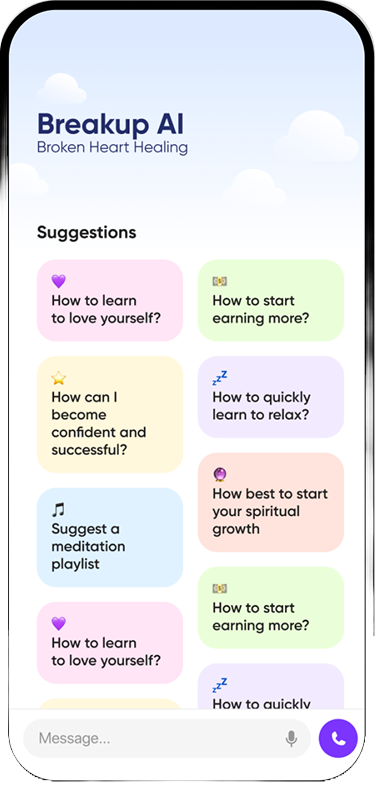
If this feels overwhelming, there are tools ever more tailored for heartbreak healing. Consider seeking guidance from Breakup.one, an AI-powered support system offering customized emotional support and healing programs. When ready, the next chapter of your life stands open, filled with new adventures—a journey only you can embark on with renewed courage and strength.
The Bottom Line
Heartbreak can feel overwhelming, but it also presents an opportunity for growth and self-discovery. By allowing yourself to grieve, embracing forgiveness, cultivating gratitude, and setting new goals, you can transform your pain into a powerful journey of healing and resilience.