



Table of Contents
- Grasping the Profoundness of Breakup Pain
- Navigating Through the Waves of Loss
- Nurture Yourself with Compassion
- Understanding the Science of Letting Go
- Shaping New Routines
- Crafting Your Support Network
- Redirecting Your Energy
- Forgiveness as a Gateway to Freedom
- Reflecting and Advancing
- Traversing the Road to Healing
Key Takeaways
- Breakup pain is a profound, physiological experience often comparable to physical pain.
- Grieving is a vital process; it’s okay to take the time you need to heal.
- Practicing self-compassion can significantly improve emotional well-being during healing.
- Developing new routines and support networks fosters independence and healing.
- Forgiveness is key to emotional freedom and moving forward.
Your phone buzzes—it’s got you on edge again. Thoughts race as you wonder if it might be them. The person who once felt like home, now a whisper in your daily life. Every old photograph seems to pulse with echoes of shared laughter and dreams that once felt tangible. You loved deeply, and now you’re left navigating the empty spaces they’ve vacated. Moving on isn’t merely about survival; it’s an invitation to heal and grow in ways unimaginable before.
Breakups can feel like storms. You toss and turn in a paradox where the familiar morphs into the unknown and tomorrow looms like a blank canvas.
“When relationships end, they shake up our everyday reality,”
— Dr. Sarah Chen, Clinical Psychologist
“Everything from our routines to our self-worth might be tangled with our partner,” she adds. This is why breakups often leave us feeling so unanchored.
Grasping the Profoundness of Breakup Pain
It’s crucial to realize that breakup pain isn’t just what it feels like on the surface; it’s a lot deeper—a physiological experience, even. Just ask Maya, 28, who recounts her divorce pains:
“It was like I’d been hit in the stomach,”
— Maya, Divorcee
Her story echoes research revealing that heartbreak activates the same brain areas involved in physical pain—at least, that’s what the Journal of Neurophysiology highlighted a few years back.
Think about attachment theory. It proposes that our close bonds get intricately tangled in our brain’s wiring, which is why parting hurts so much.
“The brain craves attachment, almost as a necessity,”
— Dr. Robert Weiss, Relationship Therapist
Navigating Through the Waves of Loss
You might find yourself swinging between sadness and anger, occasionally punctuated by denial or even brief relief. All normal. All part of grieving. Much like the stages famously observed by Dr. Elisabeth Kübler-Ross. Acknowledging these emotions without judgment can open the gates to healing. Harvard Health mentions this as a foundational step for recovery.
Rushing to ‘get over it’ isn’t the answer. It’s okay to mourn. Cry if you must, jot your feelings down, or simply talk to someone you trust. This grieving period is not just a hurdle—it’s a vital step towards processing the end of your story with them.
Nurture Yourself with Compassion
Imagine your best friend just went through a heartbreak. Chances are, you’d offer comfort, patience, and understanding. Time to extend that courtesy to yourself.
“Self-compassion boosts our emotional endurance and well-being,”
— Dr. Kristin Neff, Expert on Self-Compassion
Her insights encourage a shift from self-critical thoughts to those rooted in kindness.
Begin by recognizing your pain sans self-judgment. Little by little, affirmations and self-care routines can transform self-blame into acceptance.
Understanding the Science of Letting Go
A substantial leap in moving forward is the release—the letting go, which often feels impossible when daily sights and sounds draw memories back into focus. Neuroplasticity, the brain’s capacity to restructure, acts as a beacon of hope.
“Your repetitive thoughts and actions are tools to rewire your brain,”
— Dr. Jack Lewis, Neuroscientist
Mindfulness meditation enters the scene as a powerful ally. Regular meditation has been shown by the American Psychological Association to alter the brain within areas regulating emotions. Through this, mindfulness becomes a cornerstone for reimagining life with self-discovery at its core.
Shaping New Routines
After the tumult of a breakup, your daily pattern shifts dramatically. Filling these voids with fresh activities can ground and invigorate you. Remember Claire, 25? Her post-breakup journey led her to discover pottery, a passion bringing with it newfound friends and joys.
Rebuilding your routine is not about filling time but rather reclaiming control over your days. New habits plant seeds for independence and self-assurance, foundations for the new ‘you’ in the making.
Crafting Your Support Network
Breakups have this uncanny way of making you feel as if you’re utterly alone. But, reaching out—to family, friends, and trusted confidants—finds you a safety net through trying times.
“Surround yourself with empathic individuals who allow for raw expression and give steadfast support.”
— Dr. Michael Mantell, Expert in Emotional Healing
Digital collectives also hold potential as spaces for healing. Online therapy groups and supportive storytelling platforms can help you remember that your experience, while unique, is not isolated.
Redirecting Your Energy
Herein lies a choice—to redirect emotions once outwardly focused back into crafting a life rich with personal growth. That’s what John, 32, did. After ending a long-term relationship, he poured his energy into marathon training, an endeavor that spurred not just physical but emotional reinvigoration.
Activities inspiring personal achievement—be it language learning, a fresh hobby, or career pursuits—can carve out new narratives teeming with optimism.
Forgiveness as a Gateway to Freedom
To forgive—your ex or even yourself—may seem counterintuitive. But it’s a critical step toward tranquility.
“Forgiveness isn’t about excusing behaviors; it’s about freeing oneself from resentment’s chains.”
— Dr. Fred Luskin, Stanford University Forgiveness Project
Start small. Exercises focused on releasing pent-up anger can gradually guide you to a more liberated emotional space.
Reflecting and Advancing
Heartbreak often proves to be a clandestine teacher, nudging us towards insights about love, self-awareness, and life’s core priorities. It isn’t about chastising ourselves for past errors but fostering gratitude for newfound clarity.
Journaling can be transformative. Allow the act of penning thoughts to clear the haze and articulate hopes for future relationships and endeavors.
Traversing the Road to Healing
This journey of moving onward is personal, void of strict timelines yet full of grace. Embrace each uncertainty as healing unfolds, knowing it’s not a linear path but an ebb and flow of discovery.
For Caroline, 27, an eventual sense of calm dawned months post-breakup. She came to recognize that through time and reflection, her struggles carved a path to her truest self. You too are creating this space, crafting a narrative full of possibility and renewal.
Breaking free from breakup pain is an intimate undertaking, requiring a soft hand yet steadfast resolve. Remember: healing doesn’t erase the past; it integrates each experience into the rich and complex tapestry of life.
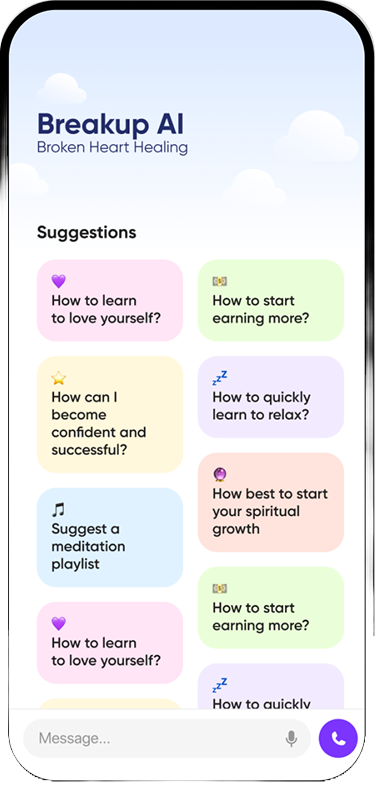
For those poised to delve deeper into healing, Breakup.one offers tools for emotional support that accompany you every step of the way to reclaiming joy.
The Bottom Line
Healing from a breakup is a deeply personal journey filled with opportunities for self-discovery and growth. Embrace your emotions, reach out for support, and be kind to yourself as you navigate this transformative experience.
References:
- Journal of Neurophysiology
- Harvard Health
- Self-Compassion Research by Dr. Kristin Neff
- American Psychological Association on Mindfulness
- Stanford University Forgiveness Project