



Table of Contents
- Understanding the Emotional Earthquake
- Embracing the Healing Journey
- 1. Embrace Your Emotions
- 2. Rekindle Your Relationship with Yourself
- 3. Set Healthy Boundaries
- Drawing Strength from Others
- 4. Seek Counsel with a Therapist
- 5. Cultivate Community Support
- Prioritizing Mindfulness and Self-Care
- 6. Embrace Mindfulness
- 7. Commit to Regular Exercise
- Stepping Towards Tomorrow
- 8. Harness the Power of Technology
- Trusting the Recovery Process
Key Takeaways
- Heartbreak can feel like an emotional earthquake, requiring a structured healing approach.
- Acknowledge your emotions to diminish their power over you and enable healing.
- Seek support from therapists and community to foster resilience and understanding.
- Practice mindfulness and engage in physical activities to boost emotional well-being.
- Utilize technology for personalized support during your healing journey.
The night Elena found herself alone, the world seemed to pause, leaving her with an unnerving quietness. Evening shadows danced across the room as she held a photograph—edges worn thin—capturing the world they once had. Heartbreak, swift and merciless, had entered the scene as an uninvited guest. For Elena, and countless others who find themselves navigating this emotional tempest, healing after a breakup isn’t just a remote possibility; it’s an empowering journey you can embark on.
Understanding the Emotional Earthquake
Breaking up can feel like an emotional earthquake, shaking the very foundations of your world.
“A breakup is more than just the end of a partnership; it throws us into a whirlpool of uncertainty, disrupts our future plans, and forces deep self-reflection.”
— Dr. Emily Stein, Relationship Expert
Interestingly, the American Psychological Association reported that nearly sixty percent of adults endure a breakup that significantly shakes their emotional well-being. Let’s face it—heartbreak is not just heavy; it can be downright paralyzing.
Remarkably, a breakup’s pain shares striking similarities with physical pain. The Journal of Neurophysiology has shown that emotional distress activates the same brain areas that light up during physical injuries. This brain activity reveals why emotional wounds can feel just as tangible as a physical scar.
Embracing the Healing Journey
After the emotional scaffolding of a relationship collapses, navigating your recovery is essential—not optional. It’s a preventative step against longer-term mental health challenges like depression, often noted in reputable studies from the Mayo Clinic.
As Dr. Sarah Chen at NYU reminds us,
“Healing emotionally allows you to reclaim your true identity and channel your energies towards personal growth.”
— Dr. Sarah Chen, NYU
Bearing witness to your own resilience in times like these is transformative—it’s about weaving your experiences into the fabric of who you are becoming.
1. Embrace Your Emotions
Heartbreak tosses a kaleidoscope of emotions our way—sadness, anger, confusion, you name it. The first step? Let these feelings be valid. Harvard’s Mind/Brain Behavior Initiative finds that acknowledging your emotions can diminish their power over you.
2. Rekindle Your Relationship with Yourself
Once the dust has settled, there’s an absence where your partner used to be. It’s time to fill that space with self-love and rediscover who you are.
Why is this crucial? A Journal of Positive Psychology study highlights that those who see breakups as a personal growth opportunity often find greater satisfaction and emotional fulfillment in life.
3. Set Healthy Boundaries
While the urge to maintain contact for closure’s sake might be strong, establishing boundaries is instrumental in healing.
Why bother? Boundaries prevent repeated exposure to emotional triggers, helping the brain move past old habits, as seen in research from Princeton University.
Drawing Strength from Others
4. Seek Counsel with a Therapist
Engaging with a professional can offer a structured space to unpack tangled emotions.
Why it’s impactful: Therapists provide evidence-based techniques—Cognitive Behavioral Therapy, for example—that help reframe negative thought patterns, a practice backed by NIH research.
5. Cultivate Community Support
Shared experiences can be a lifeline, offering validation and communal wisdom.
Why it helps: Social networks provide emotional reassurance and underscore the universality of your experience.
Prioritizing Mindfulness and Self-Care
6. Embrace Mindfulness
Staying present reduces worries over the past or future.
Effective because: Mindfulness diminishes rumination, a key contributor to anxiety and depression, says the Journal of Psychiatric Practice.
7. Commit to Regular Exercise
Never underestimate the healing power of physical activity.
Why it matters: Exercise releases endorphins, mood-enhancing chemicals. The CDC notes that regular physical activity is tied to improved emotional health.
Stepping Towards Tomorrow
8. Harness the Power of Technology
In today’s digital age, technology can offer unique support during emotional recovery.
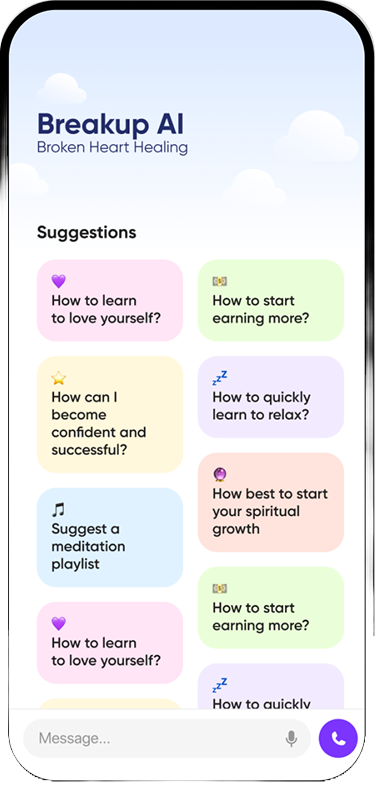
The plus side: Apps like Breakup.one use AI to tailor programs that adapt to your healing journey. A digital companion, always at your side when you need it most.
Trusting the Recovery Process
Healing from heartbreak isn’t a straight line. Some days may seem like setbacks—yet each small step is a victory to be celebrated. Trust in your process, and in your robust ability to heal.
As you venture forward—inviting new experiences, leaning on your support network, or utilizing tech tools—remember that a journey of emotional renewal awaits. Your future, your happiness, and your resilience are waiting to be reclaimed. Through the transformative path of self-discovery and growth, you are not alone.
The Bottom Line
Healing from heartbreak is a journey of empowerment and self-discovery. By embracing your emotions, seeking support, and engaging in self-care, you reclaim your happiness and resilience, allowing new experiences to unfold as you move forward.