



Table of Contents
- Understanding the Science of Heartbreak
- Building a Foundation of Self-Compassion
- Practical Self-Care Strategies for Healing
- Seeking Meaning and Connection
- Embracing Future Possibilities
- Moving Forward with Self-Care
- The Bottom Line
You find yourself standing amid the wreckage of a shared life, clutching that familiar sweater still infused with his scent—a fabric woven with memories. Replaying your last exchange, a sharp sting hits home. Heartbreak comes with the treacherous duo: unending tears or a jarring numbness. Yet there’s a path—a gentle one—towards mending what feels irreparably torn. Self-care isn’t just a quick fix; it’s the lifeline pulling you back to the shores of hope and healing.
“Heartbreak isn’t limited to emotions. It’s physiological. Your body literally registers the pain, and understanding this can be the first step toward healing.”
— Dr. Sarah Chen, Clinical Psychologist, NYU
If feelings of isolation weigh you down, take heart—self-care holds the transformative power to heal.
Understanding the Science of Heartbreak
Heartbreak isn’t merely poetic. It’s a complex emotional turmoil, entrenched deep within our biology. According to studies, the brain processes emotional pain on par with physical agony (check Kross et al.’s work at the University of Michigan). Perhaps this accounts for that gut-wrenching sorrow or why leaving bed feels almost Herculean.
Enter Maya, 28, who navigated these treacherous waters during her divorce. “It was sleep that ran away first,” she tells me. “My mind was relentless, never off duty.” Heartbreak prompts a surge of stress hormones, like cortisol, which can meddle with sleep, appetite—even sway your overall mood.
The antidote? Infuse self-care into your routine.
“When you invest in self-care, it sends a vital message: you’re safe, you’re valued.”
— Dr. Sarah Chen
It’s like setting the stage for healing to gracefully unfold.
Building a Foundation of Self-Compassion
Start your journey with self-compassion. Post-breakup self-blame is all too common. Yet Kristin Neff from the University of Texas reminds us that self-compassion involves treating ourselves with the kindness we’d extend to a beloved friend.
Think about how you’d encourage Maya through her heartbreak. You’d probably lend an empathetic ear, offer support, steer clear of criticism. That same gentle grace? Direct it inward, allowing a nurturing space for healing.
The Science Behind Self-Compassion
Self-compassion helps dwindle anxiety and depression (referencing Neff et al., 2007) through oxytocin release, fostering tranquility and safety. This kind of environment combats stress hormones, allowing the body the focus it needs for recovery.
How to Practice Self-Compassion:
- Mindful Acknowledgment: Notice negative thoughts without judgment. Consider: “I’m aware I’m being a bit hard on myself now.”
- Gentle Reassurance: Affirm your worth: “I’m doing the best I can; that’s enough.”
Practical Self-Care Strategies for Healing
Once self-compassion is within your grasp, practical self-care comes alive. Here’s how you could tailor a plan to soothe and restore your spirit.
Prioritize Physical Well-being
Physical wellness—a foundational pillar for emotional rebirth. A simple daily walk, as Maya found, can significantly boost your mood.
Why It Works:
Exercise releases those joyful endorphins, easing perception of pain, as noted by Harvard Health Publishing. It’s as if your body sends you a warming note: Joy’s still here.
How to Start:
- Daily Movement: Dedicate 15-30 minutes to movement each day—be it walking, yoga, or dancing to treasured tunes.
- Connect with Nature: If possible, take your exercise outside. Nature and fresh air have well-documented stress-relieving benefits.
Cultivate Emotional Nourishment
Your emotional core craves a breathable, healing space—one unfettered by judgment.
Why It Works:
Pent-up emotions can escalate stress and anxiety. Allowing them unbridled expression can relieve their intensity, as per insights from the American Psychological Association.
How to Engage:
- Journaling: Pen your feelings freely. Prompts such as “Today I feel…” or “I miss…” might guide you.
- Creative Outlets: Pour emotions into art, music, or creative endeavors that resonate with you.
Seeking Meaning and Connection
Heartbreak might make you question your place in the world. Rediscovering personal beliefs and engaging with a community can anchor you.
Re-establish Personal Identity
After a shared life chapter closes, redefining yourself becomes essential.
Why It Works:
Embraces resilience and self-discovery (Sbarra & Emery, 2005), emphasizing that your identity is larger than any relational role.
How to Explore:
- Revisit Hobbies: Reawaken old passions or birth new ones. Maya, for instance, found solace in rekindling her love for painting.
- Volunteer Work: Extending help connects you to the wider community, redirecting focus from personal sorrow.
Strengthen Social Connections
Isolation only deepens heartache, so reaching out is vital.
Why It Works:
Social links shrink loneliness, enhancing well-being (Cacioppo & Hawkley, 2003).
How to Connect:
- Reach Out: Dial a friend or family member when overwhelmed. Sharing can lighten your emotional load.
- Support Groups: Joining a heartbreak support group offer communal healing—a powerful balm indeed.
Embracing Future Possibilities
Though heartbreak might feel like an end, it’s a gateway to fresh beginnings. Cultivating hope and future prospects fuels your healing journey.
Setting New Goals
Ambitions—personal, professional—translate into life’s purpose and path.
Why It Works:
Goals sharpen motivation and provide a scaffold for positive growth (Locke & Latham, 2002).
How to Visualize:
- Vision Board: Craft a collage of hopes and dreams; visual aids are potent motivators.
Embrace Positivity
Adopt a mindset celebrating growth and the lessons within past experiences.
Why It Works:
Positivity builds resilience, enhancing emotional adjustment (Fredrickson et al., 2003).
How to Cultivate:
- Gratitude Practice: Note three daily gratitudes. It shifts focus from deficiency to abundance.
Moving Forward with Self-Care
It’s tough to see now, but the heartbreak’s journey could pave a profound transformational path. By focusing on self-compassion and detailed self-care strategies, you’re evolving a new path filled with possibilities and renewed strength. You have within you the fortitude to scan beyond heartbreak—to thrive.
Healing isn’t a straight line and adheres to no strict timeline. Walking this path at your own rhythm? That’s more than fine.
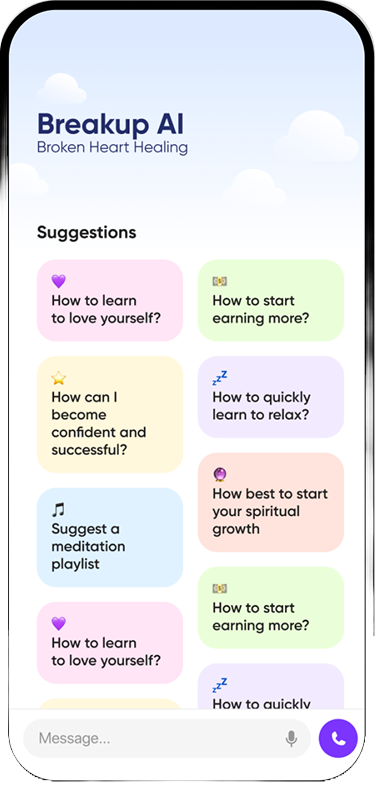
Should you need continuous support, consider Breakup.one: An AI-powered companion designed for heartbreak recovery, available every hour, guiding your individual healing route with empathy (Discover more at Breakup.one).
Key Takeaways
- Heartbreak affects not just emotions but also physiological well-being.
- Practicing self-compassion can significantly aid in emotional recovery.
- Building social connections and engaging in physical activity boosts healing.
- Setting new goals and embracing positivity can facilitate personal growth.
The Bottom Line
Healing from heartbreak is a journey that requires patience and self-love. By embracing self-compassion and adopting practical self-care strategies, you can pave a new path filled with hope and strength. Remember, you are not alone in this, and your spirit is ready to rebuild.
**HeartMend is committed to supporting your emotional journey.** Find solace and strength with our resources and join a network ready to walk with you toward healing.
References
- Kross, E. et al. (2011). Social rejection shares somatosensory representations with physical pain. PNAS.
- Harvard Health Publishing. The exercise effect.
- American Psychological Association. Emotional comfort during discomfort.
- Cacioppo, J. T. & Hawkley, L. C. Social connectedness improves emotional and psychological well-being.
- Fredrickson, B. L. et al. (2003). The Role of Positive Emotions in Psychological Resilience. American Psychologist.