



Table of Contents
- Facing the Reality of Pain
- The Rollercoaster of Emotions
- Giving Yourself Permission to Grieve
- Starting with Expression
- Cultivating Self-Care
- Simple Self-Care Tactics
- Building a Support System
- Managing Your Social Media Habits
- Reframing Your Thoughts
- Uncovering Your Own Identity
- Seeking Professional Support
- Embracing Tomorrow with Optimism
Key Takeaways
- Breakups trigger complex emotional responses, often causing both emotional and physical pain.
- Allowing yourself to grieve and express emotions is vital for healing.
- Practicing self-care and engaging in supportive communities can significantly aid recovery.
- Cognitive Behavioral Therapy (CBT) helps in reframing negative thoughts during the healing journey.
- Breakups can catalyze self-discovery and personal growth.
Facing the Reality of Pain
Breakups involve more than just saying goodbye to a person. They dismantle the future you imagined, disrupt routines, and tear down emotional structures.
“Breakups can trigger the same brain areas activated by physical pain.”
— Dr. Sarah Chen, Clinical Psychologist
No wonder it might feel as if your heart is aching both physically and emotionally.
The Rollercoaster of Emotions
When a tie snaps, and especially when it’s unwanted, you’re often left riding a rollercoaster of feelings—anger, grief, relief, and confusion swirling together. The American Psychological Association notes that this emotional upheaval can impact mental well-being considerably, at times resulting in anxiety or depressive tendencies.
Giving Yourself Permission to Grieve
Grief is integral to healing. It’s important to make space for your sorrow, much like tending to an injury. Ignoring it doesn’t help.
“Acknowledgement of your emotions is crucial because it validates your journey and kickstarts the healing process.”
— Dr. Lisa Moore, Relationship Counselor
Why does this work? Validating emotions prevents denial and repression, which can sometimes stretch out the distress. A study from the Journal of Psychology shows how emotional validation can encourage resilience and foster personal growth.
Starting with Expression
Set aside a few minutes each day to jot down your feelings. Journaling aids emotional processing and clarity. Supplement this with creative outlets—perhaps painting or music—to express what words might not capture. These practices can provide a much-needed cathartic release, slowly easing some of the emotional burden.
Cultivating Self-Care
Consider self-care as the cornerstones of reconstructing your life post-breakup. When Maya began weaving self-care into her daily routine, she felt a gradual change. Engaging in simple acts like taking a soothing bath or pursuing hobbies provided small yet significant reliefs. Harvard Health Publishing highlights that consistent self-care practices can boost mood and alleviate stress.
Simple Self-Care Tactics
- Get Moving: Integrate exercise into your daily activities. Exercise releases endorphins, which are nature’s mood elevators, while slashing stress. (Source: WHO)
- Eat Smart: A balanced diet can stabilize blood sugar levels and smoothen mood fluctuations. Omega-3 rich foods like salmon and walnuts are renowned for their brain-enhancing benefits.
- Mind Your Mind: Mindfulness practices ground your mind, reducing anxiety and negative spirals. Apps like Headspace offer guided meditations that might be beneficial.
Building a Support System
Loneliness can be particularly overwhelming post-breakup. Reaching out to your network is a healthy step.
“Nurturing bonds with supportive individuals is crucial for emotional recovery.”
— Dr. Laura Taylor, Social Psychologist
The release of oxytocin—a hormone linked to stress relief and emotional bonding—underscores the power of social connections.
WAYS TO CONNECT:
- Reach Out to Loved Ones: A casual coffee chat can offer surprising solace. It’s about shared empathy and understanding.
- Join Support Groups: Explore online communities where shared experiences offer reassurance that you aren’t navigating this space alone.
Managing Your Social Media Habits
Social media, post-split, can be a double-edged sword. Seeing your ex’s life move seemingly untroubled can intensify your own pain. Dr. Moore suggests a digital detox might be wise. Stepping back from social platforms offers breathing space, insulating you from curated snapshots and highlight reels.
Reframing Your Thoughts
As time passes, it’s easy to drift into negative self-talk or linger in the past. Cognitive Behavioral Therapy (CBT) is a potent tool, guiding you to reframe detrimental thought patterns. Use CBT worksheets or mental health apps for recalibrating your mindset.
Why does this matter? CBT, as proven scientifically, manages emotional distress by modifying dysfunctional thinking (Source: Mayo Clinic). By altering negative dialogue, you’re nurturing a more positive, growth-focused outlook.
Uncovering Your Own Identity
Often overlooked, breakups open avenues for self-discovery. It’s a chance to unearth what fulfills you, independent of a relationship. Whether pursuing new passions, traveling alone, or mastering a skill—this is your time.
HOW TO START:
- Cultivate New Interests: What’s something you’ve always wanted to try but haven’t? Be it pottery or scuba diving, novel experiences can enrich life and bring joy.
- Set Personal Goals: Extend from physical ambitions, like preparing for a marathon, to personal development, such as reading a certain number of books per month.
Seeking Professional Support
Sometimes, despite all you’ve tried, healing doesn’t follow a linear path—and that’s absolutely okay. Seeking professional assistance isn’t a sign of weakness but rather of strength and self-awareness. Therapists offer objective advice and strategies tailored to navigate your emotional maze.
Why is this effective? Structured support from professionals has been shown to hasten the healing journey (Source: APA).
Embracing Tomorrow with Optimism
When you allow yourself to feel, mend, and rediscover, what emerges is hope—a renewal of the spirit, seasoned with wisdom and resilience. Remember, you’re rewriting your story, crafting a future brimming with promise and joy.
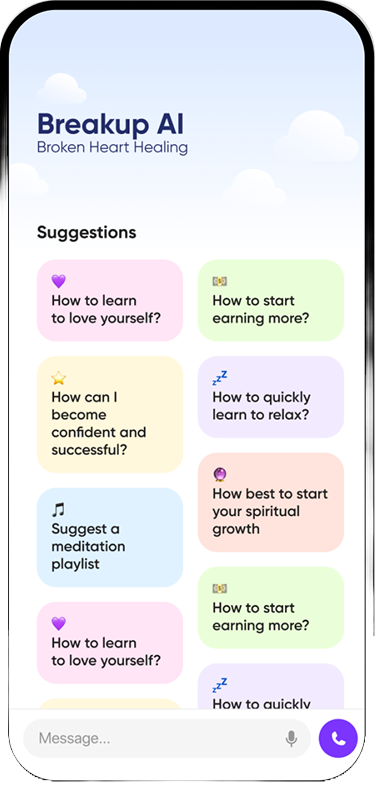
For a supportive companion on this journey, contemplate Breakup.one. With constant emotional support and guided healing pathways, it’s designed to transform your pain into strength. Discover more at https://breakup.one/.
The Bottom Line
Healing from breakup pain is deeply personal yet a shared human experience. By embracing emotions, leaning into your support network, practicing consistent self-care, and reaching out for professional help when necessary, you can steer through this turbulent period. Let this be a time of renewal, guiding you closer to uncovering the incredible person you are meant to become.
Remember always: you are deserving of love, healing, and happiness—no breakup can alter that fundamental truth.