



Table of Contents
- Understanding Breakup Depression: A Deeper Look Beyond Heartache
- The Roadmap to Healing: Effective Strategies
- 1. Allow Yourself to Grieve
- 2. Reconnect with Yourself
- 3. Establish a Support Network
- 4. Prioritize Physical Health
- Transitioning to a Positive Mindset
- Emerging Renewed and Empowered
You sit at the edge of your bed, tears streaking your cheeks, while your phone buzzes incessantly with well-intentioned messages from friends. Yet, silence hangs heavy in the room. Just a few days ago, you and your partner were dreaming of a shared future. Now, surrounded by tissues and broken hopes, you’re grappling with the crushing weight of breakup depression. How on earth do you move forward when it feels like the world has stopped?
Breakup depression isn’t merely sorrow; it’s more like a thick fog, enveloping every corner of your life, turning even the simplest tasks into monumental challenges.
“Breakup depression is an intricate emotional and physiological process, similar in some ways to mourning the death of a loved one.”
— Dr. Sarah Chen, Clinical Psychologist
You’re weathering an emotional storm, and it’s vital to affirm—to yourself and others—that your feelings are both legitimate and common. And despite the despair, there’s a glimmer of hope. With compassionate self-care, a supportive circle, and a few science-backed methods, you’ll find a way through this storm, coming out stronger on the other side.
Understanding Breakup Depression: A Deeper Look Beyond Heartache
Breakup depression comprises tangled emotions—emotional distress, mental cloudiness, physical exhaustion, and frequently, a tinge of identity crisis. It’s important to understand why the end of a relationship can cut so deep.
Attachment Theory and the Science of Heartbreak
Embarking on a romantic relationship immerses your brain in a cocktail of chemicals—oxytocin, famously known as the “love hormone,” and dopamine, the pleasure-inducer. This chemistry fosters a significant emotional link closely aligned with the bonds seen in parent-child relationships, as discussed in attachment theory. When this connection is severed, your brain faces something akin to withdrawal symptoms.
“The brain activity during a breakup mirrors that of drug withdrawal.”
— Dr. Helen Fisher, Biological Anthropologist
Recognizing this physiological reaction as an intrinsic part of your heartbreak can be freeing. You’re not simply being emotional; your brain is genuinely processing a loss akin to addiction recovery.
The Roadmap to Healing: Effective Strategies
How does one genuinely and swiftly recover from breakup depression? While there’s no quick fix, a mindful and strategic approach can make this journey not only bearable but empowering.
1. Allow Yourself to Grieve
Grieving is a fundamental step that shouldn’t be bypassed. When Maya, 28, confronted her divorce, she discovered the necessity of embracing her emotions to facilitate healing.
“I wrote unsent letters to my ex, which allowed me to voice my true feelings.”
— Maya
Writing can facilitate emotional release and provide a tangible means to navigate complex emotions.
Why It Works: Psychologically, expressing grief and sadness helps externalize and validate your emotions, promoting healing. The American Psychological Association’s findings suggest ignoring these feelings can worsen depression and anxiety symptoms.
How to Practice:
- Maintain a daily journal to clear your mind.
- Channel emotions into creating art or music.
- Communicate your pain, even if it’s a solitary conversation.
2. Reconnect with Yourself
Rediscovering personal identity outside the relationship reinvigorates self-confidence and independence. This step is crucial, particularly if you have worn a joint identity in the relationship.
Why It Works: Research in the Journal of Personality and Social Psychology suggests that having a clear self-concept—understanding your own identity—can enhance overall well-being and alleviate depressive symptoms post-breakup.
How to Practice:
- Explore new hobbies: From painting to yoga or hiking, immerse yourself in activities that you find fulfilling.
- Reflect on your needs and desires: Identify parts of yourself that were perhaps overshadowed during the relationship.
- Practice affirmations: Reinforce your self-worth and strengths routinely.
3. Establish a Support Network
Isolation can intensify feelings of loneliness and depression. Building a network of supportive individuals provides essential emotional nourishment during recovery.
Why It Works: The Mayo Clinic reveals that a supportive network of friends and family can significantly aid depression recovery by providing emotional support and reducing stress.
How to Practice:
- Reach out to loved ones: Plan weekly calls or meetups, sharing what’s on your mind.
- Participate in support groups: Connecting with others in similar situations can be profoundly validating.
- Consider therapy: Professional guidance, whether in-person or virtual, can be instrumental.
4. Prioritize Physical Health
A healthy body contributes to a healthier mind. Physical well-being significantly affects emotional state.
Why It Works: Physical exercise fosters endorphin release, the brain’s natural mood boosters. Harvard Health indicates that regular physical activity substantially mitigates depressive symptoms.
How to Practice:
- Set manageable goals: Start with gentle walks or quick home workouts.
- Embrace mindful eating: Nutrition impacts brain function, so focus on foods that nourish both mind and body.
- Develop a sleep routine: Consistent sleep patterns enhance mood and cognitive function.
Transitioning to a Positive Mindset
Eventually, you’ll awaken to find the ache in your heart has eased—a bit of that storm has passed. During this transition, welcome the transformation that accompanies surviving heartbreak. Acknowledge your resilience instead, and pivot your focus from what was lost to what can be gained.
“Recognize that heartbreak, though painful, offers a chance for profound self-discovery and a renewed mission.”
— Dr. Emily Stein, Licensed Therapist
Practicing Gratitude and Mindfulness: With a heavy heart, seeking gratitude might seem counterintuitive, yet it wields astonishing healing power. Columbia University’s study depicts how regular gratitude practices can boost happiness and lessen depressive symptoms.
- Keep a gratitude journal: Record three things you’re thankful for daily, regardless of their size.
- Engage in mindfulness meditation: Harness guided meditations to heighten awareness and calm a troubled mind.
Emerging Renewed and Empowered
As you tread this healing path, remind yourself: you’re not defined by this heartbreak but by your rebirth from it. Heartbreak is a shared human experience, yet each recovery story is uniquely yours. Each small step taken towards healing rejuvenates hope and self-reliance.
Finally, empower yourself to reshape happiness and fulfillment as you see fit. Welcome the potential for love—starting with self-love. Bear in mind, the strongest hearts are often those that have fractured and found the courage to love once more, embracing themselves fully.
Healing from breakup depression swiftly doesn’t equate to sidestepping mourning but to moving through it with a heart unlocked to transformation and renewal. Encourage yourself to dream anew, love deeply, and live fully. Healing is indeed a journey, and while its pace may vary, the rewards are certainly worthwhile.
Key Takeaways
- Embrace your emotions—grieving is essential for healing.
- Reconnect with your identity outside the relationship to rebuild confidence.
- Establish a support network to combat isolation and foster healing.
- Prioritize physical health through exercise and nutrition to support emotional well-being.
- Practicing gratitude can significantly enhance your mood and perspective.
The Bottom Line
Healing from breakup depression is a challenging but transformative journey. By embracing your feelings, seeking support, and focusing on personal growth, you can emerge stronger and more self-aware. Remember, this experience won’t define you; it’s a step towards personal evolution and rediscovery.
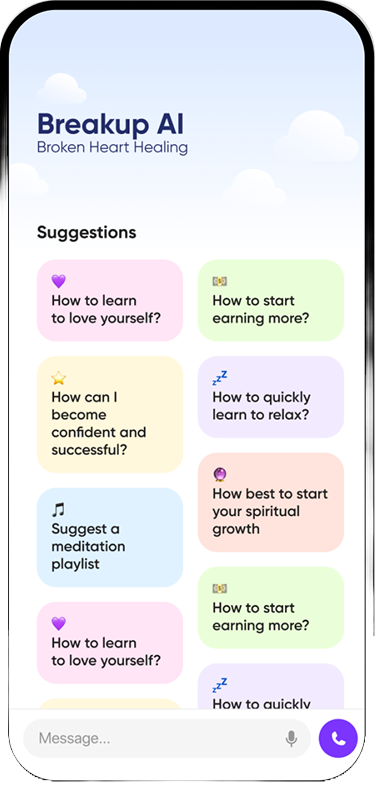
For further support and guidance on navigating heartbreak, think about using the Breakup.one app, a companion offering round-the-clock emotional support and healing programs.