

Table of Contents
- The Turbulent Road to Healing
- Recognizing Your Emotional State
- Embrace Mindful Self-Compassion
- Reconnect With Your Own Interests
- Build a Supportive Network
- Realign Your Life Goals
- Rediscover the Authentic You
Key Takeaways
- Heartbreak activates areas of the brain associated with physical pain.
- Acknowledging complex emotions is crucial to healing.
- Self-compassion can significantly improve recovery processes.
- Engaging in personal interests and hobbies enhances well-being.
- Building a supportive community can foster resilience during tough times.
It was a crisp autumn evening, and Anita found herself on her front porch, staring at the twirling leaves and wondering how her life had reached this point of disarray. After seven years, her partner had moved on, leaving Anita to grapple with the haunting question of who she was without this relationship. If this story of heartbreak and identity loss resonates with you, rest assured — you are far from alone. Navigating the path back to oneself after a breakup is as universal as it is personal, a bit like reopening an old, tear-stained diary that you’d hoped to never read again.
The Turbulent Road to Healing
A breakup doesn’t just mean the end of love; it signifies a seismic shift in daily life and self-perception. Emotional turmoil? Overwhelming would be an understatement. According to recent data, a whopping 85% of individuals face significant emotional fallout post-breakup—thanks for that, American Psychological Society.
“Heartbreak triggers the same parts of our brain as physical pain.”
— Dr. Sarah Chen, NYU
This overlap suggests your grief isn’t just “in your head”—it’s visceral and raw. Is it any wonder your heart might feel like it’s been through a blender?
Recognizing Your Emotional State
Before setting off on a quest to rediscover yourself, recognizing the swirling pool of emotions you’re swimming in is fundamental. Heartbreak isn’t just tears and Kleenex; it’s relief, guilt, anger—all sometimes at once. Maya, a 28-year-old who recently went through a divorce, described it like a “phantom limb”—something crucial missing yet felt intensely.
A nod to these feelings isn’t enough; one must acknowledge their impact on behavior and choices. Your body’s reactions, like insomnia or disinterest in activities that once set your soul on fire, are natural responses to distress. They’re your body’s way of shouting, “Hey, I’m in survival mode!” NIH suggests stress can manifest in a variety of physical forms—how comforting to know, right?
Embrace Mindful Self-Compassion
Rediscovering yourself post-breakup starts with self-compassion. Imagine talking to yourself without harsh judgments. Picture replacing “what went wrong” with genuine understanding. Dr. Kristin Neff, a heavyweight in the field of self-compassion, reminds us to treat ourselves as kindly as we would a dear friend in distress.
“Kindness, especially during our lowest moments, can pivot our reactions to personal failures.”
— Dr. Kristin Neff
Can hearing that make you breathe just a little easier?
Practical Steps:
- Self-Affirmations: Envelop yourself in affirmations each morning, statements affirming your right to love and happiness.
- Journaling: Track your emotional voyage in a journal. Pen down gratitude, lessons, and growth witnessed along the way. Research, like that from Harvard Health, shows expressive writing can ease emotional distress.
Reconnect With Your Own Interests
With the conclusion of a relationship, time and energy once shared are yours. What better moment to rekindle interests left behind? For Anita, it was rediscovering her love for painting, something she hadn’t done since her college days. And no, you don’t have to be Picasso. Let passion lead the way; in turn, it offers a therapeutic outlet and a renewed sense of identity.
Research concurs: engaging in hobbies that ignite a state of ‘flow’ can profoundly uplift one’s mood and overall well-being. Ever heard of Csikszentmihalyi’s Flow Theory? It’s like your own personal power-up!
How To Start:
- List Old Enjoyments: Write down neglected activities once cherished.
- Explore New Grounds: Maybe a dance class? New experiences breathe fresh life into routines.
Build a Supportive Network
In the aftermath of a breakup, isolation is tempting; yet social connection remains a cornerstone of recovery. A University of California study posits that emotional support bolsters resilience post-heartbreak. And who doesn’t need a little resilience boost every now and then?
Support isn’t about oversharing with everyone but finding those who genuinely uplift—think close friends, family, or supportive groups.
Steps to Cultivate Support:
- Communicate Your Needs: Be open with loved ones about how they can best support you during this period. You might be surprised at their willingness to help.
- Seek Out Supportive Groups: Whether online or in-person, there’s comfort in shared experiences.
Realign Your Life Goals
With the past filed away, gaze toward a canvas-painting your future with your aspirations. Revaluating life goals doesn’t necessitate a radical overhaul—it means syncing with core values and passions. Sara Waters, a breakup recovery life coach, suggests taking small, meaningful steps.
“Focus on goals that resonate with your vision of growth.”
— Sara Waters, Breakup Recovery Life Coach
Does this idea spark something within you?
How to Proceed:
- Vision Board: Craft a visual reflection of dreams—be it travel, career, or personal success.
- Use SMART Goals: Specific, Measurable, Achievable, Relevant, and Time-bound strides forward.
Rediscover the Authentic You
In heartbreak’s rawness lies the soil for personal regrowth. Reconnecting with your true self post-breakup can be daunting but profoundly liberating. It’s your story to write, with the chapters ahead solely yours. If Anita’s tale struck a chord, realize that such endings might just be the beginning—a transformative gateway into deeper self-discovery.
Embrace your strength and vulnerability on this personal journey. In the end, remember: healing unfurls in waves, not straight lines.
The Bottom Line
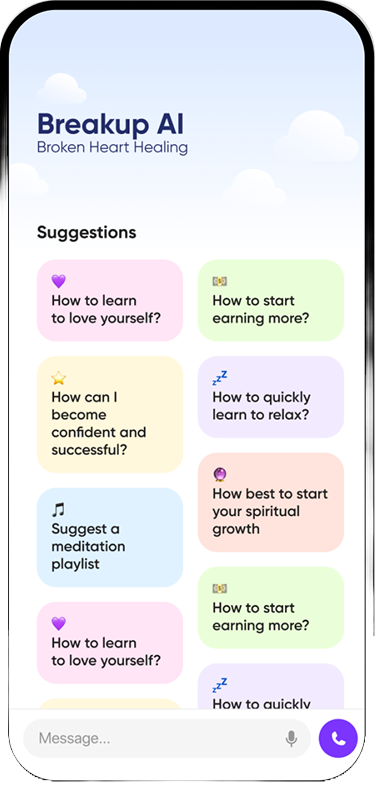
Whether embarking on this path with courage or a tentative step, know each movement is vital to both self-discovery and love’s reacquaintance. At HeartMend, we’re here to support your journey. For round-the-clock emotional companionship, consider Breakup.one — your steadfast ally in facing heartbreak and embracing authenticity.
References
- American Psychological Association
- National Institutes of Health
- University of Texas at Austin
- Harvard Health Publishing
- University of California