



Table of Contents
- Understanding the Emotional Impact of Heartbreak
- The Power of Self-Care in Healing
- Nurturing the Mind
- Reconnecting With Your Body
- Emotional Expression and Connection
- Finding New Meanings and Purpose
- Embracing Future Growth
- The Empowering Choice of Self-Care
Key Takeaways
- Heartbreak involves a complex mix of emotions, making self-acceptance crucial.
- Creating a personalized self-care plan enhances emotional resilience.
- Physical exercise, mindfulness, and emotional expression are essential for healing.
- Engaging in new hobbies can help you rediscover passions and foster growth.
- Therapy can provide support in navigating emotions and healing.
Picture this moment: you’re at a crossroad, heart burdened with unsaid words, mind churning with what-ifs. It’s a journey no one seeks, yet here you are, navigating the maze of heartbreak. The end of a romantic chapter can feel like an intense earthquake—shattering a shared future, leaving behind the rubble of dreams. Yet within this emotional wreckage lies a road towards rediscovery, bit by bit. Welcome to the vulnerable yet empowering realm of self-care post-heartbreak, where nurturing your inner self can lead to healing and growth beyond what you might have thought possible.
Heartbreak often sits you down with a mix of emotions—sadness, confusion, even anger—that can make you feel utterly alone.
“Heartbreak is a complex cocktail of loss. It’s not just about losing someone; it’s also the loss of a future you’d hoped for.”
— Dr. Sarah Chen
The first step in reclaiming your emotional equilibrium? Accepting this multifaceted loss.
Understanding the Emotional Impact of Heartbreak
Maya, now 28, describes her divorce after seven years as “being lost in a storm without an umbrella.” This penetrating imagery captures the emotional turmoil that accompanies such experiences. Perhaps you’re feeling similar—like being tossed by a tempest that offers no safe harbor.
Scientists have weighed in, too. A study shared by the Journal of Neurophysiology discovered that our brains process emotional pain much like physical pain—hence, the very real ache of heartache (Eisenberger et al., 2003). Knowing this can help validate your feelings, can it not?
The Power of Self-Care in Healing
Self-care isn’t just about pampering yourself with bubble baths, although they certainly have their place. It’s more about nurturing your emotional landscapes and tending to the invisible wounds heartbreak leaves behind—a gentle trek toward recovery.
Creating a Self-Care Plan
So where to start? Consider crafting a self-care plan that truly resonates with you—one that feels like a comforting wrap against the world’s coldness.
“Self-care should be personal. What helps one person might not for another. Listen to your inner voice.”
— Dr. Maria Gonzalez
**Why personalized self-care shines:** Tailored plans resonate deeply, aligning with your own emotional framework. Back in 2018, an article in Frontiers in Psychology emphasized that personalized strategies can greatly enhance emotional resilience.
Nurturing the Mind
Your mind—it’s a potent tool for recovery. Treat it with kindness.
Mindfulness and Meditation
Mindfulness is a gentle balm for your raw heart. In simple terms, it means being fully present, without judgment. Accepting your feelings without attempting to escape—how liberating is that?
**The psychology underpinning mindfulness:** Exercises in mindfulness, studies say, lower stress hormones and boost serotonin, the neurotransmitter linked to well-being, according to Harvard Health Publishing. Imagine that gentle peace mingling with inner chaos.
How to engage: Start with simple meditations available online, or just spend five minutes a day breathing and acknowledging your thoughts. Apps like Calm or Headspace can be excellent companions here.
Reconnecting With Your Body
Heartbreak often leaves its mark physically, so caring for your body is essential.
Physical Exercise
Engaging in physical activity transcends fitness—it’s about liberating trapped emotions within. If a workout feels daunting, try a daily walk. Kelly, who found solace in dance post-breakup, attests it helped her articulate emotions that words couldn’t capture.
**The benefits of physical activity:** The Mayo Clinic notes how exercise promotes endorphins—your brain’s natural mood lifters. Your spirit rises as your feet move.
How to get active: Find what brings you joy. Whether it’s yoga, running, or dance, make it routine. Your whole self will gradually thank you.
Emotional Expression and Connection
Journaling
Writing can be surprisingly cathartic. It’s a space where emotions too raw for speech can spill.
**The science of writing therapy:** According to the American Psychological Association, exploring emotions through writing can lessen stress and anxiety.
How to jot down effectively: Dedicate a moment to pen your thoughts. Start with prompts like “Today, I feel…” or “What wish I could say…”. Let emotions flow unrestrained.
Cultivating Supportive Relationships
Resist the urge to hide away; instead, nourish relationships that support your emotional health. Rely on friends or family for their empathy and support.
“Community can be an incredible balm during the heartache.”
— Dr. Sarah Chen
Finding New Meanings and Purpose
Engaging in New Hobbies
Heartbreak opens an unexpected chance to rejuvenate forgotten passions. Exploring these can birth joy and accomplishment anew.
**Why hobbies heal:** The International Journal of Environmental Research and Public Health revealed how creative activities bolster emotional resilience. Engaging with what offers pleasure and challenge breeds life anew.
Starting something fresh: Experiment. Try painting, gardening, writing, or take up that instrument you always wanted to learn. These pursuits can reignite your zest for life.
Embracing Future Growth
Heartbreak might beckon you towards growth you never envisioned. It’s about learning yourself anew and facing vulnerabilities with bravery. If patterns hold you back, seeking professional help might be the key. Therapists provide non-judgmental spaces for deeper emotional insights.
**The role of therapy:** As per the National Institute of Mental Health, therapy nurtures healthier thought patterns, gradually improving emotional landscapes.
The Empowering Choice of Self-Care
As you wander through echoes of past love, remember self-care isn’t just an act—it’s a lifestyle. It’s your bridge to healing, acknowledging your needs, boldly meeting them head-on.
In the poetic words of Cheryl Strayed:
“You let time pass… You float like a ghost… Then, one fine day, your past ache no longer clouds your thoughts.”
— Cheryl Strayed
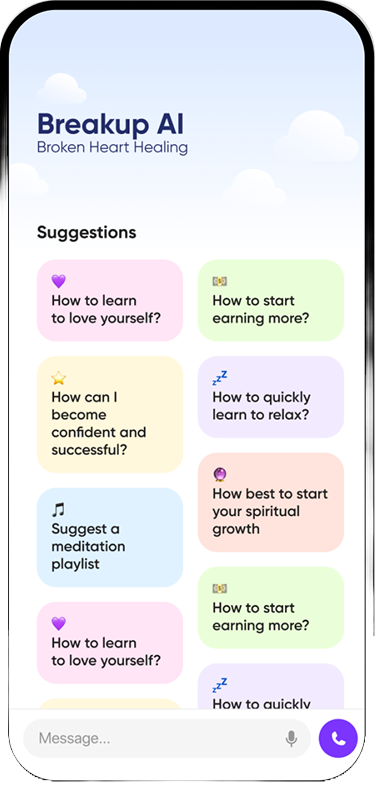
You deserve to stride toward the light, nurture your soul, and heal entirely. Those ready for compassionate guidance might explore Breakup.one. This AI-backed companion promises non-stop support and guided healing to help you reclaim your emotional self.
By embracing each step—from mindfulness to heartfelt connections—you’re paving a path to a more resilient you. One where happiness dances joyfully within.
The Bottom Line
Heartbreak is a profound experience that can lead to emotional turmoil, but by embracing self-care, mindfulness, supportive relationships, and new passions, you can navigate this challenging time and emerge stronger. Remember to nurture both your emotional and physical well-being, and don’t hesitate to reach out for professional support if needed.