



Table of Contents
- Understanding Heartbreak and Confidence
- Self-Care Strategies: The Foundation of Healing
- Building External Support Systems
- Cultivate New Experiences and Hobbies
- Practice Affirmations and Mindfulness
- Reimagining Your Future
- Empowering Your Healing Journey
- References
Understanding Heartbreak and Confidence
On a crisp autumn morning, Emma found herself standing on the knife’s edge of heartache. Her long-term partner was gone, leaving behind not just an empty closet but gaps in her very soul. As Emma sifted through a box filled with remnants of what once was — letters, snapshots, souvenirs from far-off places — a haunting question lingered, “Will I ever feel whole again?”
Heartbreak isn’t just emotional turmoil; it throws one’s self-assurance for a loop and spawns uncertainty about self-worth. That ache in your stomach, the looming shadow around your heart… it’s familiar terrain for many. But there’s solace in knowing that self-care during this turmoil can steer you toward renewal and a promising future—don’t we all cling to that hope in our darkest times?
“Heartbreak probes into our most intimate vulnerabilities. Our identities often intertwine with our relationships, and their dissolution can feel akin to losing a part of oneself.”
— Dr. Sarah Chen, Clinical Psychologist at NYU
Gaining confidence again might seem a distant dream, but remember, it’s more than just holding your head high. It’s believing in your capacity to tackle life head-on. Reclaiming this self-assurance doesn’t happen overnight, but with determination, it’s very much within reach.
Self-Care Strategies: The Foundation of Healing
Wading through the chaotic aftermath calls for a dynamic approach to self-care rather than a rigid checklist. It’s about nurturing every facet of your being—mind, body, spirit.
- Embrace Emotional Healing & Self-Reflection
Letting oneself grieve can feel counterproductive when striving for quick recovery, yet it’s vital. Emotional healing isn’t bypassing the pain; it’s about making peace with it. Maya, at 28, discovered this when her divorce convinced her initially that distractions were key. Only when she paused to reflect did she start understanding herself truly.
“Embracing your emotions is the pathway to recovery.”
— Dr. John M. Gottman, Renowned Relationship Expert
Journaling works wonders here—from a therapeutic release to processing emotions, it paves the way for transformative discoveries.
- Reconnect with Your Body
In the aftermath of heartbreak, your body might feel foreign, out of sync. Yet, exercise is a remarkable tool—a dual benefit of mood enhancement through endorphins and a gradual rebuild of self-esteem. Take Claudia, aged 32, who turned to boxing post-breakdown and found it not only relieved tension but gently stitched her self-worth back together.
Engaging your body—whether through yoga, a rhythmic dance, or a solitary run—can be grounding as well as uplifting. The very act of movement might just rekindle a connection with your spirit.
Building External Support Systems
Breakups carve out loneliness, an abyss in which many find themselves entrenched. But let’s remember—we seldom have to brave this alone.
- Lean on Your Support Network
It’s during these times that friends, family, even therapists can provide the support you didn’t know you needed. Sharing pain lessens its weight. A Harvard University research underscores that social ties boost psychological health and resilience.
“Open communication is key. Inform your entourage exactly how they can support you, whether through listening or simple companionship.”
— Dr. Emily Lane, Relationship Counselor
- Explore Professional Help
Some journeys to self-recovery benefit from professional insights. Therapists can be invaluable allies, equipping you with tailored strategies to reconstruct self-esteem. Cognitive Behavioral Therapy, for instance, effectively alters negative thought patterns.
This is no step backward; it’s embracing a guiding hand when you need it the most.
Cultivate New Experiences and Hobbies
Once the tumult quiets, rebuilding your life anew can be deeply gratifying. It’s less about masking reality and more about rediscovering what ignites your passion.
- Try Something New
New endeavors can invigorate the soul. Jenna, 25, responding to a broken heart, tried her hand at photography. It opened her eyes to the beauty within herself—seeing the world through a lens offered fresh insights and hope.
Engage in something that captivates, enhances your sense of accomplishment, and nurtures self-worth. Learning fuels joy, a fact supported by journal findings noting its positive impact on happiness and brain functionality.
- Travel and Explore
Whether grand adventures or simple day trips, travel can refresh perspectives and break heartache’s cycle. It’s stepping outside your norm, gaining a broader view of the world and your place in it. Travel—according to research from the University of Surrey—enhances life satisfaction by immersing us in novel experiences.
Practice Affirmations and Mindfulness
How you speak to yourself isn’t just conversation; it’s transformational. Post-heartbreak, self-talk might skew critical. Positive affirmations—like “I am worthy of love and growth”—can pivot this narrative to one of compassion and resilience.
- Use Affirmations for Healing
Affirmations powerfully root self-beliefs in positivity. They’re more than words; engaging the brain’s happiness circuits, they reinforce an inner strength you might have forgotten.
- Mindfulness Meditation
Mindfulness anchors you in today, offering relief from the tangles of ruminative thoughts. Studies back this—mindfulness bolsters resilience and emotional regulation. By observing your thoughts rather than being subjugated by them, you regain control.
Reimagining Your Future
Through heartbreak’s phases, a key reminder: this is a mere chapter—not your entire story. What insights have you gleaned about yourself? What’s the portrait of your ideal future? This process is foundational to nurturing a future self.
Laura, at 30, after her heartbreak, didn’t just aimlessly rebuild; she chased ambitions unlinked to relationship status. She sought new travel avenues and reimmersed herself in painting—each step a salute to her intrinsic dreams rather than external validation.
In shaping your future vision, you invest in a precious relationship—you with yourself.
Empowering Your Healing Journey
Heartbreak’s road is daunting, but each small step affirms your resilience. Nurturing compassion, reconnecting with others, embracing novel horizons—all these forge a testament to your strength.
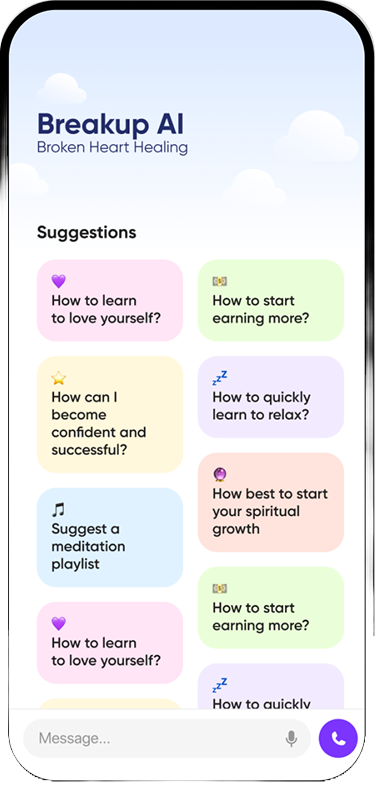
Amidst the hardship, remember—therein lies soil fertile for profound growth, a life that flourishes beyond expectations. Lean courageously into curating a life where heartache is but a memory, not the main act. You’re more than entitled to emerge stronger, wiser, and authentically you. And if it all ever feels overwhelming, consider resources like Breakup.one, offering 24/7 AI-supported guidance tailored for heartbreak recovery.
Key Takeaways
- Heartbreak challenges self-worth and demands profound self-care for recovery.
- Emotional healing involves embracing feelings and self-reflection.
- Physical activity can rebuild both mood and self-esteem.
- Utilizing support networks and professional help can significantly aid recovery.
- Adopting new experiences and practicing mindfulness fosters resilience and growth.
The Bottom Line
Heartbreak offers a painful journey, yet through self-care, connection, and exploration, individuals can transform their experience into one of empowerment and self-discovery. You have the strength within to emerge from heartbreak with renewed confidence and clarity.
References
- APA – Journal of Personality and Social Psychology study on emotional impact.
- Gottman Institute – Relationship and emotion study.
- APA – Exercise and mental health advocacy.
- Harvard Health Publishing – Importance of social connection.
- Mayo Clinic – Benefits of Cognitive Behavioral Therapy.
- University of Surrey – The transformative power of travel.
- PsychCentral – Science behind affirmations.
- Psychological Science – Mindfulness and its effects on resilience.