



Table of Contents
- Understanding the Depth of Your Emotions
- Letting Go and Mourning the Loss
- Reconnecting with Yourself Through Self-Discovery
- Building Your Emotional Toolkit
- Cultivating New Relationships and Community
- Visualizing Your Future Self
- Navigating Setbacks with Resilience
- Embracing a New Chapter with Confidence
Picture this scene: It’s… late at night, the world outside silent, as if holding its breath. You’re awake, eyes fixed on the ceiling, an unrelenting void swirling in the pit of your stomach. Rising to face another day feels like climbing Everest. Remnants of your recent breakup haunt the corners like stubborn shadows refusing to fade. Sound familiar? You’re certainly not alone. We’ve all felt how heartbreak can upend everything, leaving you lost and unmoored. But, believe it or not, this pain—this absolute emotional wreckage—also furnishes a unique opportunity to rediscover oneself, to rebuild, heal, and eventually… even flourish.
Let’s not mince words—this agony? Universally felt. Back in 2018, a Binghamton University study revealed that over 60% of participants admitted that breaking up had negatively impacted them, illustrating just how profoundly the end of a relationship can hit us all. Yet, within this cocoon of pain, there lies potential to transform into a version of yourself that’s both stronger and more self-aware.
Understanding the Depth of Your Emotions
Before you set off on this path toward finding yourself again, it’s vital to acknowledge the messiness—the whole tangle of emotions you’re experiencing. Grief. Anger. Confusion. It’s all there. And trust me, they’re not just figments of your imagination; these emotions leave marks on your body too.
“The way our bodies process emotional pain mirrors how they handle physical pain. Recognizing this is key to beginning your healing journey.”
— Dr. Sarah Chen, Clinical Psychologist
Why does this connection exist? Some fascinating research published by the Journal of Neurophysiology highlights that emotional pain fires up brain areas linked to physical pain perception, especially the anterior cingulate cortex. Understanding this physiological link might just help you see why recovery requires patience and, yes, loving care.
Letting Go and Mourning the Loss
Letting go—it’s a tough gig, isn’t it? Especially after a relationship ends. Consider Maya, age 28, who went through a draining divorce. She clung to memories like sinking ships cling to rafts. Only when she permitted herself to mourn the future she’d envisioned did any real healing begin.
The grief we feel post-breakup is akin to losing a loved one. Dr. Elisabeth Kübler-Ross introduced us to five stages of grief: denial, anger, bargaining, depression, and acceptance. Knowing that your emotions might dart between these stages can affirm your experience, providing comfort in realizing it’s all a normal part of healing.
Being kind to yourself during these moments is non-negotiable.
“Acknowledging emotions without criticism is a pivotal recovery aid.”
— Dr. Kristin Neff, Self-Compassion Researcher
Journaling your feelings or having a deep chat with a good friend might be worth exploring.
Reconnecting with Yourself Through Self-Discovery
As that breakup fog begins to clear, you’ll discover space to reconnect with the most important person of all—yourself. Getting back into hobbies or passions that sat on the back burner during your relationship feels like a breath of fresh air. Did painting fill you with delight once? Or perhaps hiking was your sanctuary. Unearthing these activities anew can ignite your sense of self.
Science backs this up. A study from Harvard Medical School discovered that embracing creative pursuits can uplift mood and help diminish symptoms of depression, fostering emotional healing. Even dabbling in creativity—a weekend painting session or a daily sketch—provides grounding and emotional equilibrium.
Building Your Emotional Toolkit
Crucial to rediscovering yourself after a breakup is piecing together a robust emotional toolkit for enduring healing. Therapy or counseling stands as an invaluable asset, supplying professional guidance and an impartial viewpoint.
“Therapy can equip you with the tools and frameworks to navigate emotions constructively.”
— Dr. Sarah Chen, Clinical Psychologist
Mindfulness and meditation hold powerful sway in emotional recovery, as the American Psychological Association reflects. These practices can help shrink emotional reactivity and rumination. Devote a few moments each day to savoring silence, centering your focus on the breath, and pulling yourself into the present.
Exercise, too, is a formidable ally. According to the Mayo Clinic, being active pumps up your endorphins, those feel-good neurotransmitters your brain loves—lifting mood and fending off depression frequently tied to heartbreak. Yoga, running, it’s your call; find an activity that treasures your body as much as your mind.
Cultivating New Relationships and Community
As you wander through this maze of rediscovery, cracking open the door to new social experiences and relationships offers profound healing. Though the prospect of forging new connections after a breakup seems intimidating, keep in mind that social interaction is essential to our nature.
A study from Harvard’s Center on the Developing Child underscores that social bonds prove crucial for emotional well-being and resilience.
Start by reaching out to long-lost friends or step into local clubs or groups aligned with your interests. Fresh friendships provide perspectives you hadn’t imagined and support you perhaps didn’t know you needed.
Visualizing Your Future Self
After anchoring yourself in daily routines, passions, and newfound relationships, it’s time to look ahead. Visualization isn’t just some buzzword—it can truly carve out the path to the version of yourself you’re keen on becoming. Cognitive neuroscientist Dr. Caroline Leaf emphasizes how visualization can rewire neural pathways, enabling you to reshape thought patterns—thus helping redefine past fragments.
Try piecing together a vision board. Collect images and sayings that resonate with your rejuvenated goals and aspirations. Keeping these visuals within sight can trigger motivation and remind you of your journey’s purpose.
Navigating Setbacks with Resilience
Let’s face it—self-discovery and healing don’t tread a linear path, and setbacks? They’re just part of life. How you bounce back from these hiccups writes your recovery story. Stumble? Rekindle memories of marching through past challenges. Turn setbacks into stepping stones for growth.
The American Psychological Association teaches resilience as the ability to rebound from adversity. Cultivating resilience doesn’t mean unfeeling; it means managing challenges adeptly. Reflect on past hurdles you’ve conquered, and contemplate the strengths that guided you through.
Embracing a New Chapter with Confidence
As you traverse this transformative expedition, bear in mind that rediscovering yourself post-breakup is both a personal and profound undertaking. It entails reclaiming your narrative, nurturing your passions, and embracing your untapped potential. When Sarah—the voice earlier amid the darkness—recast her solitude as a time ripe for growth, she discovered peace and purpose once lost.
Ultimately, this journey back to yourself after heartbreak brims with the promise of self-discovery, ushering in a deeper appreciation for your worth and desires. You are the author of your story, and this chapter, born from anguish, possesses the seeds of fresh beginnings and unexplored avenues.
Key Takeaways
- Heartbreak is a universal experience and can lead to profound personal growth.
- Acknowledge and embrace your emotions as part of the healing process.
- Engage in self-discovery by reconnecting with hobbies and interests.
- Build an emotional toolkit that includes therapy, mindfulness, and exercise.
- Visualize your future self to motivate you during your journey.
The Bottom Line
Rediscovering yourself after heartbreak is a journey filled with challenges and opportunities for growth. Embrace this chance to reclaim your narrative, nurture your interests, and build resilience as you move forward.
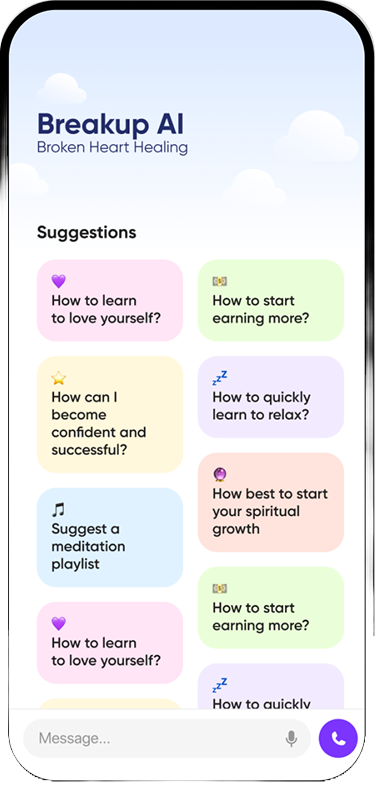
If you’re feeling adrift, unsure, or in need of a steady hand on this voyage, think about exploring Breakup.one. This AI-powered companion for heartbreak recovery provides tailored emotional support and structured programs, crafted to guide you forward with assurance and clarity. Visit Breakup.one for a step toward healing today.
**Sources:**
- Binghamton University
- Journal of Neurophysiology
- Mayo Clinic
- American Psychological Association
- Harvard Medical School
- Harvard’s Center on the Developing Child