



Table of Contents
- Introduction
- What Changes First: Your Body and Brain
- The Emotional Arc
- The Messy Middle
- Behavioral Shifts to Notice
- Why Certain Practices Work
- Movement Retrains Mood and Energy
- Mindfulness Interrupts Mental Spirals
- Expressive Writing Organizes Emotions
- Social Connection Protects Health
- Sleep Repairs Mood Regulation
- Handling Setbacks Without Losing Progress
- Dating Again
- What Moving On Does to Your Identity
- Building a Gentle Four-Week Plan
- If Healing Feels Stuck
- What You’ll Notice As You Keep Moving On
- Closing
- The Bottom Line
- References
Key Takeaways
- Moving on arrives through small, steady shifts—not one dramatic finale.
- Evidence-based practices—movement, mindfulness, writing, connection, and sleep—help regulate your body and mind.
- Setbacks are temporary “weather,” not a loss of all progress; structure and self-compassion keep you grounded.
- As you heal, identity refreshes: boundaries strengthen, joy returns, and self-trust grows.
Introduction
The first morning you don’t check their Instagram feels unfamiliar, like walking in new shoes that haven’t softened yet. There’s a stitch of pain, yes—but also a pocket of air you didn’t know you’d been holding. Coffee tastes a little brighter. You answer a text without rereading it six times. In my interviews, that’s how moving on tends to arrive: not as one cinematic finale, but a breadcrumb trail of small shifts that slowly reroute a day, then a week, then a life.
If you’re here, you may be tiptoeing into that phase. You may be wary of what loosening your grip on the past says about the love itself. It was real. It matters. And—there’s so much that opens once you begin: in your body, your brain, your routines, your sense of worth. I’ve walked people through this for 15 years, and I’ve walked it myself. Let’s map what changes, why it changes, and how to protect the process with tools that hold up under scrutiny.
What Changes First: Your Body and Brain When Moving On After a Breakup
Heartbreak doesn’t confine itself to the metaphorical heart. It lands squarely in the nervous system. Early on, your sleep may splinter; appetite wobbles; a low-level hum of jitters settles under the skin. That’s not you being “dramatic.” It’s physiology. Research has shown that social rejection and loss can activate brain regions involved in physical pain—an explanation for why grief sometimes feels tactile, almost bruise-like (American Psychological Association – https://www.apa.org/monitor/2012/04/rejection).
As you begin to move on, the system starts to re-regulate. Falling asleep doesn’t feel like a fight every night. You wake fewer times. The CDC still advises at least seven hours for adults, and for good reason: sleep stabilizes mood and helps the brain process emotional memories that otherwise keep looping (CDC – https://www.cdc.gov/sleep/about_sleep/how_much_sleep.html). In reader letters and sessions, that first full night of sleep is often named as a quiet milestone—evidence that the body is no longer bracing for impact every hour.
“Think of early recovery like a physiological storm. As moving on takes hold, the weather still shifts—gusts, then sun—but over time, you get longer stretches of blue sky. The stress response doesn’t stay jammed in high gear.”
— Dr. Sarah Chen, Clinical Psychologist at NYU
The Emotional Arc of Moving On After a Breakup
Grief resists neat arcs. You’ve heard that before because it’s true. Progress usually loops—three steady days, a sharp night, a week of ease, then a song floors you in the produce aisle. That’s not failure. It’s your attachment system recalibrating.
Mayo Clinic notes that grief can come in waves and that reminders—anniversaries, neighborhoods, saved photos—can trigger fresh feeling even when you’ve felt solid (Mayo Clinic – https://www.mayoclinic.org/healthy-lifestyle/end-of-life/in-depth/grief/art-20044775). As moving on gathers pace, the waves often grow less forceful and more spaced out. My view: we don’t “finish” grief; we grow around it.
When Maya, 28, finalized her divorce last spring, she expected a tidy countdown. “I kept tallying months like I was waiting for a warranty to expire,” she told me. “But moving on wasn’t a clock. It was more like learning to surf. The wipeouts got rarer. And then one day I realized I was just…standing on the shore, dry.”
The Messy Middle: Anger, Rumination, and the Urge to Check Your Phone
In the middle stretch, anger and second-guessing can take turns at the wheel. Rumination—those endless what-ifs—masquerades as problem-solving but functions like mental quicksand. This is where mindfulness is less buzzword, more lifeline. It teaches you to notice a thought without climbing inside it. Harvard Health has reported that mindfulness practices reduce stress reactivity and rumination, quieting the churn that fuels anxiety and low mood (Harvard Health Publishing – https://www.health.harvard.edu/mind-and-mood/mindfulness-meditation-to-enhance-well-being).
“Moving on often means weaning your brain off the checking habit—texts, DMs, old photos. Each check delivers a quick dopamine pulse, which reinforces the loop. Step one is compassionate awareness: ‘I’m craving a check because I’m anxious, not because it helps.’ Step two is a replacement ritual that downshifts your nervous system.”
— Dr. Luis Ortega, Psychiatrist and Researcher, Los Angeles
Behavioral Shifts That Signal You’re Moving On After a Breakup
It’s easy to miss the micro-milestones. Notice these quiet signs:
- You delay or skip the scroll. The reflex to check their status softens, then fades.
- Your future tense returns. You start sentences with “I’m going to…” and mean it.
- Sleep evens out; appetite steadies. Daily rhythms feel more predictable.
- Music, food, and places you avoided become neutral again—maybe even enjoyable.
- You set boundaries and don’t over-explain them to be palatable.
- You can tell the story of the relationship without collapsing into it.
When these show up, trust them. They’re the ground firming under your feet.
Why Certain Practices Work When Moving On After a Breakup
Healing isn’t a magic trick. There’s method here. Here’s the why—followed by the how.
1) Movement retrains mood and energy
Why it works: Physical activity helps regulate stress hormones and releases mood-supportive neurotransmitters. Harvard Health has long noted that exercise can be as effective as medication for some with mild to moderate depression (Harvard Health Publishing – https://www.health.harvard.edu/mind-and-mood/exercise-is-an-all-natural-treatment-to-fight-depression). The WHO still recommends 150–300 minutes of moderate aerobic activity weekly for adults (WHO – https://www.who.int/news-room/fact-sheets/detail/physical-activity). In my practice, movement is the most underrated intervention.
How to try it:
- Commit to “streaks of 10.” Ten-minute walks after lunch or dinner count.
- Pair movement with connection: a weekly hike or class with a friend.
- Track how you feel before and after. Let your body show you it helps.
2) Mindfulness interrupts mental spirals
Why it works: Mindfulness reduces rumination, strengthens attention, and builds the muscle to respond rather than react (Harvard Health Publishing – https://www.health.harvard.edu/mind-and-mood/mindfulness-meditation-to-enhance-well-being).
How to try it:
- Two minutes a day of breath-focused practice, phone on airplane mode.
- Label thoughts: “planning,” “remembering,” “judging.” Then return to breath.
- Make everyday acts mindful—shower, dishes, commuting—one sense at a time.
3) Expressive writing organizes emotions
Why it works: Putting words to experience helps the brain integrate memory and meaning. The APA has highlighted expressive writing’s benefits for emotional processing for decades (APA – https://www.apa.org/monitor/2002/11/writing). My bias? A pen can be a pressure valve.
How to try it:
- Set a 15-minute timer. Write without editing. Burn or keep—it’s the act that matters.
- Use prompts: “What did I learn about love?” “What am I free to try now?”
- Track wins: small joys, boundary moments, quiet braveries.
4) Social connection protects health
Why it works: Supportive ties buffer stress and correlate with better emotional and physical outcomes. The National Institute on Aging links strong social networks with lower depression risk and better health markers (NIA – https://www.nia.nih.gov/health/loneliness-and-social-isolation-tips-staying-connected).
How to try it:
- Create a rotation: one call, one walk, one shared meal each week.
- Ask for specific help: “Can you sit with me while I pack their things?”
- Join spaces where your story fits—support groups, hobby clubs, faith communities.
5) Sleep repairs mood regulation
Why it works: Sleep helps the brain file emotional memories and reset attention—vital when everything feels raw (CDC – https://www.cdc.gov/sleep/about_sleep/how_much_sleep.html).
How to try it:
- Keep a consistent wake time, even when you don’t feel like it.
- Ten-minute wind-down: dim lights, stretch, breathe, no scrolling.
- Treat bed like a sanctuary—cool, dark, and phone-free.
“If you remember nothing else, remember that moving on is skills-based. You’re not waiting for time to rescue you—you’re building a toolkit that restores agency.”
— Dr. Priya Nair, LMFT, New York
Handling Setbacks Without Losing Progress
Setbacks aren’t proof you’ve returned to day one. They’re part of the pattern. Holidays flare. A surprise reunion. Seeing them with someone new. Hold your ground with structure:
- Name the trigger out loud. Labeling shifts the brain from raw emotion toward regulation.
- Zoom out your timeline. Tell yourself: “This is a 24-hour weather system, not a climate shift.”
- Reconnect to routine. Put your nervous system on rails—walk, shower, eat, sleep.
- Use “structured contact” if you must interact (co-parenting, logistics). Brief, kind, boundaried. Draft, delay, send.
- Do one thing your future self will thank you for—skip late-night scrolling, text a friend, charge your phone in another room.
When Jordan, 31, spotted her ex at a concert last fall, she felt the floor drop. “I wanted to run or text him or both,” she told me. “Instead, I left early, called my sister, and slept at her place. The next morning, I made pancakes and went for a slow run.” Not glamorous. But that’s choosing yourself in real time—again and again until it’s habit.
Dating Again While Moving On After a Breakup
There’s no universal green light. A few reliable signs of readiness:
- Your ex no longer headlines your inner monologue.
- Excitement shows up without panic’s shadow.
- You know what you want to practice: honesty, pace, boundaries.
- You’re willing to walk away from misalignment, even if they like you.
You do not have to rush. Exploration can be gentle: a museum afternoon solo, a class you tabled, a weekend trip you once deferred. Back in 2021, The Guardian reported a surge in post-lockdown dating starts; my take then and now—curiosity beats pressure.
What Moving On After a Breakup Does to Your Identity
Breakups often dissolve the scaffolding of who you thought you were: partner, planner, future co-parent, honorary member of their group chat. As you move on, you lay new beams. It shows up everywhere—your playlists, the way you arrange a room, how you spend a Sunday. You might pursue a certification, adopt a plant (and actually keep it alive), unfollow accounts that dim your light, or unearth an old hobby you dropped when life got crowded.
This isn’t about becoming unrecognizable; it’s about becoming unmistakably you. That’s a finer distinction than most people realize.
Building a Gentle Plan for Moving On After a Breakup
Try a four-week “soft structure” that respects feeling while nudging growth:
- Week 1: Stabilize. Prioritize sleep hygiene, hydration, and daily fresh air. Write for 10 minutes nightly.
- Week 2: Soothe and sort. Unfollow or mute triggers. Box up mementos with a friend. Practice mindfulness two minutes a day.
- Week 3: Re-engage. Add two social touches and one physical activity you can repeat weekly.
- Week 4: Refresh identity. Choose one skill, class, or micro-adventure. Create a small ritual that marks progress—a new candle on your nightstand, a walk at sunrise each Friday.
Return to any week as needed. Moving on isn’t a race; it’s a rhythm.
If Healing Feels Stuck
If daily functioning is deeply impaired—no sleep for days, persistent hopelessness, thoughts of self-harm—seek professional help. Therapy isn’t proof you’re “bad” at moving on; it’s proof you’re wise enough to bring in support. During reporting in 2020–2022, clinicians repeatedly told me: early intervention lightens the load.
What You’ll Notice As You Keep Moving On After a Breakup
- More mental space: Work, art, travel, friends reclaim attention without forcing it.
- More self-trust: You hold boundaries without apology.
- More joy that doesn’t feel like betrayal: Laughter lands cleanly.
- More hope: Not just for love ahead, but for the person you’re becoming.
You don’t have to erase your past to step into your future. The love shaped you. The loss remade you. Moving on teaches you how to carry both truthfully.
Closing
One ordinary morning, you’ll catch your reflection—thin strip of light on the counter, unhurried—and realize the tenderness you’ve been chasing from someone else is coming from you. That’s the quiet revolution of moving on: you return to yourself, not as a consolation prize, but as a love story that keeps unfolding. Keep going. Your new life is already noticing you.
Summary: As you start moving on after a breakup, the body steadies, the waves of feeling lose force, and new edges of identity appear. Practices with evidence—movement, mindfulness, writing, connection, sleep—make progress tangible and repeatable. Setbacks are weather, not failure. You’re not replacing love; you’re rebuilding self-trust.
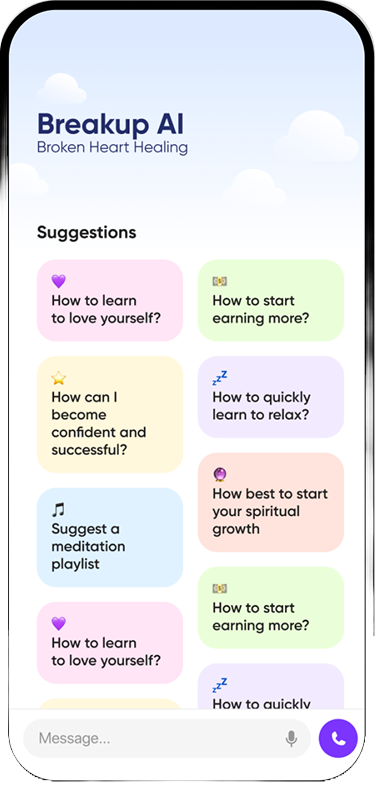
Need steady support as you heal? Try Breakup.one, the AI-powered heartbreak companion with 24/7 chats and guided programs: https://breakup.one/
The Bottom Line
Moving on is not about erasing what was; it’s about steadily reclaiming your energy, attention, and self-trust. With simple, evidence-backed practices and compassionate structure, your life expands again—quietly at first, then unmistakably.
References
- American Psychological Association (APA) – The pain of social rejection: https://www.apa.org/monitor/2012/04/rejection
- Centers for Disease Control and Prevention (CDC) – How much sleep do I need?: https://www.cdc.gov/sleep/about_sleep/how_much_sleep.html
- Harvard Health Publishing – Mindfulness meditation to enhance well-being: https://www.health.harvard.edu/mind-and-mood/mindfulness-meditation-to-enhance-well-being
- Harvard Health Publishing – Exercise is an all-natural treatment to fight depression: https://www.health.harvard.edu/mind-and-mood/exercise-is-an-all-natural-treatment-to-fight-depression
- World Health Organization (WHO) – Physical activity fact sheet: https://www.who.int/news-room/fact-sheets/detail/physical-activity
- Mayo Clinic – Grief: Coping with reminders after a loss: https://www.mayoclinic.org/healthy-lifestyle/end-of-life/in-depth/grief/art-20044775
- American Psychological Association (APA) – Writing to heal: https://www.apa.org/monitor/2002/11/writing
- National Institute on Aging (NIA) – Loneliness and social isolation: Tips for staying connected: https://www.nia.nih.gov/health/loneliness-and-social-isolation-tips-staying-connected