



Table of Contents
- Grasping the Depth of Emotional Distress
- Emotional Validity: Acknowledge Your Suffering
- Nurturing Self-Kindness
- Rediscovering Your Own Identity
- Channeling Sorrow into Transformation
- Formulating New Habits for Steadiness
- Reaching Out: Harnessing the Power of Support
- Practicing Presence: Mindfulness and Meditation
- Leaping Towards Future Possibilities
Key Takeaways
- Emotional resilience is rooted in acknowledging and processing feelings post-breakup.
- Practicing self-kindness can significantly improve emotional recovery.
- Rediscovering personal interests fosters individuality after a relationship ends.
- Mindfulness and community support play vital roles in the healing process.
- Hope for the future can be a powerful motivator in overcoming heartbreak.
You’ve been there before, haven’t you? The end of a relationship leaves you flat on your back, staring blankly at the ceiling. The sound of silence—it surrounds and suffocates. Each passing second pounds like a heartbeat missed. How in the world do you mend from such emotional agony?
Healing from emotional scars post-breakup is, truth be told, a highly personal encounter. It’s complex; it’s deeply intimate. Take Maya, for instance. At the tender age of 28, she endured a divorce following a seven-year commitment. Left adrift in an ocean of unfathomable feelings, she was at a loss.
“The blend of sorrow, fury, and emptiness was overwhelming,”
— Maya
“Yet beneath all that chaos, there was this call—this urge to figure out how to move forward.”
Grasping the Depth of Emotional Distress
Feeling trapped in a dark chasm? You’re not alone, nor is it unnatural. The emotional upheaval of a breakup can be intense. Back in 2010, the Journal of Neurophysiology reported that the heartache of a breakup actually stimulates brain areas associated with physical discomfort. You’re not just imagining it—it’s a concrete neurological event affecting your whole being.
Emotional Validity: Acknowledge Your Suffering
Dr. Sarah Chen from NYU shares her wisdom, saying:
“Without judgment, acknowledging your feelings is the stepping stone to healing. Suppressing them? Only drags out the torment.”
— Dr. Sarah Chen, NYU
When you let grief, anger, or betrayal have their moment, you’re essentially allowing yourself to journey through and, eventually, let go.
Nurturing Self-Kindness
Breakups can fire up self-doubt and those corrosive inner critiques. Eleanor Woolley, a coach specializing in self-kindness, gently reminds us,
“Be to yourself the friend you would be to someone close.”
— Eleanor Woolley, Self-Kindness Coach
Imagine the words of comfort you’d offer a friend—then turn those words inward.
Rather than rebuking yourself over missteps, lean into empathy. Harvard studies draw links between self-kindness and oxytocin release—a stress-reducing hormone for nurturing self-soothing.
Rediscovering Your Own Identity
Relationships blur lines, melding identities. Post-separation, reclaiming your individuality may seem daunting. For Lily, ending a five-year relationship left her disoriented.
“I felt lost—absent of the ‘we,’”
— Lily
Channeling Sorrow into Transformation
Transitions, unsettling as they are, carry hidden potential for personal evolution. Dr. Chen believes reflecting on insights from your past relationship crafts a foundation for future bonds. It’s not mere lesson-learning, but unveiling new facets of your own soul.
Formulating New Habits for Steadiness
A breakup erupts the routine, unsettling the norm. Constructing a fresh daily regimen—peppered with self-care activities like exercise, mindfulness, or creative expression—re-establishes balance.
The fortitude of routine consistency, according to NIH studies, can steady your circadian rhythms. Restful sleep and uplifted mood become attainable amidst emotional upheaval.
Reaching Out: Harnessing the Power of Support
Healing thrives not in isolation but with community. When Maya leaned on family and friends, the power of a supportive network was evident.
“I realized I wasn’t alone,”
— Maya
“Their enveloping care was the balm I needed.”
Sharing experiences with trusted confidants or therapists can alleviate loneliness. Mayo Clinic research underscores social support’s enhancement of both mental and physical health.
Practicing Presence: Mindfulness and Meditation
Being present, through mindfulness and meditation, is potent. Focusing on the here and now can dissolve the endless loop of regrets and fears.
Research from Washington University affirms that mindfulness amplifies brain regions pivotal to emotional control. Regular meditation, then, cultivates inner calm and refined emotional processing.
Leaping Towards Future Possibilities
When the journey feels like nightfall, remember: each end paves way for beginnings unborn. Eleanor Woolley encourages envisioning what lies ahead—it’s this hope that nurtures healing.
Writing about future aspirations or engaging in visual daydreams tethers your healing journey to a future—that bright possibility awaiting your embrace.
The Bottom Line
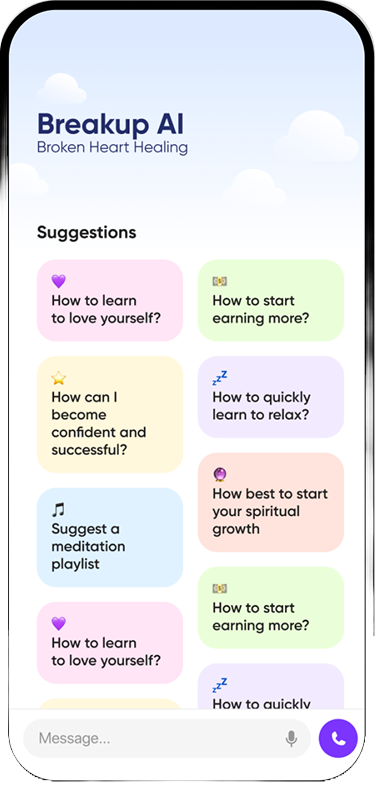
Embarking on this path of healing post-breakup is uniquely individual. Be gentle. Embrace rediscovery, fortify the journey with hope. And, when the load feels too heavy, reach out or consider the AI-powered comfort of Breakup.one—a companion ready to support your emotional journey ‘round the clock.
Seeking guidance? Breakup.one provides 24/7 emotional solace. Take a step towards healing—visit Breakup.one.
References
- Journal of Neurophysiology (2010)
- American Psychological Association
- Harvard Health
- NIH
- Mayo Clinic
- Washington University