



Table of Contents
- The Emotional Storm: Understanding Your Pain
- Creating Space: Why Distance Matters
- The Healing Power of Routine
- Finding Emotional Anchors
- The Science of Self-Compassion
- Letting Go: A Journey, Not a Destination
- Support Systems: Seeking Connection
- Embracing New Beginnings
- Empowerment Through Reflection
The Emotional Storm: Understanding Your Pain
“I felt like there was this dark cloud hovering over me,” Maya, a 28-year-old who recently endured a bitter divorce, said. It’s common to feel as if you’re caught in a storm — confusion swirling, self-doubt crashing. It’s only natural.
“The real first step in healing is acknowledging your emotional pain. It’s like giving yourself permission to feel.”
— Dr. Sarah Chen, Clinical Psychologist
Research — yes, all that science stuff — tells us breakups can actually affect the same parts of the brain that deal with physical pain. Quite staggering if you think about it (Harvard Health Publishing). Realizing that your heartache isn’t just “in your head” is a profound acknowledgment of the impact this has on your mental well-being.
Creating Space: Why Distance Matters
The urge to reach out, to seek closure, is strong post-breakup. We’ve all been there. But here’s the twist: closure can be more myth than reality. Sometimes, maintaining distance is a balm, preventing the reopening of old wounds.
“Creating space is vital.”
— Dr. Sarah Chen
Consider your heart as a garden. A relationship gone awry is like a plant that refuses to bloom. Best to let the garden settle. For Maya, this meant removing tokens of memories — photographs, gifts that triggered pangs of longing. The pain felt more manageable as she erased those daily reminders, affording herself the chance to breathe again.
The Healing Power of Routine
Breakups don’t just break hearts — they dismantle routines. Dates that became the week’s highlight are suddenly voids to fill. Johns Hopkins Medicine underscores the mental health benefits of a good routine (and who can argue with them?). Start small. Replace date nights with other fulfilling activities — a book club, maybe, or yoga.
This new routine — something as simple as evening yoga — can become the scaffold that supports recovery. Who would’ve thought a 7 p.m. class could feel like redemption?
Finding Emotional Anchors
“Who am I without us?” This daunting question arises when a relationship ends. Rediscovering yourself might be the glow in this shadowy period. Emotional anchors — friends, passions, those things that make you, well, you — matter here.
Lucy, a dear friend, hadn’t ever considered painting until after her breakup. That canvas became her sanctuary.
“Personal interests ground us. They transform emotional chaos into creative expression.”
— Dr. Jessica Nguyen, Expert in Positive Psychology
So, what will anchor you?
The Science of Self-Compassion
Trapped in self-blame? Aren’t we all at some point? Breaking the cycle means embracing self-compassion, a practice often overlooked. The American Psychological Association notes that self-compassion lessens feelings of anxiety during tough times. Think of it as cultivating kindness toward yourself.
Maya, burdened with guilt, found solace in daily affirmations. Simple notes that reminded her she was enough. These morsels of kindness became her shield from negativity — a gentle nudge toward acceptance.
Letting Go: A Journey, Not a Destination
Healing is anything but linear. Sometimes, it’s like dancing in and out of shadow and light. Maybe you’ll find old echoes of love in unexpected places — and that’s fine. It’s all progress.
“Healing has no clear timeline.”
— Dr. Sarah Chen
It’s a cue to listen to your own rhythm.
Support Systems: Seeking Connection
Reach for support; it’s invaluable during this journey. Lean on loved ones — those connections are no small thing. Lucy found solace in an art group, bonding over shared experiences and plenty of collective wisdom. It all seems less isolating, doesn’t it?
Data from the Centers for Disease Control and Prevention highlight the psychological benefits of social connections during tough spells. Let these networks be your safety net.
Embracing New Beginnings
Time, with its healing hands, offers the possibility of new beginnings. When Maya opened herself up to future relationships, she discovered love — the kind she hadn’t known before. The kind where she could remain herself.
The key? Knowing when you’re ready to move forward.
“New love doesn’t erase your past. It enriches your present.”
— Dr. Jessica Nguyen
When you’re ready, a new chapter awaits.
Empowerment Through Reflection
Reflection — that’s a big one. Step back, consider what you’ve learned, grown from, become. Each tear is part of your journey to authenticity.
Healing from a breakup? It’s more than just getting over something. It’s becoming someone — resilient, patient, exactly who you’re meant to be.
As the horizon beckons, remember: letting go isn’t forgetting. It’s charting a new course toward joy. Let this journey guide you home.
Key Takeaways
- Acknowledge and allow yourself to feel emotional pain.
- Creating distance post-breakup can be healing.
- Establish new routines to support mental well-being.
- Rediscover personal interests and emotional anchors for recovery.
- Embrace self-compassion to combat self-blame.
The Bottom Line
Healing from a breakup is a gradual journey that requires patience and self-discovery. Embrace the process, lean on your support networks, and remember that new beginnings await when you’re ready.
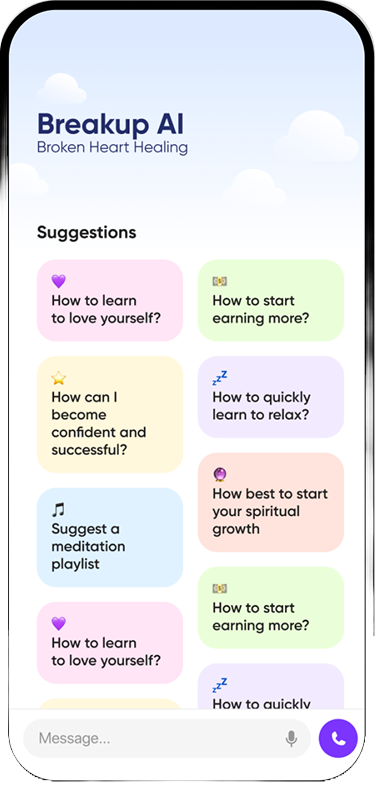
In this tapestry of heartbreak and healing, every step forward brings you closer to wholeness. And if you seek a companion along the way, Breakup.one offers AI-powered support, a friend in the storm. For consistent aid, visit https://breakup.one/.