



The text arrived at 1:12 a.m.—the kind that curdles your stomach before you even open it. A line. A fact. A future collapsing into a blue-lit screen. By sunrise, everything had a new shape. If you’re here, searching how to get over a breakup after betrayal, you’re likely walking a split path: the life where you trusted someone, and the one where the floor fell away. You’re not dramatic. Betrayal doesn’t just bruise the heart; it jolts your nervous system, unravels routines, and makes you question the version of yourself you thought you knew.
When Maya, 28, finalized her divorce after uncovering months of hidden messages and a spare apartment key, she told me the papers weren’t the hardest part—it was the snapback. “I felt naïve and furious and strangely loyal, all at once,” she said during a late fall coffee in Brooklyn. “I didn’t recognize myself.” If that rings true, pause. We’re not skipping past the ache. We’re building a path through it—with steps grounded in evidence and real life, for the days when your brain won’t stop replaying the worst frame.
Table of Contents
Key Takeaways
- Start with the body: prioritize sleep, breath, and gentle movement to calm your nervous system.
- Set clear boundaries—especially digitally—to reduce reactivity and reclaim control.
- Process the story in structured doses (writing, therapy) to avoid rumination loops.
- Rebuild trust from the inside out with self-compassion and small promises kept.
- Healing is non-linear; reach for support when symptoms persist or intensify.
Why betrayal breakups hit differently
Betrayal flips the body’s alarms to high. The American Psychological Association notes that acute stress pushes the whole system into action—faster heart rate, tight muscles, digestion on hold—fueled by cortisol and adrenaline (APA). That tight chest, that storm in your gut, the 3 a.m. wake-ups? Biology doing triage. Your body does its best to defend you.
“Betrayal shatters what psychologists call the ‘assumptive world’—our belief that close others are safe and knowable. You’re grieving the relationship, but also the reality you relied on. That’s a layered loss.”
— Dr. Sarah Chen, Clinical Psychologist at NYU
Back in 2021, a General Social Survey brief suggested that roughly one in six married Americans report infidelity at some point; numbers aside, the shock is always personal.
Grief here doesn’t follow rules. The APA describes grief as wave-like—anger, disbelief, bargaining, and deep sadness looping rather than lining up (APA). Deception often drags shame into the room. That doesn’t make you culpable. It means your nervous system and psyche are working overtime to make meaning after a breach. My view: naming the rupture is the first humane act.
Stabilize your body first so your heart can heal
You don’t outthink panic. You out-soothe it. Regulation comes before reflection; otherwise, the mind keeps sprinting.
Why it works:
- Calming the nervous system reduces cortisol, which lowers rumination and steadies emotional regulation (APA).
- Mindfulness-based practices support attention and decrease reactivity, easing intrusive thoughts (NCCIH).
- Gentle movement eases anxiety and improves sleep through endorphin release (CDC).
My take: if I had to pick one place to start, it’s sleep.
How to do it:
- Anchor in breath. Use a 4–6 pattern: inhale through the nose for 4, exhale through the mouth for 6. Three minutes can reset a spike. Progressive muscle relaxation helps too (NCCIH).
- Make sleep protective. The CDC recommends at least 7 hours for adults (CDC). Build a wind-down: dim lights, phone on airplane mode, warm shower, cool dark room. If thoughts race at 2 a.m., keep a notepad for a quick brain-dump. Return to breath.
- Move, daily, gently. Walk with a friend. Ten minutes of yoga. A quiet kitchen dance after dishes. Prioritize consistency over intensity.
- Choose steady fuel. Regular meals with protein, fiber, and healthy fats steady blood sugar—and with it, mood. It’s unglamorous care. It works.
Make safety and boundaries non-negotiable
Betrayal unsettles trust. Boundaries are how you put the rails back on—first with yourself, then with others.
Why it works:
- Cutting contact and limiting digital exposure lowers reactivity and breaks checking/obsessing loops.
- Predictability builds perceived control, a key ingredient in resilience (APA).
Opinion: boundaries aren’t punishment; they’re life support.
How to do it:
- Use a defined contact plan. If logistics aren’t shared (pets, housing, co-parenting), try 30 days of no contact. If communication is necessary, keep it brief, necessary, neutral. Email or a co-parenting app—not late texts.
- Clean your feeds. Mute, unfollow, or block anyone who spikes anxiety. This isn’t petty. It’s clinical care for your attention.
- Ritualize mornings and nights. Bookend the day device-free for 15 minutes: stretch, journal, steep tea, read a page or two, get daylight on your face.
Process the story without drowning in it
The brain hunts for why. Left unchecked, it loops and inflames. Structured processing gives those thoughts a container.
Why it works:
- Expressive writing for 15–20 minutes over several days can reduce intrusive thoughts and enhance well-being by organizing emotional memory (APA).
- Evidence-based therapies—CBT, trauma-focused modalities—reframe painful beliefs and calm traumatic stress (NIMH).
My bias: you don’t have to share the pages with anyone for them to count.
How to do it:
- Set a 20-minute timer. Write uncensored about what happened and how it changed you—then close the notebook. Follow with a two-minute soothe: breath, cold water on wrists, sunlight on skin.
- Try a three-part prompt: What I know is… What I feel is… What I choose today is…
- Consider professional support. A therapist trained in betrayal trauma, CBT, or EMDR can help separate your patterns from theirs and lower trigger intensity (NIMH).
“People often try to logic their way out of betrayal. Your limbic system needs rhythm and compassion before your cortex can make meaning. We front-load nervous-system care—sleep, breath, movement—and then insight becomes less punishing, more productive.”
— Dr. Alicia Romero, Psychiatrist at UCLA Health
Grief rituals that help you let go, piece by piece
Closure isn’t handed to you by an ex. It’s assembled—small acts that honor what was real and release what harmed you.
- A goodbye letter you won’t send. Say what remained unsaid. Name what you loved and what crossed your line. End with one sentence reclaiming your future.
- A symbolic release. Press sea glass into your palm and let the ocean keep it, or safely burn a brief note and scatter the cooled ashes in the garden.
- A “memory box with a lock.” Place significant items in a small box and store it away. Set a six-month date to revisit. You don’t need to purge to heal; you do need to stop tripping over the past. This is often gentler than a dramatic cleanse.
Repair trust—starting with you
After betrayal, the core question isn’t only “Can I trust others?” It’s “Can I trust myself?” That repair is daily work.
Why it works:
- Self-compassion reduces shame and supports resilience; it’s linked to lower anxiety/depression and better emotion regulation (Harvard Health).
- Small promises kept rebuild a felt sense of reliability.
Opinion: strength without tenderness turns brittle.
How to do it:
- Choose micro-commitments. One glass of water upon waking. A 10-minute walk after lunch. Call one trusted person each day. Success signals safety.
- Speak to yourself as you would a friend. Swap “How could I be so stupid?” for “I made the best choices with the information I had.”
- Name your non-negotiables for future relationships. These are not walls, but clarity: honesty about finances, transparency with devices, a shared definition of cheating, and a commitment to initiate repair within 24 hours of conflict.
“People think the fix is finding someone ‘more trustworthy.’ That matters. But the deeper task is to recognize your own signals, honor your gut, and act on your boundaries without abandoning yourself.”
— Dr. James Patel, LCSW, Betrayal-Recovery Therapist
Rebuild the architecture of your life
A rupture like this takes your weekends with it—and sometimes your address book. Healing is designing a life that holds you where you live.
- Grow connection, on purpose. Strong ties protect mental and physical health—linked to lower risks of anxiety and depression (Harvard Health). Build low-stakes rhythms: Wednesday cowork with a friend, Saturday farmer’s market, Sunday call with your cousin. The Guardian reported in 2022 that social routines were among the first habits to fray post-breakup; rebuilding them isn’t trivial.
- Move toward meaning. List 3–5 values that still matter—creativity, honesty, adventure, kindness. Choose one tiny action per day that embodies one value. Values steer when motivation fades. It’s slow navigation, not a sprint.
- Refresh your spaces. Wash sheets. Shift furniture. Change the candle scent. Environments cue safety; even a small reset alters the mood more than you expect.
How to get over a breakup after betrayal when triggers keep ambushing you
You can be steady at 2 p.m., then a song from 2016 or the street outside your old coffee shop rips it open. That’s normal. Triggers prove you’re human, not that you’re failing.
- Name it to tame it. Quietly say, “I’m triggered. My body thinks I’m in danger. I’m safe right now.” Ground with five things you can see, four you can feel, three you can hear, two you can smell, one you can taste. Simple, concrete, present.
- Choose a “safe action.” Text your “green person” with a prearranged keyword, step outside for air, or splash cool water on your wrists. Repeatable beats complicated.
How to get over a breakup after betrayal without losing faith in love
It may feel unimaginable today, but betrayal doesn’t author your ending. Trust can grow wiser, not smaller.
- Curate your inputs. Unfollow feeds that glamorize revenge or preach cynicism. Follow voices modeling healthy repair and boundaries. In 2021, a Pew snapshot found nearly half of U.S. adults take relationship cues from social media—choose carefully.
- Date at your pace, if and when. No prize for speed. If you decide to date, practice clear conversations about expectations early. Stating what you need is not “too much.” It’s the new guardrail.
A 30-day gentle plan to begin again
Think scaffolding, not rules.
- Week 1: Stabilize. Prioritize breath, sleep hygiene, hydration, and three 10-minute walks. Implement your boundary plan. Clean your feeds.
- Week 2: Process in doses. Three expressive writing sessions, each followed by a soothe ritual. Reach out to two trusted people and say the truth: “I’m in it. Can I text you when it spikes?”
- Week 3: Rebuild connection and joy. Schedule two social touchpoints and one solo pleasure practice (art, cooking, a hike). Revisit your values list and pick one micro-action daily.
- Week 4: Integrate. Notice what helps. Consider a therapy consult if triggers stay intense. Draft your personal “trust code”—signals of safety, your boundaries, and what you’ll do if they’re crossed.
Forgiveness is optional—and it’s about you
Some people heal through forgiveness; some don’t, and their lives are whole. Forgiveness is not forgetting or excusing. It’s a way to loosen resentment’s grip on your nervous system. The Mayo Clinic frames forgiveness as a practice linked to better mental health and lower stress (Mayo Clinic). If that feels far away, leave it. Your job now is to reduce suffering while protecting what comes next. My opinion: pressure to forgive can wound; give it time.
When to reach for more help
If sleep evaporates for weeks, appetite disappears, hope dims, or you’re having thoughts of self-harm, that’s not a failure—it’s a signal your brain needs more support. Depression and trauma respond to therapy and, for some, medication (NIMH: Depression; NIMH: Psychotherapies). Ask your primary care clinician for referrals or search for therapists in betrayal trauma, CBT, or EMDR. In an immediate crisis in the U.S., call or text 988 for the Suicide & Crisis Lifeline.
You’re not behind
If you’re still Googling how to get over a breakup after betrayal three months—or a year—from now, you’re not late. Healing is non-linear. It’s happening every time you keep a boundary, breathe instead of spiral, nourish your body, and tell the truth to someone who can hold it.
“Recovery doesn’t mean you never remember. It means remembering hurts less and guides you more.”
— Dr. Sarah Chen, Clinical Psychologist at NYU
Here’s what I want for you: a future where your chest feels roomy again. Where intuition speaks up and you listen. Where this story is a chapter, not your title. There’s a steadier you on the far side of this—kinder to yourself, clearer-eyed about love. She isn’t a stranger. She’s already here, one careful choice at a time.
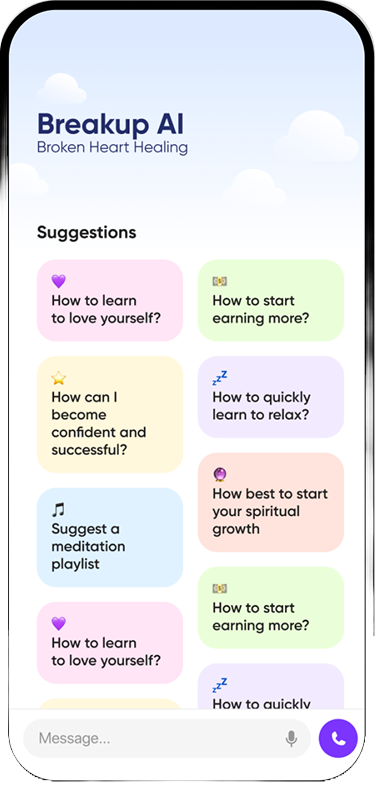
For steady support any hour, try Breakup.one—an AI heartbreak companion with guided programs and 24/7 care: https://breakup.one/
The Bottom Line
Begin with your body—sleep, breath, gentle movement—so your mind can make meaning without drowning. Protect your energy with firm boundaries, process the story in small, contained doses, and rebuild trust by keeping promises to yourself. Lean on connection and ask for help when you need it. Trust can grow wiser. You can grow kinder to yourself.
References
- American Psychological Association (Stress effects on the body) — https://www.apa.org/topics/stress/body
- American Psychological Association (Grief) — https://www.apa.org/topics/grief
- American Psychological Association (Writing to heal) — https://www.apa.org/monitor/2002/06/writing
- American Psychological Association (Resilience) — https://www.apa.org/topics/resilience
- Centers for Disease Control and Prevention (How much sleep do adults need?) — https://www.cdc.gov/sleep/about_sleep/how_much_sleep.html
- Centers for Disease Control and Prevention (Benefits of Physical Activity) — https://www.cdc.gov/physicalactivity/basics/pa-health/index.htm
- National Center for Complementary and Integrative Health (Mindfulness Meditation) — https://www.nccih.nih.gov/health/mindfulness-meditation-what-you-need-to-know
- National Center for Complementary and Integrative Health (Relaxation Techniques) — https://www.nccih.nih.gov/health/relaxation-techniques-what-you-need-to-know
- National Institute of Mental Health (Psychotherapies) — https://www.nimh.nih.gov/health/topics/psychotherapies
- National Institute of Mental Health (Depression) — https://www.nimh.nih.gov/health/topics/depression
- Harvard Health Publishing (The health benefits of strong relationships) — https://www.health.harvard.edu/newsletter_article/the-health-benefits-of-strong-relationships
- Harvard Health Publishing (The power of self-compassion) — https://www.health.harvard.edu/blog/the-power-of-self-compassion-2018022813335
- Mayo Clinic (Forgiveness: Letting go of grudges and bitterness) — https://www.mayoclinic.org/healthy-lifestyle/adult-health/in-depth/forgiveness/art-20047692