



The night I finally blocked my ex, I didn’t feel strong. I felt shaky, a little nauseous, and—yes—embarrassingly dramatic for crying over a toggle on my phone. But an hour later, something in my nervous system exhaled. If you’re here Googling how to set boundaries for heartbreak recovery because you keep looping—checking their feed, re-reading old texts, bargaining with “just one coffee”—you’re not weak. You’re grieving. Boundaries aren’t punishments; they’re scaffolding. And scaffolding, humble as it looks, keeps the whole structure from falling.
Key Takeaways
- Boundaries regulate your nervous system after heartbreak by lowering trigger exposure and stress.
- Prioritize sleep, movement, and mindful contact limits to reduce rumination and reactivity.
- Use three layers—digital, social/environmental, and body-based—for a complete boundary plan.
- Short, clear scripts and simple systems make boundaries easier to keep and kinder to communicate.
- Progress is measured in small, steady wins—not perfection or dramatic “glow-ups.”
Why boundaries work: what your brain and body are doing after a breakup
The ache of heartbreak isn’t “just in your head.” Functional MRI scans have shown that rejection and loss light up the brain’s pain matrix; that helps explain why your chest can clamp the way a sprained ankle throbs. The American Psychological Association has long noted this overlap. When the body registers threat, stress hormones surge; live there too long and the fallout touches sleep, immunity, digestion—everything you count on to cope. Back in 2021, a Harvard study on stress reactivity echoed this: sleep and consistent routines reduce emotional volatility more than most of us believe.
Boundaries lower the “threat volume.” Even a steadier bedtime matters. The CDC calls seven hours a baseline; short sleep is linked to worse mood and impulsive choices the next day. So a boundary like “no scrolling my ex after 10 p.m.” isn’t rigid. It’s physiological maintenance.
“Think of boundaries as shock absorbers for your nervous system. They limit dose and frequency of emotional triggers, which reduces rumination and helps the prefrontal cortex come back online so you can choose long-term healing over short-term relief.”
— Dr. Amara Singh, Licensed Clinical Psychologist
In my experience, that’s not just theory—it’s mercy.
How to set boundaries for heartbreak recovery starts here: grieve like a scientist, love yourself like a friend
Before the how, understand the why. Breakups create “cues”—their ringtone, the corner bakery, the reflex to send one more message—that spike reward circuits and craving. Limiting exposure to triggers isn’t avoidance; it’s evidence-based harm reduction so your system can stabilize. In 2022, The Guardian reported the average Brit spent more than four hours a day on their phone; if your heartache is sneaking in through that portal, containment is care.
When Maya, 28, went through her divorce, she felt guilty going no-contact. “It felt cruel,” she said when we spoke last fall. “But I kept relapsing into 2 a.m. conversations that left me wrecked.” She created three layers of boundaries for 30 days—digital, social, and body-based. By week two, she wasn’t better, but she was steadier. That steadiness created the conditions for grief to move, not calcify. My view: steadiness beats catharsis, every time.
The three layers every breakup boundary plan should include
Set boundaries across three fronts so your mind, body, and environment work together rather than against you.
Digital guardrails: how to set boundaries for heartbreak recovery online
Why it works: Digital contact is an intermittent reward machine. A single “seen” notification or a like on your Story can spike dopamine and reignite craving, much like any cue-triggered habit. You don’t need to compare heartbreak to addiction to see the loop: repeated cue + unpredictable reward = compulsion.
How to do it:
- No-contact windows with your ex. Choose a specific period—often 30–60 days—to reset. If you must stay in contact for logistics, route it through email or a shared note once weekly.
- Mute, unfollow, or block—temporarily or permanently. If it feels harsh, remind yourself this is medical-grade self-care for your brain’s reward and stress systems.
- Contain searching. Set a “research curfew”: no searching their name, new partners, or mutual friends after 8 p.m. Put your phone in another room at night.
- Make your phone your ally. Use app timers, Do Not Disturb, and keyword blockers for mutual-friend group chats that spiral.
“Boundary scripts” when you need to say it out loud:
- To your ex: “For the next 30 days, I won’t be in contact so I can heal. If there’s a true logistical need, email me; otherwise, I won’t respond.”
- To friends: “I’m taking a screen break from anything that brings up my ex. Please don’t send updates or screenshots.”
One editorial note from many interviews: the clean break tends to work better than the slow fade.
Social and environmental lines: how to set boundaries for heartbreak recovery in your circle
Why it works: Environment cues emotion. Seeing your ex’s barista, passing “your” Sunday market, or hearing mutual friends’ hot takes spikes stress. Boundary-setting lowers exposure and social pressure while increasing felt safety. You’re not withdrawing from life; you’re recalibrating the settings so you can re-enter it.
How to do it:
- Create “safe zones.” Curate a handful of spaces, playlists, and routes that don’t hold memories. Switch gyms or cafés for a month if you need to.
- Ask for containment. Tell friends, “I love you, and I need a moratorium on ex talk unless I bring it up.”
- Split the map with mutual friends if needed. It’s okay to rotate events or ask hosts to seat you apart.
- If you share a workplace, move communications to official channels only, keep meetings brief and public, and decline personal debriefs.
“When boundaries feel ‘mean,’ remember you’re not controlling others—you’re clarifying terms of engagement that make connection safer. Clear is kind. Vague is chaos.”
— Lila Moreno, LCSW
My bias here: vague costs more than a frank sentence ever will.
Body-based limits: how to set boundaries for heartbreak recovery in your day
Why it works: Your body is your breakup home base. Movement regulates mood, mindfulness reduces emotional reactivity, and consistent sleep steadies hormones. The WHO recommends 150 minutes of moderate activity weekly for mood and health. Mindfulness—done in minutes, not marathons—helps attention and emotion regulation. This is not self-optimization; it’s basic hygiene for a taxed nervous system.
How to do it:
- Sleep as a non-negotiable. Anchor wake time first. No screens in bed. Aim for 7–9 hours.
- Move your body, gently but daily. Twenty minutes of walking counts. Add one “strength day” a week.
- Mindfulness micro-doses. Two minutes of breath work before opening texts. Five slow exhales before responding to any urge to reach out.
- Substance boundaries. Alcohol can deepen sadness and fragment sleep; if you’re using it to numb, take a 30-day pause and notice your mood shift.
If I could underline one lever, it’s sleep. Everything is worse without it—everything.
Boundary scripts without the knot in your throat
Sometimes the hardest part isn’t knowing what to do—it’s finding the words. Keep it simple, kind, and concrete. You don’t need to re-argue the past. You’re protecting the future.
- To a mutual friend who overshares: “I care about both of you, and for now I’m stepping back from updates. If I want to know, I’ll ask.”
- To a late-night texter version of yourself: Put a sticky note on your screen: “This will hurt tomorrow.” Then open a Notes doc titled “What I really want is…” and write for 90 seconds.
- To a coworker who pries: “I’m keeping that part of my life private right now. Thanks for understanding.”
My take: short scripts travel farther than perfect speeches.
When guilt and people-pleasing kick in
Guilt after setting boundaries is common. You might worry you’re being “dramatic” or “punishing.” But boundary guilt is often grief in disguise. You’re mourning a version of yourself that could tolerate discomfort for closeness. There’s also attachment at play: if your early wiring equates love with over-functioning, saying no can feel like losing love.
“Expect the backlash—not just from others, but from the parts of you that equate self-protection with abandonment. Name it, normalize it, and recommit for 24 more hours. Boundaries are a practice, not a personality.”
— Dr. Amara Singh, Licensed Clinical Psychologist
From the field: the guilt fades faster than you think; the clarity lasts longer than you expect.
Design a relapse plan, not a perfection mandate
You will have slips. You’ll peek, you’ll text, you’ll stalk, you’ll spiral. Plan for it. Relapse isn’t the end of the work; it’s data.
- Pre-commit a reset ritual: a shower, a brisk block walk, one page of journaling, then phone in a drawer for 20 minutes.
- Track triggers: Was it hunger, 11 p.m., or a scary work email? Boundaries often need support from basics like food and daylight.
- Shrink the aftermath, not the feeling: If you texted, follow with, “I’m taking space again now,” and mute for 48 hours.
I’d rather see a quick reset than a week of self-critique. Progress beats penance.
Safety-boundaries if there was control or abuse
If the relationship involved control, stalking, or abuse, boundaries are first about safety. Document communications. Consider blocking, changing routines, and telling trusted people. Therapy can help you plan safe exits and legal options. If you feel in immediate danger, call emergency services. The CDC outlines forms intimate partner violence can take and why support matters. My stance is simple: safety before civility, always.
No-contact vs. humane contact: which boundary is for you?
There’s no single rule. If no-contact feels vital, you don’t owe a justification. If you share kids, a lease, or a business, choose “structured contact”—weekly written updates, a shared calendar for logistics only, and a firm no to anything relational (“How are you?” becomes “Please keep communications to logistics”). CBT and adjacent therapies can help you practice new thought-behavior loops around contact and triggers. In messy realities, structure is mercy.
Maya’s 30-day boundary map, revisited
By week three, Maya noticed the urge to text arrived like a wave and passed like one too. Her best friend stopped sending screenshots. She rerouted her morning walk away from her ex’s block, slept 7.5 hours most nights, and paused alcohol. “I still missed him,” she said. “But I stopped bargaining with myself. I could feel myself again.” If there’s a metric that matters most, it’s that: you can feel yourself again.
Measure progress by what you can’t post on Instagram
You may not have a montage-worthy glow-up yet. That’s okay. Track micro-metrics:
- Decreased contact frequency or response lag to urges
- Slightly better sleep efficiency
- Fewer social media checks of your ex per day
- Less reactivity when you pass “your” restaurant
- More days you remember to eat lunch
These are not small. They’re neurobiological wins that compound. Quiet victories rarely trend, but they move the line of your life.
Scripts and systems: how to set boundaries for heartbreak recovery without burning bridges
- If you share a pet: “Let’s move to a shared Google doc for vet care and visits. I won’t be discussing our personal relationship there.”
- If they send “just checking in” texts: “I’m not available for emotional check-ins right now. Please respect my space.”
- If their family reaches out: “I appreciate your kindness. I’m stepping back from all contact as I heal.”
Systems that make scripts stick:
- A friend who holds your phone while you draft, then presses send
- Email filters for their address into a “Logistics Only” folder
- Sunday boundary check-in: what worked, where it slipped, what you’ll try this week
In my book, systems save you when willpower sags.
When to pull in more support
If your symptoms don’t ease or intensify—can’t sleep for weeks, panic, depression that interferes with daily life—it may be time to bring in more help. Therapy is effective for grief, rumination, and anxiety; CBT and related therapies have strong evidence. Group support reduces isolation, which the CDC links to significant health risks when it’s chronic. You’re not failing if you need a team. You’re healing in community. It’s harder to drown when someone is already holding the rope.
If this sounds familiar, you’re not alone
There’s a version of you who thinks if you leave the door cracked, love will return. Boundaries can feel like the opposite of hope. But the truth is, boundaries make room for a sturdier kind of hope—the kind made of rest, clarity, and a future you shape on purpose.
“Boundaries don’t close your heart. They close the windows the storm keeps blowing through.”
— Lila Moreno, LCSW
Your next right step might be small
- Put your ex’s name on mute today.
- Ask one friend to stop delivering updates.
- Choose a bedtime and guard it like a medicine reminder.
- Set a 24-hour no-contact window and let it renew each morning.
Image alt: Woman journaling by a window at sunrise, practicing how to set boundaries for heartbreak recovery with a gentle morning routine
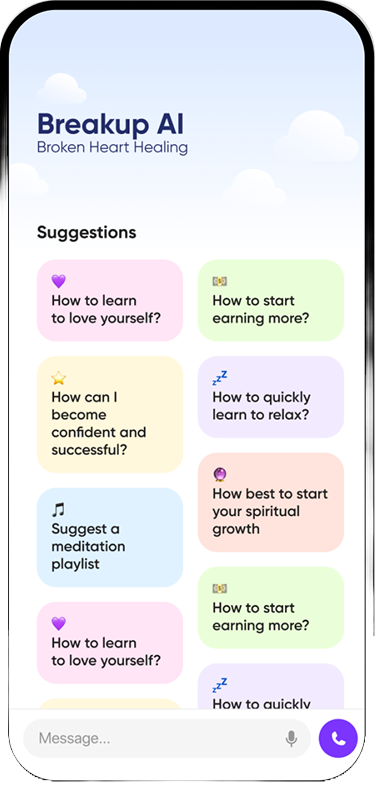
In a sentence: Boundaries are the scaffolding that steadies you while you grieve, rest, and rebuild after love’s ending. For science-backed support, sleep, movement, and mindful contact rules make a measurable difference. If you need a gentle guide at 2 a.m., there’s help. Bold next step: Try Breakup.one—an AI-powered heartbreak recovery companion with 24/7 emotional support and guided healing programs.
The Bottom Line
Clear, compassionate boundaries don’t punish you or your ex—they protect your healing. Start small, keep it kind, and support yourself with systems. The steadiness you build today becomes the confidence you live from tomorrow.
References
- American Psychological Association (APA) – Why rejection hurts
- American Psychological Association (APA) – Stress effects on the body
- Centers for Disease Control and Prevention (CDC) – Sleep and Sleep Disorders
- National Institutes of Health, National Institute of Mental Health (NIMH) – Psychotherapies
- National Center for Complementary and Integrative Health (NCCIH) – Mindfulness Meditation
- World Health Organization (WHO) – Physical activity
- National Institute on Alcohol Abuse and Alcoholism (NIAAA) – Rethinking Drinking
- Centers for Disease Control and Prevention (CDC) – Intimate Partner Violence
- Centers for Disease Control and Prevention (CDC) – Loneliness and Social Isolation