



You delete the thread, block the number, and promise yourself you’re done. Then—day 14—one song, one scent in a hallway, and your thumb lands on their name as if muscle memory staged a coup. If you’ve whispered, “Why you relapse during no contact, again?” into the quiet of your room, you’re not failing—you’re human. Heartbreak isn’t only an emotion; it’s a full-body event that reroutes your days, trips your stress response, and prods the tender parts of your brain that ache for comfort and certainty. I’ve sat in that 2 a.m. undertow; most people do, and sooner than we admit.
Table of Contents
- Why You Relapse During No Contact: The Brain’s Withdrawal Loop
- The Moments You’re Most Vulnerable
- The Attachment Echo: Why You Bargain With Yourself
- Why Urges Spike So Hard—and Pass If You Let Them
- Build a Relapse-Resistant Plan: Why It Works, Then How
- When a Slip Happens: Repair Over Shame
- Compassionate Scripts For Your Inner Voice
- The “No Contact Kit” You Can Build Today
- When No Contact Should Be With Support, Not Solo
- What to Expect as You Heal
- If You’re Wondering Whether To Break No Contact For “Closure”
- A Gentle Reframe: You’re Not Relapsing, You’re Relearning
- The Bottom Line
- References
Key Takeaways
- Relapse urges are driven by attachment, reward, and stress circuits—biology, not personal failure.
- Urges peak with triggers like poor sleep, alcohol, or loneliness but pass if you pause and ride the wave.
- Reduce cues, build “speed bumps,” and pre-plan alternatives to make no contact easier to keep.
- Slips are data; repair with compassion, reset boundaries, and refine your plan.
- Connection with others—not contact with an ex—supports lasting relief and healing.
Why You Relapse During No Contact: The Brain’s Withdrawal Loop
When Maya, 28, went through her divorce, she swore off contact. For 10 days she felt steady—routine, walks, journaling. On day 11, a memory photo surfaced. “I don’t even know how I was holding my phone,” she told me. “I just heard the message send.” If that sounds familiar, it isn’t a lack of willpower; it’s a brain seeking the person who once regulated your mood, stress, and sense of safety. We underestimate how fierce this circuitry is.
Here’s the science behind why you relapse during no contact:
- Attachment and reward systems light up: Romantic love recruits dopamine-rich reward pathways—the same machinery involved in craving and reinforcement. After a breakup, those circuits don’t switch off; they protest. NIH’s News in Health has covered Helen Fisher’s MRI work showing how love activates motivation and reward regions, which is why rejection can echo as withdrawal and preoccupation (NIH News in Health).
- Social pain shares circuitry with physical pain: The American Psychological Association reports that social rejection triggers regions akin to those activated by physical pain. No contact can feel somatic for a reason; the ache is literal, not just poetic (APA).
- Your stress response is on high alert: Breakups act as stressors. The National Institute of Mental Health notes stress initiates physiological shifts—racing heart, tense muscles, narrowed focus—that nudge the brain toward fast relief, like texting your ex (NIMH).
“After a breakup, the brain prioritizes short-term soothing. Attachment alarm, reward deprivation, and stress fire together. Reaching out feels like survival, not simply a ‘bad decision.’”
— Dr. Lina Park, PhD, clinical psychologist
In my view, naming it biology lowers shame—and opens room for choice.
The Moments You’re Most Vulnerable
Relapse rarely arrives at noon in a crowded café. It slips in when you’re tired, lonely, triggered, or even slightly altered. If you’re wondering why you relapse during no contact at night or around specific cues, it’s more than timing; it’s physiology meeting context.
- Sleep debt magnifies emotion: One in three U.S. adults don’t get sufficient sleep, and poor sleep worsens emotion regulation and impulsivity (CDC).
- Caffeine and alcohol tilt your nervous system: Caffeine can heighten anxiety and tremor; alcohol is linked to riskier decision-making—prime conditions for “I miss you” outreach (Mayo Clinic; CDC).
- Inactivity heightens low mood: Regular physical activity reduces symptoms of depression and anxiety; stillness can intensify ruminative loops that steer you toward contact (WHO).
“Your bandwidth shrinks when you’re underslept or stressed. In that fog, the brain reaches for the most accessible regulator—your ex. Timing matters as much as triggers.”
— Dr. Mateo Ruiz, MD, psychiatrist and researcher
I’ve watched clients make very different choices at 10 a.m. after a walk than at 1:37 a.m. under a duvet.
The Attachment Echo: Why You Bargain With Yourself
Even when you know, intellectually, that no contact is healthy, you bargain: Maybe we could just be friends. Maybe if I explain it better. Maybe they miss me too. That bargaining voice is an attachment echo—your nervous system trying to reattach to a former safe base, however wobbly that base became.
- The APA highlights how social exclusion and uncertainty ignite distress and can spiral into checking, searching, and rumination (APA).
- Grief is nonlinear: Mayo Clinic notes that complicated grief can include intrusive thoughts, searching, and intense longing (Mayo Clinic).
Case study: Priya, 26, set no contact after a situationship ended. “I kept ‘accidentally’ watching his stories,” she said. “I told myself it was harmless. Then I replied to a song and—boom—three weeks of texting.” That “harmless peek” acts like a nicotine puff: it reignites the loop. My bias? Digital “accidents” are rarely accidents; they’re proximity.
Why Urges Spike So Hard—and Pass If You Let Them
Urges feel endless. They aren’t. In addiction science, cue-induced cravings surge, crest, and recede if you don’t act. Heartbreak isn’t a substance addiction, but the reward-learning principles apply: cues—photos, songs, streets you walked together—spike craving; not responding builds new learning that “urge ≠ action.” NIDA describes how cues trigger craving through conditioned associations in the reward circuitry (NIDA).
“If you can ride the wave for 20 minutes—urge surfing—most urges drop significantly. You’re rewiring the prediction that says, ‘contact equals relief.’”
— Dr. Lina Park, PhD, clinical psychologist
I’ve clocked it on my own timer; twenty minutes can feel long, and it still works.
Build a Relapse-Resistant Plan: Why It Works, Then How
Why it works: You’re reducing triggers, expanding coping bandwidth, and giving the reward system credible substitutes. Prevention isn’t glamorous; it’s effective.
1) Stabilize your physiology first
- Why: A calmer body dampens “act now” impulses. Stress narrows attention to short-term fixes (NIMH).
- How:
- Sleep-protect your heart: 7–9 hours; park your phone outside the bedroom. Use Do Not Disturb overnight and again at wake.
- Eat and hydrate on a schedule; taper caffeine after 2 p.m. to protect sleep and mood (Mayo Clinic).
- Move your body: Brisk walks support mood regulation; exercise is linked with reduced depressive symptoms (Harvard Health; WHO).
2) Train your attention away from rumination
- Why: Mindfulness lowers stress reactivity and interrupts the highlight-reel loop (Harvard Health).
- How:
- Urge surfing: Set a 20-minute timer. Breathe into sensations (tight chest, buzzing hands). Narrate: “My brain is craving contact. This wave will pass.”
- 5–4–3–2–1 grounding: Name sensory input to anchor in the present.
- Expressive writing: 10 minutes uncensored—what you want to text, what you wish they’d say. Writing about emotions can ease stress (Harvard Health).
3) Redesign your environment like you’re breaking a habit
- Why: Habits are context-dependent. Remove cues, add friction, and relapse risk falls (APA).
- How:
- Block, don’t just mute. Clear threads, shared albums, and routes. Unfollow or hide for now. This is not pettiness; it’s brain care.
- Create speed bumps: Move messaging apps into a folder named “Breathe First.” Add a 30-second lock-screen reminder: “Pause—Why do you relapse during no contact? What do you need instead?”
- Preload alternatives: A “comfort list”—three friends to text, one grounding exercise, one playlist, one outside activity.
4) Use tiny contracts with your future self
- Why: Implementation intentions (“If X, then Y”) pre-commit the stressed brain to wiser defaults (APA).
- How:
- If I see a trigger (their street, a song), then I will call my sister and walk around the block.
- If I want to check their social, then I will write the message in Notes and wait 24 hours.
5) Replace contact with connection
- Why: Isolation intensifies craving. The nervous system is built for belonging (APA).
- How:
- Schedule “anchor” connections: midweek dinners, Sunday walks. Ask two friends to be “No Contact Buddies” for 30 days—on-call for surges.
- Join a class, group, or volunteer shift where your body co-regulates with others—no deep sharing required.
When a Slip Happens: Repair Over Shame
Jordan, 31, held no contact for a month, then texted his ex after a scathing work review. “I felt so foolish,” he said. “Like I’d erased all progress.” You haven’t. A slip is data, not defeat. In my practice, the people who recover fastest are the ones who debrief without cruelty.
- Why this matters: Shame feeds secrecy, which feeds more relapse. Repair builds resilience.
- How to repair:
- Debrief with compassion: What was I feeling 60 minutes before? Which cue or need was unmet (sleep, food, connection, safety)?
- Reset boundaries concretely: Re-block, clear threads, add a new speed bump (e.g., delete their contact and store it with a friend).
- Revisit your “why”: Write a few lines on why you chose no contact. Keep it handy.
“I tell clients a lapse is a dress rehearsal for success. Your brain just learned which door needs an extra lock.”
— Dr. Mateo Ruiz, MD, psychiatrist
Compassionate Scripts For Your Inner Voice
Relapse often starts with the story you tell yourself. Try these when you’re asking why you relapse during no contact as your thumb hovers over “Send.”
- “This is a craving, not a command. I can ride this wave.”
- “I’m not reaching for them; I’m reaching for relief. I’ll find relief in a way that protects me.”
- “If I still want to text in 24 hours, I’ll reassess. For now, I’ll move my body for 10 minutes.”
The “No Contact Kit” You Can Build Today
Why it works: Preparing during a calm window gives your stressed brain pre-approved options. Think of it as future-you’s safety net.
- People: Two buddies (text thread pinned), one therapist or counselor contact, one late-night person.
- Places: A saved map of “safe routes” that avoid shared locations.
- Practices: 90-second cold splash, 4-7-8 breathing, 20-minute walk, a playlist named “Keep the Boundary.”
- Protections: App limits after 9 p.m.; phone in a kitchen drawer at night; no social media in bed.
- Prompts: Sticky note on your mirror—“Why you relapse during no contact: your brain wants safety. Let’s make safety, not contact.”
When No Contact Should Be With Support, Not Solo
If grief feels unmanageable—persistent numbness, thoughts of self-harm, or you can’t function—reach out. The National Institute of Mental Health outlines signs of depression that warrant professional care (NIMH). Therapy isn’t a sign of failure; it’s an investment in regulation while you heal. My stance: help early, not last.
What to Expect as You Heal
- Weeks 1–2: Intense cravings, bargaining, intrusive memories. Keep your world small and steady.
- Weeks 3–4: Urges still spike but shorter. You’ll notice narrow windows of ease.
- Weeks 5–8: More good days than bad; the body trusts relief can come from new sources—movement, friends, sleep, creativity.
“Most people miss their progress because it’s quiet progress. They only hear the noise of a relapse. Track the quiet: the mornings you don’t check, the evenings you sleep without tears, the text you chose not to send.”
— Janelle Moore, LCSW, trauma therapist
If You’re Wondering Whether To Break No Contact For “Closure”
Ask: Do I want information, or do I want relief? If it’s relief, contact rarely gives what you’re truly seeking. If there’s a clear logistical reason (shared lease, finances), consider a structured, time-limited message drafted with a friend, then reestablish the boundary. The voice asking why you relapse during no contact often confuses a moment’s soothe with durable healing. In most cases, clarity grows in the space you protect.
A Gentle Reframe: You’re Not Relapsing, You’re Relearning
Every hour you honor your boundary is an hour of neural rehearsal. You’re teaching your brain that safety, soothing, and meaning can exist without this person. That isn’t just “moving on”—it’s the maturation of your emotional architecture.
If tonight is one of the hard nights, try this:
- Move your body for three songs.
- Put your phone in another room and set a 20-minute timer.
- Write the text you want to send in a note. Then add the words you deserve to hear—from you.
- Call your buddy and walk around the block once.
Summary and next step: Heartbreak hits your attachment, reward, and stress systems, which explains why you relapse during no contact—especially when tired, triggered, or lonely. Stabilize your body, train your attention, redesign your environment, and repair after slips. Healing is nonlinear, but you can wire in relief that lasts.
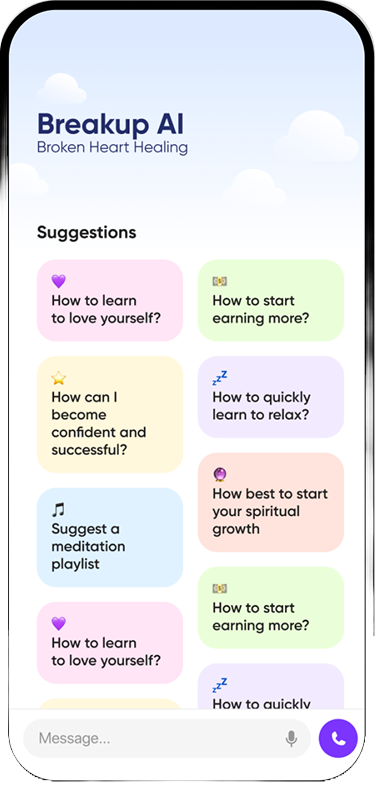
Bold CTA: Try Breakup.one for 24/7 support, daily tools, and guided programs: https://breakup.one/
The Bottom Line
Relapse urges are normal signals from a nervous system craving safety. With the right supports—sleep, movement, mindful attention, smart environmental design, and honest repair after slips—you can keep your boundary and build relief that lasts. You’re not behind. You’re rebuilding a life where you feel safe inside your own skin.
References
- NIH News in Health: Love on the Brain
- American Psychological Association: The pain of social rejection
- National Institute of Mental Health: Stress
- Centers for Disease Control and Prevention: Sleep and Sleep Disorders
- Mayo Clinic: Caffeine—how much is too much?
- Centers for Disease Control and Prevention: Alcohol Use
- Harvard Health Publishing: Mindfulness meditation may ease anxiety and mental stress
- Harvard Health Publishing: Exercise to fight depression
- World Health Organization: Physical Activity
- American Psychological Association: Breaking bad habits
- Mayo Clinic: Complicated grief
- National Institute on Drug Abuse: Drugs, Brains, and Behavior
- National Institute of Mental Health: Depression
- Harvard Health Publishing: Writing about emotions may ease stress and trauma